Follow Us on Google
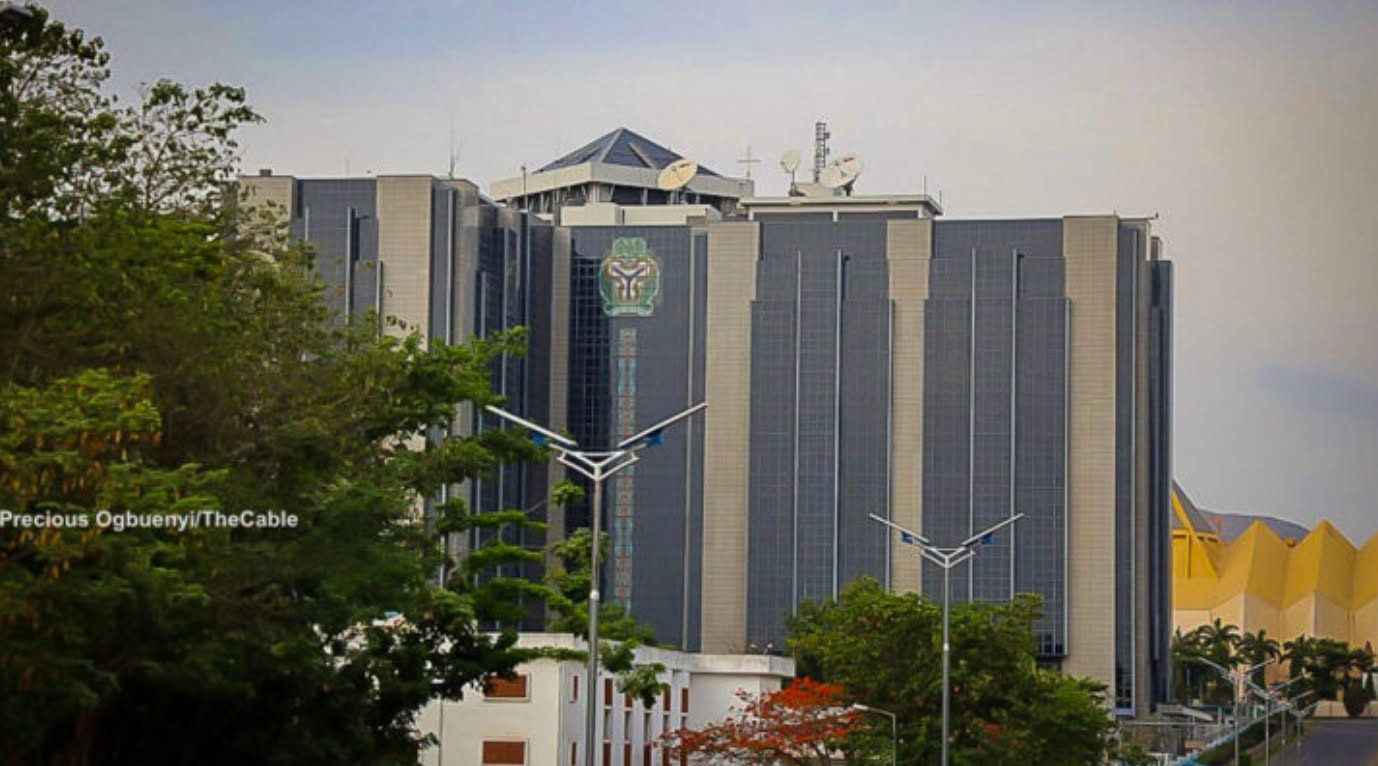
The Central Bank of Nigeria (CBN), last week, cut the benchmark interest rate to 23 per cent from its previous 26.5 per cent. This represents a massive 350 percent basis point reduction. The decision by the Monetary Policy Committee (MPC) came against the backdrop of sustained inflation moderation in recent months and improved foreign exchange conditions. According to the CBN Governor, Olayemi Cardoso, the decision to slash interest rate to 23 per cent was taken after the MPC had examined trends in the global and domestic economic environment as well as an evaluation of emerging risks in global markets and their potential for monetary policy decisions.
Good enough, headline inflation has been easing from 15.43 per cent in July to 15.39 percent in August, making a third consecutive monthly decline. Food inflation reportedly fell to 19.57 per cent from 20.31 per cent, while core inflation moderated to 13.29 per cent from 14.97 per cent. Also, month to month headline inflation slowed to 0.71 per cent from 1.57 per cent. However, this has not reflected on the prices of goods and services across the country. While the MPC recalibrated the standing facility corridor to +50/-300 basis point, it retained the Cash Reserve Requirement(CRR) at 45 per cent, which is the minimum deposit that commercial banks are required to keep with the CBN, 16 per cent for Merchant banks, and 75 per cent for non-TSA public sector deposits.
No doubt, the cut in interest rate is a welcome development. It is a relief for businesses and manufacturers and a confidence boost for investors who have been on edge over high interest rate in recent years, which hovers between 30 per cent and 37 per cent. According to statistics, an acceptable lending rate for meaningful industrialisation should be between 10 per cent and 12 per cent. The present commercial banks’ current interest rate of between 30 per cent and 37 per cent does not bode well for the manufacturing sector.
Borrowing costs by manufacturing sector in the first half of 2026 averaged about 27 per cent for prime lending rates and jumped as high as 35.6 per cent or higher for maximum lending rate. Total credit to the sector dropped to N18.7trillion. For instance, in the second quarter 2026(Q2 2026) the Manufacturers Association of Nigeria (MAN) raised the alarm over plunge in industrial growth and other severe structural headwinds. Industrial growth dropped to 3.96 per cent during the Q2 2026 from 7.46 per cent in 2025. The manufacturing sector growth was 3.24 per cent against 3.29 per cent in Q1 of 2026.
High interest rate has adversely affected business operations. Also, expensive, tight commercial credit for Small and Medium Enterprises (SMEs) are suffocating under high borrowing costs. This is creating a widening disconnect between service-led GDP and real production, and between macroeconomic figures and real sector vitality. Besides, GDP report by the National Bureau of Statistics (NBS) in Q2 of 2026 revealed that the overall year-on-year growth trajectory remains disproportionately service-driven at 56.62 per cent, while the broader industrial sector could only muster 17.23 per cent GDP. For the interest cut to be meaningful, the CBN should monitor compliance by the commercial banks.
Other News
In many African countries like South Africa, Morocco and Benin Republic, lending rate is single digit. The CBN should work towards that as well for effective and sustained economic growth. Despite the scale of last week’s reduction in interest rate, it is worrying that the CBN said that the decision should not be interpreted as a shift to monetary easing. The CBN Governor described the slash in interest rate as an “operational adjustment” intended to improve monetary policy decisions.
Business operators need constant assurances from both the monetary authority and the fiscal authority. Currently, the widening gap between the Monetary Policy Rate (MPR) and the prevailing interbank rates has continued to weaken the effectiveness of monetary policy benchmark. The cut in interest rate, which is driven mainly by improved macroeconomic conditions after years of aggressive monetary tightening, should serve as a window to stabilise the fundamentals of the economy. Nigeria requires an average annual growth rate of eight per cent to achieve progressive growth. It is only 4.2 per cent at the moment. Let the CBN ensure that the impact of the interest cut is felt in key sectors of the economy.
Recently, Aliko Dangote warned that high interest rate and power supply deficit would undermine the industrialisation of the country, as well as discourage investment. It appears the economy is turning the corner, with Nigeria’s external reserves looking pretty good at $55.25billion as of September 18, 2026, the highest in 18 years. This, according to the CBN, is sufficient to finance about eleven months of imports of goods and services.
Also, the balance of payments surplus increased to $3.57billion in the Q2 of 2026 from $2.38billion in the Q1 of 2026. The current account surplus jumped by 67.92 per cent to $7.54billion from $4.49billion due in part to strong external buffers and increased diaspora remittances in July 2026, putting the CBN within reach of its $1trillion monthly target. However, these are good numbers that should translate to better living conditions for Nigerians and productivity in key sectors of the economy. However, a single digit interest rate and measurable fiscal policy implementation will attract Foreign Direct Investments.