Follow Us on Google
•Analysts call move calculated use of policy buffers
By Chinwendu Obienyi and Adanna Nnamani, Abuja
The Central Bank of Nigeria (CBN) on Tuesday announced a record 350-basis-point cut in its interest rate, reducing it from 26.5 per cent to 23 per cent. The bank described the decision as a “monetary reset” to improve how its policies affect the economy and support the transition to an inflation-targeting system.
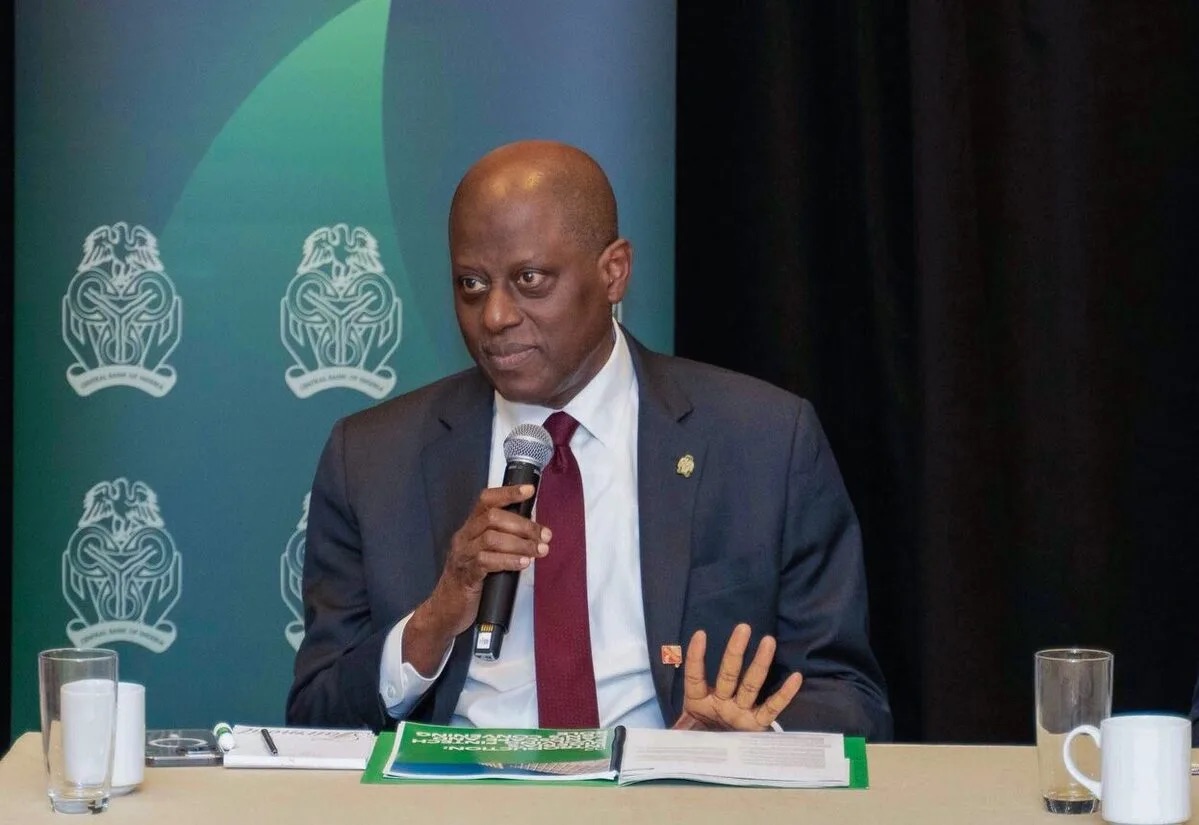
Announcing the 307th MPC decision in Abuja, Governor Olayemi Cardoso said the committee had “reset” the MPR and recalibrated the policy corridor as an operational realignment to strengthen monetary transmission, even as it retained key reserve and liquidity ratios.
“After careful deliberation on recent trends in the global and domestic economic environment, an assessment of emerging risks to the outlook, and their potential implications for monetary policy, the Committee resolved to reduce the MPR to 23 per cent, retain the cash reserve ratio (CRR) at 45 per cent for deposit money banks (DMBs) and 16 per cent for Merchant banks”, Cardoso said. The Committee also retained the 75 per cent CRR requirement on non-TSA public sector deposits, maintained the liquidity ratio at 30 per cent and retained the asymmetric corridor at +50/-300bps around the MPR.
Cardoso explained that the MPC’s decision was underpinned by the continued moderation in headline inflation, which declined for the fifth consecutive month, supported largely by relative stability in the foreign exchange market.
However, he said the Committee also acknowledged renewed pressures from rising food and core inflation components recorded in August 2026.
While recognising the persistence of inflationary pressures, Cardoso said the Committee noted that emerging risks are increasingly being driven by external factors, including escalating global tariffs, geopolitical tensions in the Middle East and their potential spillover effects on imported inflation.
Addressing the decision to reset interest rates, Cardoso said the move reflected changes in Nigeria’s economic fundamentals rather than a shift away from monetary discipline.
He said the transmission mechanism had not been working effectively because of a significant gap between the MPR and interbank-market rates.
“The MPC noted that divergence between the MPR and prevailing market rates had weakened policy transmission.
With the ongoing reform of the monetary policy implementation framework, including the adoption of naira-based, transaction-driven operational benchmarks, the committee considered the reset appropriate to better align the framework with market realities, restore the MPR as the principal signal of policy, and enhance transparency in money market operations.
The rates at which the interbank market is operating are disconnected from the MPR, and that gap needs to be addressed. If it is not addressed, the transmission mechanism becomes weaker.” he explained.
According to the CBN governor, the recalibration does not constitute easing but rather an operational reset to improve effectiveness without undermining the disinflation process.
While stating that his proudest achievement was to return the apex bank to its core mandate, embark on foreign-exchange market reforms, banking-sector recapitalisation and the rebuilding of external reserves, Cardoso argued that the multiple-rate regime imposed substantial costs on the economy.
He estimated that losses associated with foreign-exchange subsidies were equivalent to about three per cent of gross domestic product, compared with roughly 2.2 per cent of GDP attributed to fuel subsidies. “That meant that, between the two, about 5.2 per cent of GDP was being lost. That was not sustainable by any measure,” he said.
Regarding the memorandum of understanding between the CBN and the Ministry of Finance, Cardoso said the agreement did not create a new relationship, since the fiscal and monetary authorities had always interacted.
Rather, he said, the MoU institutionalised that cooperation and described the agreement as a source of optimism for Nigeria’s economic future, saying it would help ensure that both sides moved in the same direction in the interest of sustainable growth and price stability.
He added that the risks to global inflation remain tilted to the upside, as persistent supply chain disruptions, elevated crude oil and other commodity prices, and increasing trade fragmentation could intensify price pressures.
Other News
These pressures, combined with the possibility of renewed geopolitical tensions, he said, could delay the normalisation of monetary policy.
He also added that domestic output growth is expected to remain resilient for the rest of 2026, supported by continued improvement in crude oil production, expansion in agriculture, and other business activities as suggested by the PMI.
“Inflation is projected to moderate further in the short to medium term, underpinned by stability in the foreign exchange market, the lagged impact of earlier monetary policy tightening, and expectations of improved food supply as the harvest season progresses.
Overall, the outlook for the domestic economy remains positive, although prolonged geopolitical tensions in the Middle East and election-related spending could present upside risks to price developments”, he said.
Reacting to the decisions of the MPC, economic experts stated that the 350bps cut is expected to significantly reduce the federal government’s cost of borrowing by an estimated 300bps on existing debt instruments, thereby easing pressure on the fiscal deficit, where interest payments have consumed a large share of revenue.
They pointed to the freeze in bond offers, with traders awaiting clarity on how yields would adjust to the new policy rate.
In his views, Nigeria’s first professor of the capital market, Prof Uche Uwaleke, said the MPC decision to cut the MPR by 350 basis points is justified by moderating inflation, exchange rate stability, improvement in FX market liquidity and accretion to external reserves.
“It is a welcome development against the backdrop of the recently signed MoU between the Minister of Finance and the CBN Governor on fiscal and monetary policies collaboration”, he said.
Also commenting, the Chief Executive Officer, Financial Derivatives Company, Bismarck Rewane, while speaking during the post MPC programme at CNBC Africa monitored by Daily Sun, described the cut as a calibrated use of policy buffers, noting that the cumulative 350bps reduction roughly mirrors the 10 per cent decline in inflation from its peak, suggesting a move toward “dynamic equilibrium.”
He highlighted the CBN’s emphasis on “high-powered money” and transmission mechanisms as evidence of a focus on liquidity management rather than indiscriminate easing.
Rewane also pointed to the proximity of Nigeria’s general election (January 2027) and global events (U.S. midterms, World Bank meetings) as contextual risks, but argued that the CBN’s reserves and coordinated fiscal stance provide sufficient insulation against sharp currency or inflation shocks.
“I would not say that it was a risk too high to take. Obviously, there will be some reaction, but do we have enough buffers to support the same for an extended period? That is a million dollar question. However, we do not think there would be much of volatility around the currency”, Rewane said.
For his part, the Co-Managing Partner at Comercio Partners, Nnamdi Nwizu, expressed surprise at the depth of the cut, having anticipated a 40–60bps reduction.
He noted that the market had already priced in some easing, evidenced by falling OMO yields and NTB rates, but that the 350bps move signals “utmost confidence” in macroeconomic stability.
Nwizu drew attention to two critical enablers, diaspora remittances and a newly signed Memorandum of Understanding (MOU) between the CBN and the Debt Management Office (DMO), which he believes underpins fiscal discipline and provides a buffer against capital flight.
“There’s been some kind of handshake,” he said, suggesting inter-agency coordination gave the MPC the confidence to act decisively ahead of the election.
The rate cut comes against the backdrop of Nigeria’s 2027 general election, raising questions about the interplay between monetary policy and political timing.
However, both the CBN and fiscal authorities have emphasized that the easing is data-driven and supported by concrete measures, including FX market reforms, improved reserve buffers, and a commitment to non-inflationary financing.
The recalibration of the asymmetric corridor (+50/-300bps) further reinforces this stance by discouraging banks from parking excess liquidity at the CBN and incentivizing lending to the real sector.