Follow Us on Google
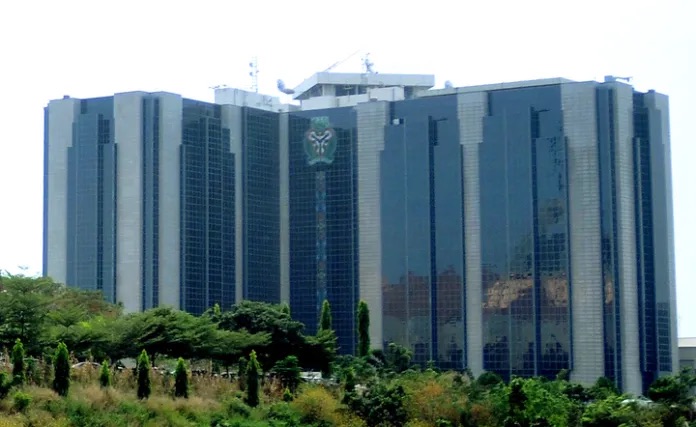
The Central Bank of Nigeria (CBN) intensified its drive to remove excess cash from the financial system last week, withdrawing about N5.48 trillion through its Open Market Operations (OMO) in just two days.
In simpler terms, the CBN saw too much cash chasing too few assets and moved to take some of that cash off the table, partly to prevent liquidity from fuelling inflation, FX pressure and excessive market volatility.
The aggressive liquidity mop-up tightened conditions in the money market, although funds from maturing securities helped cushion the immediate impact on banks.
The N5.48 trillion was not money that disappeared from the economy permanently. Some of it can return when the OMO securities mature, unless the CBN rolls them over or conducts further liquidity operations.
System liquidity opened the week at N5.46 trillion on Monday after N139.15 billion flowed into the banking system. Despite a heavy maturity schedule, the CBN initially stayed out of the market.
By Wednesday, however, the apex bank moved to absorb excess cash, allotting N2.79 trillion worth of OMO bills at its auction.
The intervention more than offset the N2.32 trillion OMO maturities that fell due the same day, leaving system liquidity at N4.61 trillion. Without the CBN’s intervention, liquidity would have risen to about N7.40 trillion.
The cash mop-up continued on Thursday when the CBN allotted another N2.69 trillion in OMO bills. Banks also settled N763 billion worth of Nigerian Treasury Bills (NTBs) that day, putting further pressure on available cash.
Overall, the CBN withdrew N5.48 trillion through its OMO operations in the two days. When the N763 billion NTB settlement is added, the total cash drain rises to about N6.24 trillion.
System liquidity consequently closed the week at N3.61 trillion, down significantly from the levels recorded earlier in the week.
Despite the size of the intervention, short-term borrowing costs remained relatively stable. The overnight rate fell by seven basis points to 22.21 per cent, while the funding rate remained unchanged at 22 per cent.
The overnight Nigerian Interbank Offered Rate (NIBOR) also edged down by one basis point to 22.229 per cent, suggesting that banks still had enough cash to meet their immediate funding needs.
However, rates further along the curve moved higher, signalling expectations of tighter liquidity ahead. The one-month, three-month and six-month NIBOR rates rose by 11, 28 and 34 basis points respectively.
The movement suggests that while banks are not facing an immediate cash squeeze, market participants expect funding conditions to become tighter in the coming weeks if the CBN sustains its liquidity management operations.
Other News
The Treasury bills market also reflected the changing liquidity picture. Selling pressure was stronger on short-dated bills, while buying interest remained limited in the middle segment.
Average yields rose by 65 basis points at the short end and 32 basis points in the middle of the curve. However, yields on longer-dated bills fell by 14 basis points, leaving the overall average benchmark yield 23 basis points higher at 18.92 per cent.
Investor demand for government securities remained strong despite the tighter cash conditions.
At the latest NTB auction, the N700 billion offered attracted N3.79 trillion in subscriptions, representing a bid-to-cover ratio of 5.41 times. The government eventually allotted N762.89 billion.
The 364-day bill attracted the strongest demand, receiving N3.63 trillion in bids and recording a bid-to-cover ratio of 7.26 times.
Its stop rate fell by 44 basis points to 17.15 per cent, while the stop rates for the 91-day and 182-day bills remained unchanged at 16.30 per cent and 16.50 per cent respectively.
Demand was similarly strong at the CBN’s OMO auction, where investors submitted N4.3 trillion in bids against N1 trillion on offer.
The apex bank allotted N2.8 trillion, with stop rates settling at 19.90 per cent for the 97-day paper and 19.65 per cent for the 132-day bill.
Analysts at Cowry Asset Management said the money market could receive some temporary relief from maturing securities in the coming days.
They noted that about N2.26 trillion in OMO bills is expected to mature on September 1, while another N735 billion in NTBs is due on September 2.
The maturities are expected to release fresh cash into the banking system, but the analysts warned that the relief could be short-lived if the CBN continues to withdraw excess liquidity through fresh OMO sales.
“With the CBN still willing to sterilise excess cash, money market conditions are likely to remain volatile, with short-term yields guided by the pace of liquidity management and the balance between maturities and new issuance,” the analysts said.
The latest intervention highlights the CBN’s increasingly active approach to controlling the amount of cash circulating in the financial system, with the level of liquidity expected to remain a key factor influencing interest rates and investment yields in the weeks ahead.