Follow Us on Google

By Chinwendu Obienyi
When South Africa, Nigeria and 21 other jurisdictions were added to the Financial Action Task Force (FATF) grey list on February 24, 2023, economic analysts cautioned that the move could dampen foreign investment in Nigeria.
A KPMG report revealed that countries placed on the FATF grey list were flagged for strategic deficiencies in their anti-money laundering, terrorist financing and proliferation financing frameworks, despite prior warnings to address these shortcomings.
However, the report added these countries have formally committed to resolving these deficiencies quickly within agreed time-frames and of course was subject to increased monitoring.
FATF noted that although Nigeria made some progress since the adoption of its Mutual Evaluation Report in August 2021, it is required to implement the Force’s action plans.
This grey-listing added another layer of risk and complexity to businesses that already perceived Nigeria as a high risk country for anti corruption and other financial crimes risks.
Furthermore, investors tend to avoid jurisdictions with weak regulatory frameworks due to the risk of compliance issues, potential fines, and reputational damage.
Hence, in its latest string of reforms, the Central Bank of Nigeria assured that it will leave no stone unturned towards exiting the grey list by the second quarter (Q2) of 2025.
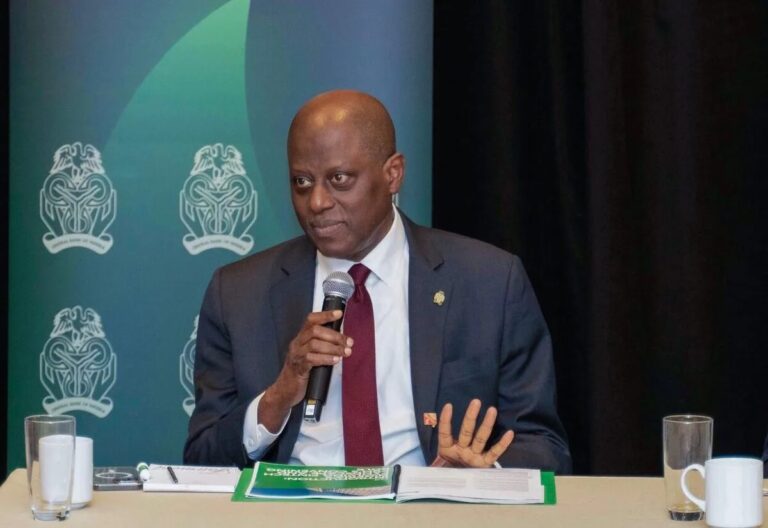
The Governor, Olayemi Cardoso while speaking to the banking industry during the 59th Annual Dinner of the Chartered Institute of Bankers of Nigeria (CBN), said that with its current reforms put in place by President Bola Tinubu’s administration, Nigeria would exit the grey list by next year.
His words, “Regarding Nigeria’s inclusion on the Financial Action Task Force (FATF) grey list, we fully recognise the problems this presents and are addressing legacy deficiencies with utmost urgency. Building a robust culture of compliance remains central to our efforts. We are optimistic that Nigeria will exit the grey list by Q2 of 2025.
“Today, we face significant challenges: money laundering, cybersecurity threats, fraud, corruption, and disparities in financial inclusion. The cost of inaction is profound—fraud undermines confidence, corruption erodes trust, and money laundering perpetuates organised crime. As you may have noticed by now, compliance is a recurring theme in this speech, reflecting its critical importance to our mission.”
Speaking further, Cardoso stated that financial institutions should make compliance a strategic priority, championing zero tolerance for breaches—not just in policy, but in practice; where financial institutions anticipate vulnerabilities and proactively address risks in areas susceptible to abuse.
Cardoso also noted that there has to be a comprehensive approach to strengthening governance, compliance, and collaboration within Nigeria’s financial system.
According to him, teams within financial institutions must be well-trained to identify and respond to red flags, such as suspicious transactions or unusual patterns that could indicate fraud or money laundering.
He stated that special attention should be given to high-risk clients, politically exposed persons (PEPs), and vendors to ensure these relationships do not expose the institution to illegal activities or reputational risks while adding that banks and other stakeholders in the financial ecosystem should work together to address systemic threats, such as emerging fraud schemes or cybercrime trends.
The CBN’s helmsman then stated that financial institutions would refine their compliance and governance frameworks starting in 2025 is a significant step towards strengthening the financial system.
Other News
According to him, this directive aligns with the need to address emerging risks, enhance transparency, and ensure the sector’s alignment with global best practices.
“We are enhancing regulatory effectiveness and accountability, as demonstrated by recent changes to our supervisory and enforcement approach,” he said, recalling that penalties totalling N15 billion were imposed on 29 banks for breaches, including AML/CFT violations”.
Cardoso said that in addition to these penalties, the banks are required to address the root causes of the lapses, which is crucial for improving regulatory effectiveness. “Historically, the industry has struggled with recurring issues, but we are confident that this approach will help change that narrative,” he stated.
Whilst addressing the governance lapses, he also shed light on the wider economic consequences of systemic inefficiencies.
He revealed that Nigeria incurred a huge loss of N6.2 trillion in 2022 due to distortions in the foreign exchange (FX) market and restrictive policies that stifled economic activities.
He added that the FX challenges, compounded by inadequate policy implementation, created an environment of uncertainty that undermined investor confidence and stymied growth across critical sectors.
Cardoso emphasised that addressing these issues requires a multifaceted approach, starting with robust reforms in the financial sector and proactive measures to stabilise the FX market. He revealed that to further enhance the functionality of the foreign exchange market, the apex bank is introducing an electronic FX matching system, which has proven effective in other markets.
Cardoso said, “The current dollar exchange rate reflects the price that the most desperate buyers are willing to pay, and this does not represent the true market value of the naira.
The introduction of the electronic matching system will correct these distortions by enhancing the price discovery process. Additionally, it will significantly boost the Central Bank’s oversight and intervention capabilities, ensuring a more stable and transparent foreign exchange market”.
Thus, the CBN Governor’s statement highlights the crucial role of compliance in fostering a resilient and trustworthy financial system.
By emphasizing that compliance strengthens the entire financial ecosystem, Cardoso also underscored the interconnectedness of institutions and the broader economic benefits of robust governance.
Reacting to the CBN’s Governor statements, the Vice President, High cap Securities, David Adonri, explained that exiting the grey list is expected to improve Nigeria’s global financial reputation.
“There is expected to be increased investor confidence, smoother financial transactions, and reduced costs for diaspora remittances. These developments could boost foreign direct investment (FDI) and catalyze broader economic growth. Additionally, they align with government reforms aimed at enhancing transparency and financial system integrity“, he said.
An economist who did not want his name in print, said, “I doubt if this would be possible but if it were to be possible by Q2 2025, then this would positively impact Nigeria’s financial ecosystem, particularly in reducing barriers for international trade and finance.
I want to believe that the CBN and the Nigerian Financial Intelligence Unit (NFIU) are playing crucial roles in this transformation, demonstrating compliance with most FATF recommendations. However, exiting the grey list would position Nigeria as a more attractive destination for global business, fostering a healthier and more competitive economic environment”.