Follow Us on Google
By Chinwendu Obienyi
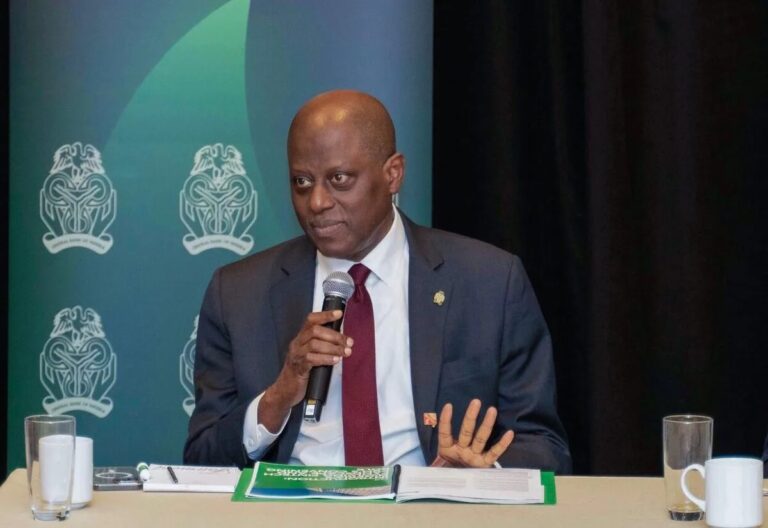
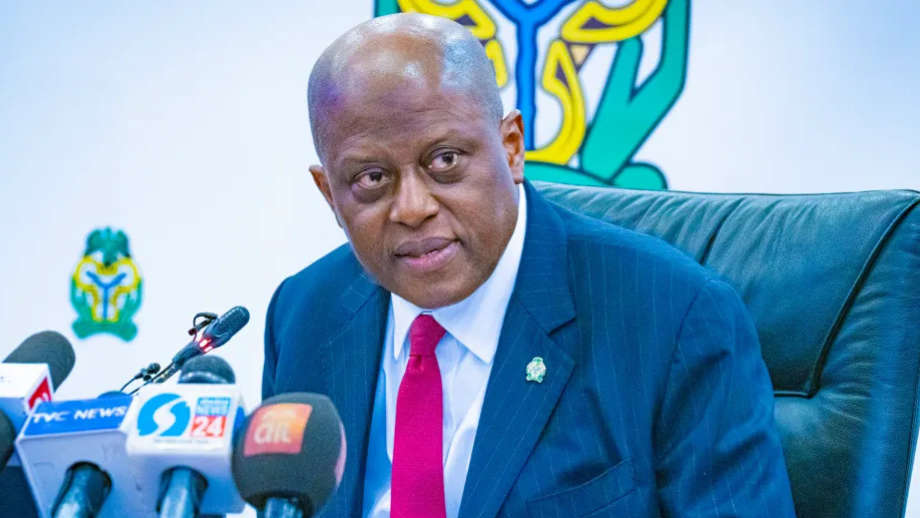
Central Bank Governor, Olayemi Cardoso, while fielding questions from journalists during the post-Monetary Policy Committee (MPC) meeting, revealed that the apex bank is actively working with other stakeholders to develop a comprehensive framework for digital assets.
According to him, the goal is to foster innovation in the financial sector while ensuring stability and protecting the integrity of Nigeria’s financial system highlighting the CBN’s proactive approach to balancing technological advancement with sound regulatory oversight.
Cardoso also highlighted that gross reserves have reached a 13-year high of $50.4 billion, underpinned by strong trade, rising non-oil exports, and increased diaspora remittances, signaling robust market confidence. He addresses global economic developments and notes that while domestic momentum is positive, external shocks and election-related fiscal spending remain risks to monitor.
Excerpts
Fintechs and digital payment systems
Firstly, we recognize that it is important for the system to benefit from innovation and we are doing everything possible to encourage a payment system that quite frankly is good for purpose, and eventually does bring out, in large numbers, a lot of people from poverty. However, we also appreciate the fact that there are risks that go with that especially risks to financial stability, and it is for that reason that we believe the way forward is to ensure that we have a thoughtful manner of oversight in that particular area, and ensuring that we balance out potential risks that go hand in hand with innovation. Within the central bank, we will continue to approach the subject with thoughtful and proportionate measures.
We are advancing work already on a very comprehensive framework for digital assets, and that is something that will go through a lot of scrutiny, a lot of thought. We are conferring with various stakeholders, not just domestically but internationally, to ensure that at the end of the day, what we get is something that is transparent and can give us long resilience. It is very important that this happens so much as I know there is a lot of discussion in the internet, out in the open space about digital assets, etc.
But, I can assure you that the approach that the CBN is taking to this is ensuring that we are looking purposely and thoughtfully at the future and ensuring that we are managing the risks. The risk we will look at is not one that is peculiar to Nigeria, it is one that countries world over are facing, and hopefully we will get it right, and we will ensure that we come up with something that takes our economy to the position we want it to be.
Rising gross reserves
Gross reserves, as at middle of February, is about 50.4 billion, which, as I had said in the communique, is the highest figure that we have had in 13 years. A detailed breakdown of the net reserves will be published shortly to provide further clarity on reserve movements over time. Now, do we think this can be sustained? The answer is, of course, yes. We have seen very positive signals with respect to the way the macros are developing, there will be favorable trade developments.
The current account is in healthy surplus and of course, the non-oil exports have also gone up respectively. Diaspora remittances have also gone up respectively and this has been underpinned by market confidence. Without market confidence, no matter what you do, you find that you will significantly sub optimize. We have over the period of time, embarked on a great number of international forums where we have gone out, told our story, we have made promises, ensured that we stuck to those promises, and were as open and transparent as we could in order to engender positive market sentiment and have economic belief in the framework in which we were setting out for the future of foreign exchange system. So I believe that has paid off quite well. How sustainable is this? Now, of course, there will always be risks to any outlook. There will always be risks to any outlook. We cannot underestimate the potential global shocks that could come our way. Nobody has a crystal ball. We can only project into the future. But who knows what tensions there could be globally that will come in and affect us in a way that we never anticipated. Oil prices, how those oil prices play out, we can only project, importantly, of course, as pre-election spending, and that also, if not properly contained, can destabilize, you know, the stability we have accomplished and of course, fiscal deficits were the new year, and I know that that is something that is being looked at very carefully and from our side, of course, we have got to make sure that we are consistent with our policy formulation, and there are no policy somersaults. My view is that as long as all things being equal, all things being equal, I believe that the trajectory we are on is one that is sustainable into the future. Of course, we know that there is every effort being made to diversify our base, and as all those things start to kick in, they can only add to the situation we are in.
Recapitalisation
The MPC reiterated the strategic importance of the recapitalisation exercise and urged the banks to ensure its successful completion. This would reinforce financial system resilience and enhance the sector’s capacity to support sustainable economic growth, price and other domestic developments in years.
20 banks have fully met the new capital minimum capital requirement. 20 banks have fully met the new capital requirement minimum and a further 13 are advanced stage of their capital raising processes, and quite frankly, I expected to conclude within that stipulated time it is expected, there are other institutions that are still finalizing their plans and evaluating a range of strategic options, and there’s time which, of course, includes consolidating, where appropriate. Now there is a very interesting statistic that I would like to share. As at February 19 2026, total verified and approved capital raise stands at N4.05 trillion. Of this N2.90 trillion which is 71.6 per cent has been mobilized domestically, with $706.84 million, which is N1.15 billion, representing 28.33 per cent foreign. So in summary, 71.67 per cent is domestic mobilization and 28.33 per cent is for foreign participation. This balance, in my view, represents a mix of domestic and foreign which signals broad investor engagement and confidence in the sector. And I can tell you that this is the case. You may not remember this, but I did mention that when I went abroad and I met with some of the investor community. They had a very strong interest in investing in the banks. So I am glad that that has come out in a very positive way. The other group that I think I will be remiss not to mention are the institutions which are currently undertaking regulatory intervention with certain legal and structural considerations which naturally influence the sequencing of their recapitalisation actions. In other words, it is unreasonable to expect that they would follow the same sequence as those that have, really and truly two and a half years ago when we made this announcement, have had ample time in which to do a lot of the things they are doing. We remain, as a Central Bank of Nigeria (CBN) actively engaged with all relevant stakeholders to ensure that they have an orderly and credible outcome while maintaining financial stability, specifically with respect to those institutions currently under regulatory intervention, The positive funds in these institutions remain secure and operations continue on that close, supervisory and regulatory oversight of the central bank.
Decisions and considerations of the MPC
The Committee’s decision was based on a balanced evaluation of risks to the economic outlook.
We observed that the ongoing dis-inflationary trend is likely to continue. This outlook is supported by the lagged effects of previous monetary tightening, sustained stability in the FX market, and improvements in food supply conditions.
Notably, headline inflation in January 2026 declined on a year-on-year basis for the eleventh consecutive month. This sustained deceleration reflects the effectiveness of our prior contractionary policy stance, enhanced exchange rate stability, robust capital inflows, and improvements in the balance of payments position.
Also the relative stability in petroleum product prices, along with improved supply of key food staples, has further reinforced the downward momentum in inflation. These developments suggest that earlier policy tightening measures have continued to anchor inflation expectations.
Other News
In addition, we acknowledged the remarkable strengthening of Nigeria’s external sector. The robust accumulation of FX reserves, supported by stronger export earnings and increased remittance inflows, has enhanced stability in the foreign exchange market and bolstered investor confidence. We remain committed to maintaining price stability while supporting sustainable economic growth and we will continue to monitor both domestic and global developments closely and stand ready to act as necessary to safeguard macroeconomic stability.
Presidential order on Oil and Gas
Members of the MPC also welcomed the newly issued Presidential Executive Order 09 which redirects oil and gas revenues into the Federation Account. The Committee acknowledged the potential impact of this order in improving fiscal revenue and accretion to reserves. Given these improved macroeconomic conditions, the Committee believed that a moderate easing was consistent with the prevailing inflation dynamics.
Headline inflation moderating
Headline inflation year on year is to 15.10 per cent in January, 2026 from 15.15 per cent in December, 2025 reflecting a moderation across both the food and core components.
Food inflation declined markedly to 8.89 per cent from 10.84 per cent over the same period, supported by improved domestic food supply, sustained exchange rate stability and favorable base effect. Similarly, core inflation declined to 17.72 per cent from 18.63 per cent driven largely by moderation in the average prices of information and communication services. Month on month, headline inflation declined to -2.88 per cent in January 2026 from 0.54% in the preceding month, indicating a continued softening of price pressures.
Having said all of this, caution is our watchword in the central bank. We are, by nature, a conservative group of people, and we have to be that way because we have to do everything possible to protect our economy and where we see fragilities, we have got to ensure that we are doing the right things to protect our economy and to strengthen our base. As at the time we came in, inflation was at 34 per cent but we have brought it down to where it is, slightly over 15 per cent. We are encouraged by that and we believe that a lot of the measures we have taken, though difficult, you know, tough in many respects, have begun to pay off.
Part of that obviously, is the monetary tightening. We have had no option but to ensure that we have kept a very tight monetary policy. We believe that if we sustain stability in the foreign exchange market, which we have seen in the recent past, then it is important to sustain that. We also believe that it is important that the sort of decreases we are seeing in food inflation should continue like that.
We understand the structural rigidities, and we understand that the fiscal authority is doing everything possible to sort of balance things out so that, at the end of the day, the collective will ensure that we continue on a downward dis-inflation pathway. I must also emphasize that it will take a lot of discipline from all the stakeholders. This is not something that will be left for the central bank alone. All the stakeholders will need to be involved working collaboratively to ensure that the gains we have achieved are sustained.
Strengthening the coordination between DMBs and Fintechs
There are over 430 licensed Fintech operators, hence to all intents and purposes, they are a systemically important segment. As you know, many of them are in various geographies and for us, it is important for us to do what is possible, to support their efforts. Many of them, are doing a lot of innovative things in various parts, particularly in the African continent, particularly the African continent, they are unicorns in some to some respects, and the least we can do is to put in place the guardrails and to ensure that we have the supervisory capacity to manage them as they go along, and ensure that they all carry our flag when they go internationally, doing so with pride, and that we have given them what it takes to be very successful wherever they go to. Secondly, if you read that document, you find out that we stuck our necks out. This is because some people that read that document came back to me and said, Well, this is a nice document, but how are we sure you can execute it? How are you sure that the execution phase is key?
We did that deliberately because we want to put ourselves on the line to ensure that the timelines we have put out, pushes us and other stakeholders to meet those timelines. So it is not just a nice document that will gather dust and people will forget about it, that is not the intention. We have a dedicated payment system supervision function that is functional and is looking at all the different aspects of some of the things mentioned like strengthening oversight of this, as well as improving the coordination between fintechs and deposit money banks, as well as, how to tackle the digital fraud risk that we are seeing now.
A lot of these things are work in progress and it has been very important for us as we have gotten to the point we have to engage with different players in that market, which we have done and understood where the pin points are, and ensure that going forward, we are able to address those pinpoints and have an ongoing dialog session that will be able to properly supervise that sector. We know the need to bring them to the standards of the deposit money banks, and that basically is the intention. I am not going to make any promises to you now, but I will say that as we go along, we will do everything possible to ensure that the cyber threats, the different threats that you know the banking system has, we ensure that the fintechs are also able to rise to that occasion and operate at a respectable enough standard.
I must emphasize that this will not happen overnight but it is work in progress, and we are very deliberate and committed to ensuring that we can close that gap.
Global developments
Global economic activities are projected to strengthen in 2026, underpinned by progress in trade negotiations, increased investment in Artificial Intelligence-related technology and gradual monetary policy easing.
Notwithstanding this projection, significant headwinds remain, including rising protectionism, deepening geo-economic fragmentations, and the likely escalation of trade disputes. Global disinflation is anticipated to continue in 2026, driven by the lagged impact of previous monetary policy tightening, further resolution of supply chain disruptions, and improved stability in commodity markets. Near-term inflation is, however, likely to remain above
Our outlook
Our outlook indicates that the current momentum of domestic disinflation will continue in the near term. This is premised on the lagged impact of previous monetary policy tightening, sustained stability in the foreign exchange market and improved food supply, however, increased fiscal releases, including election related spending, could pose upside risk to the outlook.
The MPC reaffirmed its commitment to an evidence based policy framework firmly anchored on the bank’s core mandate of ensuring price stability while safeguarding the soundness and resilience of the financial system.