Follow Us on Google
-
14 banks meet capitalisation requirements
From Adanna Nnamani, Abuja
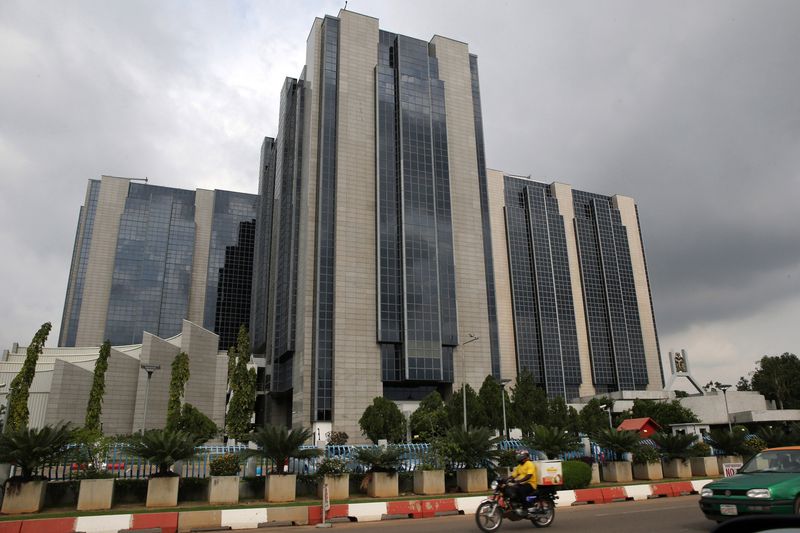
The Central Bank of Nigeria (CBN) has reduced its monetary policy rate (MPR) by 50 basis points to 27 per cent as it seeks to support economic recovery while cautioning against rising excess liquidity in the banking system.
The CBN Governor, Olayemi Cardoso, announced this in Abuja on Tuesday, following the bank’s Monetary Policy Committee (MPC) meeting.
Cardoso attributed the rate cut to sustained disinflation observed over the past five months, declining inflation projections for the rest of 2025, and the need to strengthen economic growth.
The committee also adjusted the standing facilities corridor to plus 250 to minus 250 basis points and revised cash reserve requirements for commercial banks and public sector deposits to enhance liquidity management. The liquidity ratio, however, was maintained at 30 per cent.
Governor Cardoso emphasised that the MPC’s decision considered the resilience of the Nigerian economy, citing improvements in output growth, exchange rate stability, robust external reserves, and a moderation in headline inflation, which fell to 20.12 per cent in August from 21.88 per cent in July 2025. He added that the recent rise in crude oil production and moderation in fuel prices contributed to the positive outlook.
Highlighting the banking sector, Cardoso said that 14 banks have fully met the new capital requirements under the ongoing recapitalisation exercise. He also reassured that the phased termination of regulatory forbearance measures would not threaten financial stability, explaining that the removal of waivers on single obligors promotes transparency and long-term risk management.
The CBN governor further addressed Nigeria’s foreign reserves, revealing that gross external reserves stood at $43.05 billion as of Thursday, September 11, 2025, up from $40.51 billion at the end of July, with an import cover of 8.28 months. He attributed the growth to innovative measures, including the non-resident portfolio inflow scheme, and expressed confidence that reserves would continue to rise with sustained investor confidence and ongoing policy interventions.
On the global economy, Cardoso said favourable trade negotiations and monetary policy easing in advanced economies may support output recovery, although geopolitical tensions and structural challenges could disrupt global supply chains. He said global inflation is expected to continue decelerating, prompting central banks in emerging markets to adopt a cautious and data-driven approach to policy easing.
Other News
The governor also reiterated the CBN’s commitment to supporting the federal government in ensuring macroeconomic stability, stating ongoing collaboration with the Ministry of Finance to sustain disinflationary trends and protect exchange rate stability. He expressed optimism that the onset of the harvest season would improve local food supply, moderate prices, and further ease inflationary pressures.
On payment systems, Cardoso highlighted the new Nigerian Payment System Vision 2028, designed to strengthen financial inclusion, particularly in rural areas, while enhancing security and efficiency. He stressed that leadership at the CBN must be proactive in adapting to technological changes, including digitisation and artificial intelligence, to deliver a payment system fit for Nigeria’s growing economy.
The governor reflected on his two-year tenure at the CBN, describing it as challenging but transformative, with a focus on transparency, accessibility, and credibility. He highlighted efforts to improve ease of access to foreign exchange and the ongoing development of thought leadership programmes aimed at consolidating regulatory expertise across Africa.
He said: “Our goal is for single digits in the future. That is our goal. And that is something that we are very resolute on. We will not stop until we get there.
“We are coming from a very challenging place. And since then, it has been on an upward trajectory. We will continue to deploy measures that drive reserves on a very positive upward trajectory.
“Transactions get done, you do not need to do anything. We have a very open and transparent system of ensuring that coin exchange goes to where it is meant to go.
“The stability we have accomplished, it will continue. We are not afraid that if we put this thing here, tomorrow it has lost value. Those days now have gradually begun, and so people talk about this less and less.
“The Central Bank must be at the forefront of thought leadership as it pertains to matters that affect our economy. There is a lot of work being done in that area.”