Follow Us on Google
By Chinwendu Obienyi
Monetary policy in Nigeria has always been beset with obstacles and chief among them is the high level of cash outside the banking system.
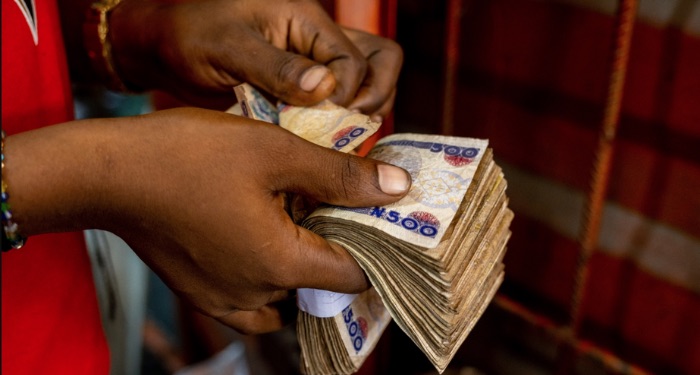
This is no different to the recent money supply data garnered from the Central Bank of Nigeria (CBN)’s website, which revealed that the country’s currency outside the banking system, closed 2025 at a record high of N5.4 trillion, thus underscoring at least 94 per cent of cash in circulation held by Nigerians.
The surge came alongside a broader expansion in money supply at about N124.4 trillion, raising questions about the effectiveness of Nigeria’s cashless policy ambitions.
This phenomenon of excessive cash outside banks is not new to Nigeria. For decades, economic analysts have linked it to a combination of structural, institutional and behavioural factors.
These include low levels of financial literacy, particularly in rural communities; limited trust in financial institutions; high transaction costs; inadequate banking infrastructure; and prolonged episodes of macroeconomic instability.
In many parts of the country, cash remains the dominant medium of exchange. Informal traders, artisans, transport operators and small-scale farmers often operate entirely outside the banking system, conducting daily transactions without accounts or digital payment tools. The result is a vast informal economy that absorbs liquidity but contributes little to formal savings mobilisation.
This reality somewhat complicates the central bank’s core mandate. When large volumes of money sit outside deposit channels, it becomes difficult to maintain price stability, regulate liquidity or mobilise long-term savings for lending to investors and businesses.
Early days of the cashless policy experiment
When the CBN introduced the cashless policy in 2012, the objective was straightforward: reduce the dominance of physical cash by promoting electronic payment channels and modernising Nigeria’s financial system.
During the early 2000s and the years preceding the 2014 oil-price collapse, deposit rates were relatively competitive. Banks mobilised savings more effectively, credit expanded and external reserves strengthened.
By contrast, the period of financial repression between 2020 and 2021, when deposit rates collapsed even as inflation accelerated, witnessed a sharp rise in currency outside banks. That episode entrenched savings aversion and accelerated dollarisation.
This is not to say that over the years, the policy has not delivered notable gains. The proliferation of automated teller machines, point-of-sale (PoS) terminals, mobile money operators, instant payment platforms and fintech-driven solutions has significantly expanded digital transaction volumes.
According to industry data, electronic payments have grown exponentially over the past decade, transforming retail transactions and reshaping consumer behaviour, particularly in urban centres.
Yet, despite these advances, the absolute volume of cash outside banks has continued to rise.
Experts note that while digital payments have improved transaction efficiency, they have not fundamentally addressed the incentive problem underlying cash hoarding, the absence of meaningful returns on savings.
Why Nigerians prefer holding cash
At the heart of the issue lies economics rather than culture.
For much of the past decade, depositors have earned deeply negative real returns on bank savings. While inflation climbed into double digits, savings deposit rates remained capped at low single digits. Even fixed deposit instruments frequently lagged inflation.
In practical terms, money left in the bank steadily lost purchasing power.
Under such conditions, cash retention became rational behaviour. Households and businesses increasingly preferred holding liquidity for immediate use or converting surplus funds into alternative stores of value such as foreign currency, real estate, commodities or informal investment schemes.
The situation worsened during periods of exchange rate uncertainty, when access to foreign exchange tightened and confidence in macroeconomic management weakened. Dollarisation intensified, and cash hoarding accelerated.
Although the CBN has raised the monetary policy rate aggressively in recent years with the benchmark rate climbing above 25 per cent, last year’s tightening has not fully transmitted to retail depositors. While yields on treasury bills and bonds surged above 20 per cent, most savings accounts continued to offer returns far below inflation.
Implications for monetary policy
The consequences of elevated cash outside banks are far-reaching.
Firstly, it weakens monetary policy transmission. Interest rate adjustments have limited impact when a large share of liquidity remains outside the formal system.
Secondly, it fuels inflationary pressure. Cash-heavy economies experience stronger demand-side inflation, as spending occurs without intermediation or restraint. It also amplifies FX pressure. This is because excess cash often finds its way into parallel FX markets, intensifying dollar demand during periods of uncertainty.
Other News
Furthermore, it constrains credit growth. With fewer deposits, banks face funding limitations that restrict lending to productive sectors of the economy.
Finally, it undermines fiscal performance by entrenching informality and shrinking the tax base.
Deposit rates
Analysts increasingly argue that competitive deposit rates could play a pivotal role in reversing the trend.
Offering attractive returns on savings raises the opportunity cost of holding idle cash. When deposit yields provide positive real returns, households are incentivised to move money back into banks.
Stronger deposit mobilisation improves banks’ liquidity positions, enabling greater credit extension to businesses and consumers. It also enhances the effectiveness of monetary tightening by ensuring interest-rate signals influence a larger pool of liquidity.
Importantly, attractive naira yields can reduce speculative demand for foreign currency by restoring confidence in domestic assets.
International experience supports this view. Economies that sustain positive real deposit rates tend to achieve deeper financial intermediation, stronger currency stability and lower inflation persistence.
While higher deposit rates offer clear benefits, they also present challenges.
Banks face increased funding costs, which may compress margins or translate into higher lending rates. In an economy already burdened by expensive credit, this trade-off requires careful calibration.
There is also the risk of uneven transmission, where institutional and high-net-worth clients benefit disproportionately, while retail savers see limited improvement.
To be effective, deposit-rate reforms must be supported by broader macroeconomic stability, particularly lower inflation volatility, credible FX management and fiscal discipline.
Also, greater competition within the banking sector could accelerate progress.
Digital banks, fintech savings platforms and mobile money operators are already offering higher-yield products, forcing traditional banks to rethink deposit pricing strategies.
Furthermore, regulatory flexibility could further encourage innovation, allowing differentiated savings products tied to market benchmarks rather than rigid caps.
Experts’ react
Currently, Nigeria’s improving external position, reflected in rising foreign reserves and narrowing FX market spreads, provides a window of opportunity to tackle deeper structural weaknesses.
Reabsorbing cash into the banking system, according to economic experts, would strengthen liquidity management, improve monetary control and expand credit to the real economy.
Speaking at a forum held last year, President, Capital Market Academics of Nigeria, Professor Uche Uwaleke, noted that tier-1 banks were declaring huge profits despite weak economic growth. He warned of a growing disconnect between banks’ fortunes and struggling sectors like manufacturing and agriculture, stressing the need to ensure customers and the real economy share in banking gains.“There is a disconnect between strong bank profitability and weak support for savings and credit for the real economy despite banks declaring profits.
I would say there is need for depositors to benefit more”, Uwaleke said.
For his part, the Vice Chairman, Board of Directors, Highcap Securities, David Adonri, stated that Nigeria’s preference for holding cash outside banks has become a structural feature of the monetary system rather than a temporary response to past policy shocks.
Adonri added that deposit rates would signal a transition from consumption-driven liquidity toward savings-led capital formation, a prerequisite for sustainable growth.
Conclusion
As Nigeria seeks to stabilise its currency, tame inflation and attract durable investment inflows, the role of deposit rates can no longer remain peripheral.
Competitive deposit pricing may not resolve every macroeconomic challenge, but without it, trillions of naira will continue to circulate beyond formal channels, limiting growth, weakening policy effectiveness and constraining financial development.
In that sense, paying savers more is not merely a banking decision. It is a structural reform capable of rewiring how money flows through Africa’s largest economy.??