Follow Us on Google

From Okwe Obi, Abuja
Can the Niger Delta Development Commission’s proposed $500 million agricultural intervention achieve what decades of government-backed farming programmes have failed to deliver? That question is gaining prominence as experts and stakeholders raise concerns over possible duplication of responsibilities, weak implementation frameworks and poor coordination, warning that without adequate planning, collaboration and accountability, the ambitious initiative could join the long list of costly agricultural interventions that promised food security but produced little lasting impact.
Recently, the NDDC Managing Director, Samuel Ogbuku, announced plans to raise the funds to address 14 projects and programmes, of which 11 are squarely on agriculture.
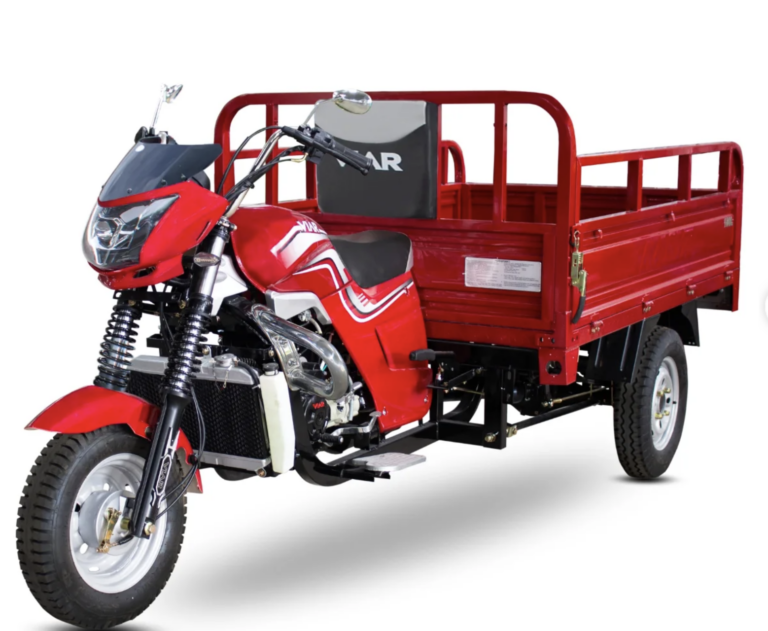
Some of the projects are: training of 300 farmers on commercial-scale rice production, provision of about 40 handheld tillers for farmers, empowerment of 4,500 rice and cassava farmers, training of 20,000 agricultural entrepreneurs on farm management, provision of 180-ton rice mills at Elele in Rivers State, provision of 680 tractors, including ploughs, harrows, trailers and planters, training of 200 youths in livestock and agro-processing, among others.
Vice President Kassim Shettima, who spoke at the investment summit in Abuja entitled: ‘Unlocking Investment for Sustainable Agricultural Transformation in the Niger Delta,’ described the initiative as “bankable projects” across all nine mandate states.
Shettima said the intervention reflected President Bola Tinubu’s resolve to provide food security among the earliest priorities of this administration.
“This is why mechanisation has been the centrepiece of the drive, and why the administration launched the Renewed Hope Agricultural Mechanisation Programme for 10,000 tractors over five years, alongside local assembly plants, and in parallel with the John Deere Tractorisation Programme, the Greener Hope Project, and the Green Imperative Programme. “We have complemented these with a value-chain approach that prioritises the processing of staple crops, expanded farmer support through seedlings, fertilisers, irrigation, and finance, including the Presidential Fertilizer Initiative and new agricultural corridors, and livestock interventions such as Livestock Development Centres, aimed, in part, at defusing tensions between farmers and herders.
“The outcomes speak for themselves. Through the sustained dedication of the Minister of Agriculture and Food Security, Senator Abubakar Kyari, we have seen the prices of several essential food commodities fall by as much as 50 per cent for some.
“This is the harvest of pragmatic reform and deliberate investment, and this gathering promises to widen it further. Your Excellencies, distinguished ladies and gentlemen, we are prepared to explore the potential of each state, because Nigeria’s prosperity is the sum of its parts,” he said.
The intervention comes less than two years after President Tinubu unveiled 2,000 tractors at Sheda that have not yet been distributed to farmers across the country.
During the launch, the President said: “Agricultural productivity is synonymous with national stability and food sovereignty.
“The ability to nourish our population is the bedrock of a prosperous nation. Our ambition extends beyond mere self-sufficiency. We envision Nigeria as a global agricultural powerhouse.
“Supplying quality produce to international markets while ensuring every citizen has access to affordable nutrition. That is why we took a bold decision to establish this Renewed Hope Agricultural Mechanisation Programme. We are just beginning.
“Under this initiative, in addition to whatever they have at the sub-national level, as governors, whatever you have procured, we are also going to do more. While we are here, over 2,000 advanced tractors, 50 industrial-grade land preparation booths, 12 fully equipped mobile workshops, 8,000-plus specialised farming implements. “This equipment, when deployed to empower mechanisation and service providers, will create job opportunities, make farming easier and more attractive to our young people.”
But stakeholders in the agricultural sector have questioned the utilisation of the tractors and other tools, the efforts the government has put in place to ensure the security of farmers, and the responsibility of the Ministry of Agriculture and Food Security, the Ministry of Livestock Development, and over 15 agencies under agriculture.
Also, they argued that such interventions, which for decades have not led to food sovereignty, were another duplication of responsibilities.
A public affairs analyst, Jide Ojo, in his submission, said: “There is a popular saying that talk is cheap, and we have never been bereft of ideas as a country.
“What has been lacking is the political will to implement, and when you hire consultants, and you do very beautiful blueprints, or roadmaps, sometimes some of these things are like building castles in the air.”
Other News
According to him, the NDDC, which is an interventionist agency, should have collaborated with federal, state and local governments on intervention projects because it does not have the institutional capacity to deliver.
Ojo said: “Agriculture is not like woodwork, or speakers, or brick and mortar. It is not like something where you hire consultants, or you hire a contractor, or you move to sites. Agriculture is grassroots-based.
“Whether you are talking of animal husbandry, or you are talking of cultivation of grain, or cash crops, they are rooted in communities. You need grassroots support, and you also need the federal government’s policy.
“You need to key into it. When you are dealing with the federal government on the issue of agriculture now, you are dealing with a minimum of two ministries, because there is now the Ministry of Agriculture, and then the Ministry of Livestock Development, and depending on what you are dealing with, you need to really bring them to the table.
“And you need to bring them to the table at the level of conception, not at the level of implementation. If what you did is just putting a five-man committee together, hiring people, and coming up with a beautiful report or blueprint, it may not work.
“But if you have done sufficient consultation with grassroots farmers, the various cooperatives within the agricultural value chain, you have talked it through the local government system, the state government, and then you are bringing partnership support, like funding support.
“You know why cooperatives are very important? Many a time, the cooperative is what works most in the agricultural value chain because when you are dealing with individual farmers, it may take you a long time to achieve a measurable result.
“But when you are with cooperatives already established with vast experience, you now give them financial support, you now oversee their performance, that will give you better achievement.
“So, the answer to your question is actually dependent on what kind of policy options are being looked at, and what is the implementation framework? Do they have an evaluation framework to track performance? Because, really speaking, if you are doing agriculture, there is no money for an evaluation.”
He added that even when such interventions take a period of about three years, they are likely to be defeated without proper consultations and planning.
“Even when you spend three years, you may never achieve anything. We did it under President Muhammadu Buhari, spent three years, but we were never food secure. The best they did for us was to say that we had a rice pyramid, which disappeared almost immediately.
“They just used us as a caricature. They came to Abuja and then used planks to build a very big pyramid and put bags of rice on top of those planks and said that we had achieved rice sufficiency, which was a lie.
“And it is very easy to lose money in agriculture if there’s no proper plan. Because you must forecast, right? Agriculture is something that you do not have full control over. There are pests, you don’t have full control over climate, and there could be climate change.
“There have been… that is why I said you can lose billions, even in one farming season. Look at flooding, the impact of flooding on agriculture, climate change, even pests and diseases.
“So, you need to do proper research, proper consultation, proper partnership, and proper implementation before you can get the value chain achieved.
He concluded: “We need food security. There is no gainsaying the fact that we need food security, but if you don’t deploy the resources in such a way that would yield a good result, you may just be wasting resources.
“And, you know, NDDC also has a challenge of opacity in fund management. Don’t forget the old issues, but there are very good ideas. I think under the current leadership, there has been a significant improvement in service delivery under the current MD, Samuel Ogbuku.
“I think there is a better turnaround. But again, you need to have a properly designed policy framework, an implementation framework, and a monitoring and evaluation framework to ensure proper service delivery, even as you launch this very commendable value chain in agriculture.”