Follow Us on Google

By Lukman Olabiyi
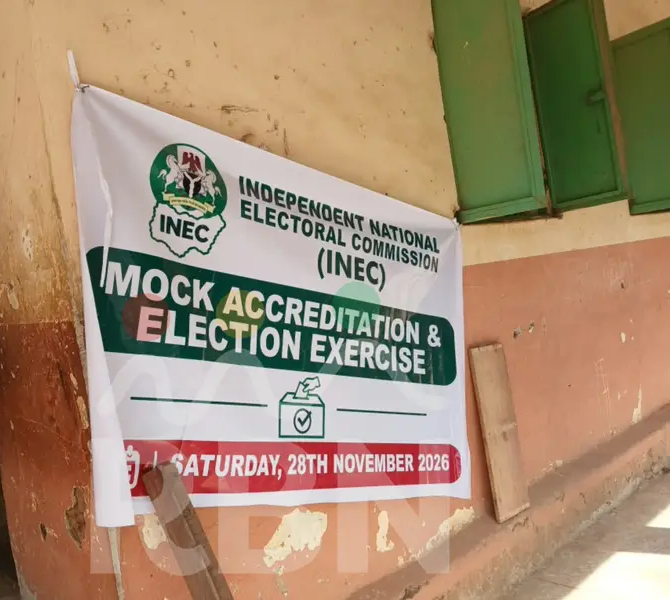
Residents and party officials on Saturday raised concerns over technical glitches experienced with the Bimodal Voter Accreditation System (BVAS) during the Independent National Electoral Commission’s (INEC) mock accreditation and election simulation exercise in parts of Lagos State.
The complaints, particularly in Ifako-Ijaiye and Iju, centred on the failure of some BVAS machines to recognise Permanent Voter Cards (PVCs), raising questions about the preparedness of the electoral commission ahead of the forthcoming general election.
The exercise, conducted in selected polling units across the state, was designed to test the functionality of the BVAS and other electoral processes, identify operational challenges and address potential delays before the actual election.
At Unit 1, Ward A, Ifako-Ijaiye Local Government Area, the ward chairman, Ayo Adekunle, said the BVAS deployed to the polling unit was not functioning properly.
Adekunle explained that INEC had selected two polling units in each ward for the simulation exercise to assess its level of preparedness and identify areas requiring improvement.
According to him, the exercise was necessary to prevent a recurrence of long queues and delays in voter accreditation on election day.
“What we are having here today is INEC trying to put some things in order because the BVAS they brought here today is not working properly. They don’t want a situation where, on general election day, there will be a long queue and people will not be attended to. That is the reason why INEC came up with this exercise,” he said.
He urged the commission to address the technical challenges observed during the exercise before the main election.
Adekunle, however, clarified that the exercise was not an actual election, explaining that the ballot booklet used contained neither party logos nor party names.
“It is an exercise. It is not a general election. If you look at that booklet, there is no party logo or party name on it. It is just an exercise for INEC to know its standard and work towards the general election,” he added.
Similarly, at Number 4, Alhaji Haruna Street, Iju, a resident, Ibidapo Thomas, said the exercise was affected by technical difficulties, particularly the inability of some BVAS machines to recognise voters’ PVCs.
Thomas, who confirmed that INEC officials were present at the polling unit, said the problem persisted even though the polling unit was the only one open for the exercise in the immediate vicinity.
“So far, so good. INEC is here and they are trying to get the process ongoing. What we observed is that one of the teething problems is that for some of the people that intend voting in the mock exercise, the BVAS did not recognise their PVCs, despite the fact that this is the only unit that is open around here. And we have been having that issue for quite some time now,” he said.
Other News
He acknowledged the efforts of electoral officials to resolve the problem but stressed the need for INEC to ensure that all technical shortcomings were addressed before the actual election.
However, INEC expressed satisfaction with the performance of the BVAS in other parts of the state, describing the accreditation process as seamless.
The Resident Electoral Commissioner (REC) in Lagos State, Prof. Ayobami Salami, gave the assessment while monitoring the exercise at Polling Unit 057, Ward 07, along Shitta/Ogunlana Drive in Surulere.
Salami said accreditation was taking less than one minute per voter, with no complaints recorded from electoral officials or members of the public at the polling unit.
“I have been very impressed with what we have seen. You have accompanied us on this exercise, and you have observed that there has been no problem with the BVAS.
“It takes less than one minute to accredit a voter, and everything has gone seamlessly. So far, there has been no complaint from our personnel, members of the public or voters,” he said.
The REC attributed the selection of 490 polling units to INEC’s decision to test the electoral process in two polling units per ward, providing an opportunity to assess the technology and identify possible operational challenges ahead of the general election.
He also explained that the commission had reduced the number of registered voters assigned to a single BVAS machine from 1,250 to 850 to minimise delays and improve the speed of accreditation.
Salami said additional BVAS machines would be deployed to polling units with more than 850 registered voters to prevent congestion and ensure a smoother accreditation process.
“If you have a polling unit with, say, 1,000 registered voters, what we previously had was one BVAS machine serving all the voters.
“Previously, the threshold was 1,250 voters per BVAS. We have now reduced it to 850 because the previous arrangement caused long waiting times for voters.
“To make accreditation easier and encourage more people to come out and vote, we have reduced the threshold from 1,250 to 850.
“Therefore, whenever a polling unit has more than 850 registered voters, we provide an additional BVAS machine to reduce waiting time,” he said.