Follow Us on Google
A clean cook stove company and carbon project developer, BURN has thrown its weight behind Nigeria’s efforts to scale clean cooking as one of the country’s most immediate and investable climate solutions, delivering emissions reductions, public health gains and industrial growth.
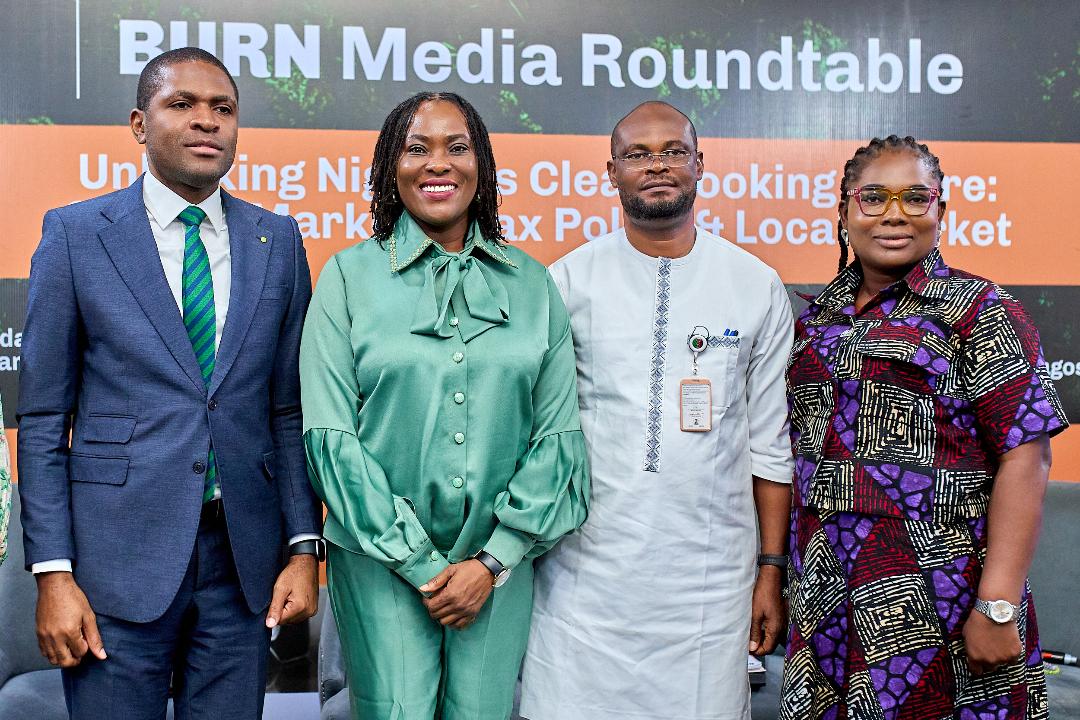
The company’s position was made known by BURN’s Country Manager, Etulan Ikpoki, recently during a media roundtable in Lagos.
The gathering offered an opportunity for senior editors as well as climate, business and development reporters to examine clean cooking, carbon finance and Nigeria’s climate ambitions. It also explored how policy, private capital and local manufacturing can work together to unlock scalable and high-integrity climate action.
According to Ikpoki, “Clean cooking is one of the few climate solutions Nigeria can scale quickly, credibly and at household level. When local manufacturing, strong standards and carbon finance work together, the immediate results include lower emissions, healthier families and real economic value. We welcome the government’s leadership in putting policy frameworks in place that support credible carbon markets and clean energy investment.”
He lamented that with over 80 percent of Nigerian households still dependent on biomass fuels, inefficient cooking has continued to place pressure on forests, household incomes and public health systems. “Globally, inefficient cooking accounts for nearly one gigaton of CO₂-equivalent emissions annually, making clean cooking one of the fastest routes for Nigeria to translate its NDC 3.0 commitments and National Energy Transition Plan into measurable outcomes.
“Recent policy signals, including the Nigeria Carbon Market Activation Policy (NCMAP) and the Tax Reform Act introduced in 2026, have strengthened the investment case for clean cooking by improving market clarity, enforcement and access to private capital. These developments featured prominently in discussions, highlighting how aligned policy frameworks can unlock private-sector-led climate solutions,” he stated.
He noted that since 2018 when BURN launched its operations in Nigeria, it has invested over US$9.6 million, including its ISO-certified assembly plant in Kano. He said the facility currently produces 40,000 clean cooking appliances per month, with capacity to scale up to 100,000 units, supporting Nigeria’s industrialisation agenda while creating skilled local jobs.
He equally stressed that the company had distributed about one million fuel-efficient cookstoves nationwide and employs 700 people, out of which about 40 percent are women. “By leveraging carbon finance, BURN has subsidised stove prices by 60 to 100 percent, delivering approximately US$15 million in discounts to Nigerian households and enabling families to access a US$40 stove for as little as US$5,” he added.
Also speaking, Senior Special Assistant to the President on Climate Technology and Operations and Presidential Co-Chair of the Clean Cooking Alliance, Olamide Fagbuji, said: “Clean cooking is a practical transition Nigeria can scale quickly, with immediate benefits for families.
“When technology, strong standards, local manufacturing and affordable financing align, it becomes a fast route to deliver our climate and energy commitments.”
However, the Senior Special Assistant to the President on Climate Finance and Stakeholder Engagement, Ibrahim Shelleng described clean cooking as one of Nigeria’s most investable climate interventions. He said: “The priority now is converting policy momentum into bankable programmes, backed by credible monitoring, clear rules and coordinated action.”
He noted that across Africa, the company had distributed approximately 6.3 million clean cooking appliances, improving the lives of 32.5 million people, reducing household fuel costs by US$2.3 billion, lowering indoor air pollution by 65 to 100 and protecting forests by saving more than 36.5 million tons of wood.