Follow Us on Google
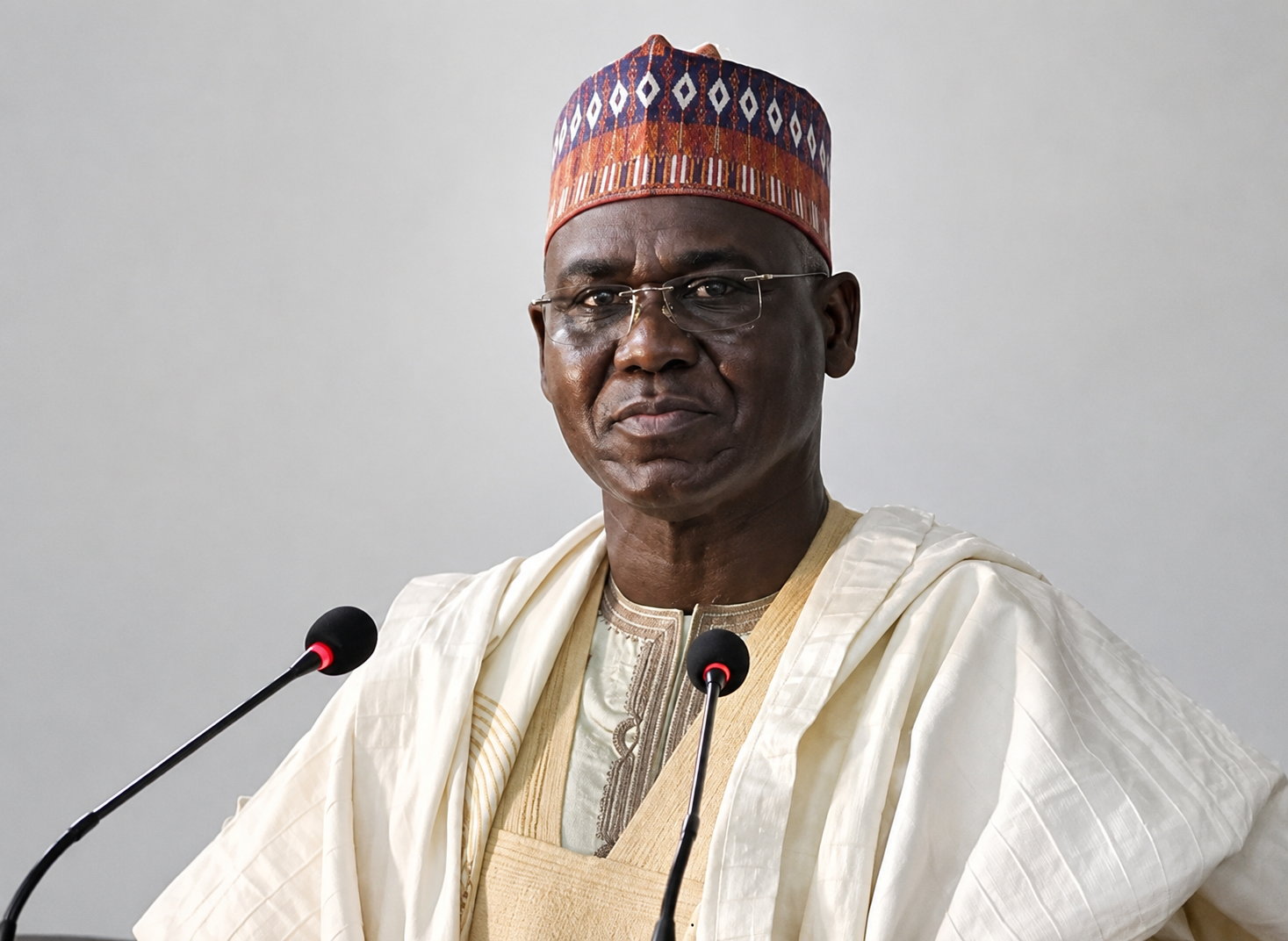
Former Chief of Army Staff, Lt. Gen. Tukur Yusufu Buratai (retd), has called on Nigerians to close ranks in defence of the country’s sovereignty, dignity and international reputation amid a legal battle in the United States over the possible release of documents allegedly connected to historical drug-trafficking investigations involving President Bola Ahmed Tinubu.
Buratai made the call in a position paper titled “Nigeria First: A Case for Protecting National Sovereignty and Dignity — A Patriotic and Non-Partisan Perspective,” in which he argued that the controversy should not be viewed simply as a personal matter involving the President but as an issue with wider implications for Nigeria and its citizens.
The intervention comes as a US District Court for the District of Columbia considers the release of records relating to allegations dating back more than three decades.
Recent reports say President Tinubu, the FBI, the US Department of Justice and other parties have until August 28, 2026, to respond to the proposed disclosure, while the FBI has sought to present sensitive material to the court privately for in-camera review.
Buratai said Nigerians should be concerned about the potential consequences of allowing the controversy to become a defining international narrative about the country.
“This is not merely about Bola Tinubu—it is about 250 million Nigerians whose national pride, economic prospects, and global standing hang in the balance,” he argued.
‘We are protecting ourselves, not Tinubu’
According to the retired general, the central issue should not be reduced to whether Nigerians support or oppose President Tinubu politically.
He maintained that negative international publicity surrounding a sitting Nigerian president could inevitably affect how the country and its citizens are perceived abroad.
“We are not protecting Tinubu; we are protecting ourselves,” Buratai said, arguing that millions of Nigerians who have never been accused of wrongdoing could nevertheless bear the reputational consequences of the controversy.
He cited Nigerian students seeking opportunities overseas, professionals building international careers, entrepreneurs seeking investment and businesses operating across borders as groups that could potentially be affected by negative perceptions of Nigeria.
Buratai also warned against allowing the allegations to overshadow what he described as Nigeria’s achievements in business, technology, academia, sports, entertainment and other fields.
‘A 33-year-old case should not define a nation’
A major plank of Buratai’s argument is the age of the allegations.
He noted that the matters in question date back roughly 33 years, when Tinubu was a much younger man and Nigeria itself was operating in a very different political and social environment.
The former Army chief questioned whether it was reasonable for events allegedly dating back more than three decades to outweigh an individual’s subsequent decades of public life.
“Can any Nigerian honestly claim that they are the same person they were 33 years ago?” he asked.
Buratai argued that Tinubu’s subsequent political career and public service should form part of any assessment of his character.
He cited Tinubu’s tenure as governor of Lagos State, his influence on Nigerian politics and his subsequent emergence as President of the Federal Republic as part of what he described as a much broader record that should not be reduced to allegations concerning a distant period.
The retired general’s strongest concern, however, was sovereignty.
He questioned whether a foreign judicial process should effectively become a vehicle for determining the public reputation of Nigeria’s sitting president.
“We did not elect an American court to vet our leaders. We did not ask the FBI to determine the character of our president. We have our own processes, our own institutions, and our own standards,” Buratai stated.
He acknowledged that public officials should not be beyond accountability but argued that accountability should be pursued through appropriate institutions and legal processes.
“This does not mean that leaders should be immune from accountability. It means that accountability must be pursued in ways that respect the dignity of the office and the nation,” he said.
The position paper therefore calls for stronger Nigerian institutions capable of investigating and addressing questions concerning public officials without relying on foreign judicial processes.
Buratai also raised concerns about the possible economic fallout from reputational damage.
He argued that an international controversy involving Nigeria’s presidency could potentially affect investor confidence, international business relationships, tourism, diaspora engagement and the reputation of Nigerian companies operating abroad.
Nigeria, he said, could ill afford an additional crisis of confidence at a time when the country is already grappling with economic pressures.
The former Army chief stressed that ordinary Nigerians would ultimately bear the consequences of any serious deterioration in the country’s international image.
“The 250 million people of Nigeria would be the losers—not because of anything they did, but because of a foreign court’s decision about one man’s past,” he said.
Buratai also drew attention to the timing of the controversy ahead of Nigeria’s 2027 presidential election.
President Tinubu is expected to seek another term on the platform of the All Progressives Congress (APC), and Buratai argued that the release of sensitive information involving the incumbent president could have a significant effect on the political environment.
He described the prospect as potentially giving foreign actors an unprecedented influence over Nigeria’s democratic conversation.
Despite his defence of the President’s national standing, Buratai repeatedly sought to distinguish his position from partisan support for Tinubu.
He urged political parties, leaders and citizens to approach the matter from what he described as a national-interest perspective.
“This is not about defending Tinubu the individual; it is about defending Nigeria,” he said.
He added, “We will not allow foreign courts to determine our leaders’ legacies. We will not allow foreign legal proceedings to dictate our national narrative. We will not sacrifice 250 million people on the altar of a 33-year-old case.”
Buratai urged Nigerians not to allow the controversy to deepen political divisions, arguing that national sovereignty and dignity should transcend party politics.
The former Army chief proposed a seven-point response, including diplomatic engagement between Nigeria and the United States, vigorous legal representation for the President, national solidarity, public education, engagement with Nigerians in the diaspora, preparation for possible disclosure and the strengthening of Nigerian accountability institutions.
He also urged the government to develop a communication strategy capable of responding to any eventual release of the documents.
Buratai called on Nigerians to defend the country’s image and sovereignty without abandoning the principle of accountability.
“Nigerians must resist this not because we blindly support any leader but because we love our nation,” he said.
“We must do so because we refuse to let foreigners define our national identity.”
“Our nation’s pride is not for sale, our dignity is not negotiable, and our future will not be determined by a foreign court’s judgment on a distant past.” Buratai stated.