Follow Us on Google
By Amechi Ogbonna
With less than twelve calendar months to May 29, 2023 sunset of President Muhammadu Buhari’s eight-year tenure, there is no doubting the fact that many political economists and historians have already set sail for a robust assessment of the impact of his economic policies on Nigeria’s private sector over the period he has been on the driver’s seat.
For most analysts, this assessment derives its strenght from the fact that the president had since assumption of office in 2015 signed a number of Executive Orders to further improve the nation’s business environment and to help the private sector among others to expand its operational scope in order to attract more foreign direct investments into the economy.
It was indeed in his commitment to improve Nigeria’s Ease of Doing Business ratings, that Buhari in July 2016, inaugurated the Presidential Enabling Business Environment Council (PEBEC), chaired by Vice President Yemi Osinbajo with a mandate to make recommendations on institutional reforms that could promote Nigeria’s investment attractiveness.
Six years down the line and with 2023 exit date looming in the horizon, the Federal Government had over the last two months commenced an audit and a stock-taking tour of some of its policy outcomes on private sector beneficiaries amid global headwinds that had left several powerful economies tottering.
After concluding similar facility tours of four other companies in Lagos and Imo states among others, the Federal Government’s visitation train recently berthed at the BUA Cement facility in Sokoto.
Head of the government visitation team and Nigeria’s Minister of Information and Culture, Mr Lai Mohammed, in his presentation at BUA’s Sokoto Cement plant said, “Within the past two months alone, we have visited four projects, the latest being this BUA Cement facility here in Sokoto. Others included the Dangote Petroleum Refinery and Petrochemicals, the Dangote Fertiliser in Lagos, which we visited on April 3rd 2022; the Lekki Deep Sea Port in Lagos, which we visited on May 4th 2022 and the Duchess Hospital also in Lagos, which we visited on May 10, 2022.”
According to him, “these projects visited were beneficiaries of the conducive business environment created by President Muhammadu Buhari’s administration using the Presidential Enabling Business Environment Council (PEBEC), which has implemented over 150 reforms since 2016, as well as the Companies and Allied Matters Act, 2020 CAMA 2020) – Nigeria’s most significant business legislation in three decades”.
Mohammed, said the result of the favourable business environment included the birth of new businesses such as the 5 Million tonnes per annum (mtpa) BUA Cement in Sokoto; the Lekki Deep Sea Port, one of the most modern sea ports in West Africa and the 5,000 barrels per day Modular Refinery in Ibigwe, Imo State among others.
He said the conditions that have made BUA cement to flourish, especially since 2015 when Buhari assumed office, include the Pioneer Status granted it by the administration, the ban on importation of cement, government’s divestment from the cement industry and the backward integration policy that helped the economy to improve.
The minister explained that the impact of government’s favourable policies has helped BUA Cementto record a -300 percent increase in production between 2015 and this year, moving from 3.5 million Tonnes per annum in 2015 to 11 million tonnes per annum at the moment.
The minister noted that the Sokoto plant for instance is operating at over 90 per cent of its installed capacity, with its strategic location, which is just 100 kilometers to Niger Republic, leaving with capacity to export to Niger and Burkina Faso, to earn the nation forex especially during the rainy season when construction works in Nigeria is at its lowest ebb.
One major advantage that BUA Cement Sokoto has over competition is its capacity to produce all year-round and moving between 250 and 270 trailers per day, while boosting haulage of finished products with its in-house 700 trucks being deployed for cement distribution.
“The 3 Million tonnes per annum line (IV) of the BUA Cement facility that we have just visited was commissioned by President
Muhammadu Buhari in January this year. It takes the combined installed capacity of the factory’s Lines 2,3 and 4 to 5 Million tonnes per annum. This is one of the most modern cement plants anywhere. It has gas analysers used in regulating carbon emissions
into the atmosphere; air purifying mechanisms set up to enhance the quality of air released from the cement manufacturing process.
In fact, the plant has filters capable of capturing 99.9 percent of dust in order to make the environment healthy and conducive for its workers and customers alike.” He said.
But more importantly, Mohammed noted that the plant is also the first cement plant in Nigeria to use Liquefied Natural Gas to generate 50MW of power, thereby replacing coal in its kiln. This has made the plant environmentally friendly to also curb climate change.
He expressed optimism that upon the completion of the Abuja-Kaduna-Kano (AKK) gas pipeline project, the Sokoto plant will reduce time and cost of transporting gas, currently being trucked from Port Harcourt to the plant.
Today for instance, no less than 20 trucks of LNG are brought to the facility daily from Port Harcourt which is an indication of the costs and the logistic challenges the firm is carrying in the course of its operations today.
In January this year when President Muhammadu Buhari came to commission Line 4 of the Sokoto plant, he did admit that its over 10000 direct and indirect jobs at the Sokoto plant makes BUA the largest job creator in the North West.
That assertion was corroborated by the Managing Director of BUA Cement, Alhaji Yusuf Binji, who gave some statistics of the jobs offered by the company to include 443 permanent staff with other ancillary jobs, that raise the total jobs at the plant to over 10,000.
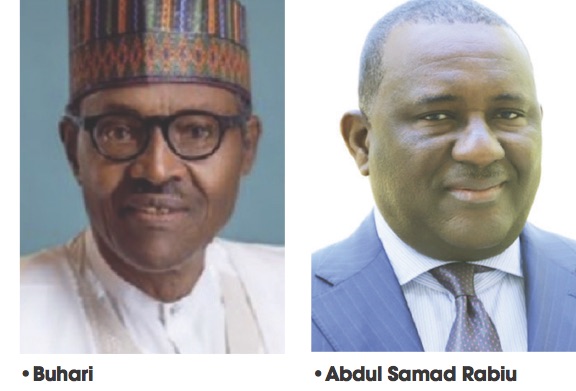
On the score of the number of employment so far created by the Group in the cement industry, an elated Federal Government paid glowing tribute to the Chairman of BUA Cement, Alhaji Abdul Samad Rabiu and his team for their faith in the Nigerian state despite the humongous challenges facing it.
Said the minister “There is no better indication of BUA’s support for the government’s economic diversification and job creation agenda than the company’s massive investments in Nigeria.”
Meanwhile, as part of its plans to facilitate cheaper and faster movement of goods and persons from the North West to other parts of the country, the Federal Government has pledged to link Sokoto and Yola in Adamawa states to its ongoing Kano – Katsina- Maradi rail line.
The proposed rail link is expected to achieve cost -effectiveness in the movement of industrial and commercial goods as well as persons from the north west and north east to other parts of the country.
This according to the minister said was being done to reduce the cost of transportation to leverage the massive price cut on building materials and goods including cement.
The Sokoto plant is the first cement plant in Nigeria to use Liquefied Natural Gas to generate 50MW of power, thereby replacing coal in its kiln.
Some of the conditions that have made BUA cement to flourish, especially since 2015 when the Muhammadu Buhari administration assumed office include the grant of Pioneer Status, the ban on importation of cement, government’s divestment from the cement industry and the backward integration policy of government.
By leveraging these conditions, BUA Cement was able to record a -300 per cent production raise between 2015 and 2022, from 3.5 Million Tonnes per annum in 2015 to 11 million tonnes in 2022 with the Sokoto plant alone operating at over 90 per cent of installed capacity. “
“The 3 Million tonnes per annum line (IV) of the BUA Cement facility that we have just visited was commissioned by President
Muhammadu Buhari in January this year, and takes the combined installed capacity of the factory’s Lines 2,3 and 4 to 5 Million tonnes per annum. This is one of the most modern cement plants anywhere. It has gas analysers used in regulating carbon emissions-released into the atmosphere; air purifying mechanisms set up to enhance the quality of air released from the cement manufacturing process.” Muhammed said BUA Cement facility in Sokoto is the 4th high-impact private and public sector projects to be visited by the Federal Government after others located in Lagos and Imo states described as beneficiaries of the conducive business environment created by the administration of President Muhammadu Buhari, under the auspices of the Presidential Enabling Business Environment Council (PEBEC), which has so far implemented over 150 reforms since 2016, as well as the Companies and Allied Matters Act, 2020 CAMA 2020) – Nigeria’s most significant business legislation in three decades.
In the last five years, BUA has completed four new cement plants of similar capacity in different parts of the country and is set to complete two more plants this July to raise its total production to 17 million tonnes per annum by 2023.
To achieve the above milestones, the Group had in 2020 consolidated its cement operations to list an enlarged BUA Cement Plc on the Nigerian Stock Exchange with a total combined installed capacity of 8 million tonnes per annum with a marketcapitalisation of N2.4trillion.
This makes it the second largest cement producer in Nigeria with 25 percent market share and indeed the largest cement producer in the North West, South South and South East of the country as well as the largest private employer of labour in the North-West.
To justify its rating, BUA Cement (Sokoto plant) has proven its mettle in all its niche segments including quarrying, extracting, processing and dealing in limestone as well as the manufacture and supply of cement.
Beyond running a profitable enterprise, BUA Group has continued to sustain robust and congenial relationship with its host communities by investing in Corporate Social Responsibility, through the provision of health services, scholarship for students, provision of housing, roads, and electricity among others.
But despite its pacesetting achievements, management said it remains committed to the vision of becoming a leading cement producer in Nigeria.
Managing Director and Chief Executive of BUA Cement, Yusuf Binji, said the company was motivated by the Presidential Enabling Business Environment Council to invest in the country, coupled with the abundance of raw materials in its areas of operation.
The Sokoto plant began production in 1967 after the foundation laying ceremony by Sir Ahmadu Bello with an installed capacity of 100 tonnes per annum. Through consistent investments it’s capacity has risen to 5 million tonnes per annum.
Incidentally, the Sokoto plant according to Binji is one of the companies that has weathered the storms of local and international economy having continued on the upward trajectory amidst various challenges.
“We produce cement which we market under two brand names of BUA cement which is coming out of our Edo plant and the Sokoto cement which is coming out from our plant here in sokoto.
“ Our vision is to become a highly competitive market leader in Nigeria, making cement available and affordable in Nigeria for national development.”
Binji said BUA cement is the largest cement producer in the North West, South South and South East regions of Nigeria. “
“We have four modern production lines in the locations we operate in. We are listed on the Nigerian Stock Exchange with a market capitalisation of N2. 4 trillion naira.
He said the company was targeting 120mw of clean energy from Liquified Natural Gas to reduce its carbon footprint.
As the largest employer of labour in the entire North West, Sokoto plant alone is currently offering over 10000 direct and indirect jobs to Nigerians even as this is expected to increase upon completion of production Line 5 of the expansive facility due for commissioning in the third quarter of this year.
Despite being the largest cement producer in the North West, South South and South East with a combined capacity of 11 metric tonnes, its management said the target was to hit the 17MT mark by 2023 when Line 5 of the Sokoto plant would be completed.
According to Alhaji Binji, the Sokoto line 4 commissioned by President Buhari last January is already operating at almost100 percent capacity, working 24 hours 7 days a week. He said “ We are investing heavily in process expansion because of the conducive operating environment created by the government. The backward integration and pioneer status granted us by Federal Government has made the business environment for cement production more conducive”
With it’s products sold all over the country, he said the Federal Government’s support has enabled BUA Cement to fully source all its raw materials locally, operating with the most sustainable principles available in the country and elsewhere.