Follow Us on Google
By Maduka Nweke
In an economy weighed down by inflation, currency volatility and slowing growth, Nigeria’s real estate sector is expanding and positioning itself as one of the country’s most resilient investment frontiers.
Fresh data from Access Research Nigeria indicates that the nation’s property market is projected to hit between $2.42 trillion and $2.81 trillion in value by the end of 2026.
The surge, analysts say, is less a coincidence and more of a reflection of deep structural forces, urban migration, housing shortages and a strategic pivot by investors seeking stability.
“In 2026, Nigeria’s real estate market is experiencing significant growth, with total value projected to reach approximately $2.42 trillion to $2.81 trillion,” the agency stated. It attributed the rise to inflationary pressures and increasing construction costs that continue to push asset prices upward.
Central to the growth story is the residential segment, which remains the industry’s powerhouse.
“The residential sector, the largest segment, is anticipated to reach $2.05 trillion in volume before the end of 2026,” the report added, highlighting strong appetite for both mid-market housing and high-end developments.
Across Lagos, Abuja, and Port Harcourt, demand is not just rising, but relentless. Nigeria’s widening housing deficit, combined with rapid urbanisation, continues to stretch supply.
In Lagos alone, an estimated 800 to 1,000 people arrive daily, intensifying competition for limited accommodation and driving up both rents and property values.
Yet, beyond demand fundamentals, a quieter shift is underway in how investors approach the market. Gone are the days when land banking dominated strategy. In its place is a more calculated focus on income.
“Investors are shifting toward income-generating assets (rental income) rather than speculative land banking due to inflationary pressures,” the agency noted. Short-let apartments, in particular, are emerging as high-yield vehicles, delivering returns of 15 to 30 per cent, while land in growth corridors continues to post appreciation rates of up to 40 per cent.
The recalibration is being reinforced by macroeconomic realities. As inflation bites and foreign exchange uncertainty persists, investors, especially from the diaspora, are increasingly drawn to tangible assets that can preserve value and generate steady cash flow.
The said high inflation and FX volatility are forcing a shift toward data-driven, income-focused investments.
It added that the trend is boosting demand for secure, high-end properties in well-serviced locations.
Infrastructure is now a decisive factor. Capital is flowing into areas with improving road networks, power supply, and commercial activity, triggering price spikes and accelerating development in previously overlooked districts.
Even with these gains, growth is expected to remain measured over the medium term. The agency forecasts a compound annual growth rate of 3.15 per cent between 2026 and 2031, pushing market value to an estimated $2.83 trillion.
On the global stage, Nigeria still trails significantly. China’s real estate sector, for instance, is projected to reach $133.2 trillion in 2026.
But for domestic investors, the local story is compelling enough.
Nigeria’s rising property prices are a direct outcome of inflation, rising building costs, mortgage challenges, and currency instability. For buyers and investors, this can be overwhelming, but with smart choices, it’s possible to navigate the market successfully.
According to Dr. Chudi Ndubuoke, a real estate analyst, the sector is experiencing significant growth and development as customers in Nigeria have shown a strong preference for real estate investments, as property ownership is seen as a symbol of wealth and stability. “The demand for residential properties, particularly in urban areas, has been on the rise due to population growth and urbanization. Additionally, there is a growing interest in commercial properties, especially in major cities like Lagos and Abuja, as more businesses are being established in the country.
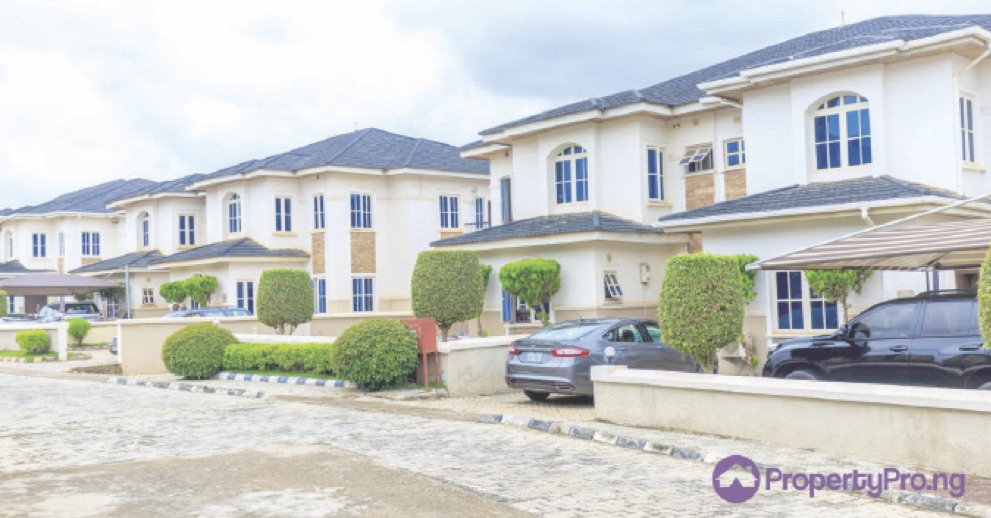
One of the key trends in the Nigerian real estate market is the increasing popularity of gated communities and luxury estates. These developments offer security, modern amenities, and a higher standard of living, which appeals to the growing middle class and expatriate population.
Another trend is the rise of mixed-use developments, which combine residential, commercial, and recreational spaces in one complex. These developments cater to the demand for convenience and accessibility,” he stated.
According to Mrs. Iyore Gladys, a Property Agent in Amuwo-Odofin, Nigeria has a large youth population, with a significant number of young professionals entering the workforce. This demographic trend has contributed to the demand for affordable housing options, especially in urban areas. Additionally, the government has implemented policies and initiatives to promote affordable housing, such as the National Housing Fund and the Family Homes Fund.
These efforts, she said, aim to address the housing deficit in the country and provide opportunities for low and middle-income individuals to own homes.
“The Nigerian economy has been experiencing steady growth in recent years, driven by sectors such as telecommunications, banking, and manufacturing. This economic growth has had a positive impact on the real estate market, as it has increased consumer purchasing power and investor confidence. Additionally, the government has implemented economic reforms to attract foreign direct investment, which has further stimulated the real estate sector.
In conclusion, the Real Estate market in Nigeria is thriving due to customer preferences for property ownership, the emergence of gated communities and mixed-use developments, the demand for affordable housing, and the country’s positive macroeconomic factors. These factors combined have created a favorable environment for real estate investments and development in Nigeria.