Follow Us on Google

From suicide bombings targeting defenceless civilians to ambushes on military convoys as well as frontal attacks on military formations, the resurgence of the Boko Haram insurgency appears to be in defiance of the current containment strategy of Nigeria’s security forces. In these recent attacks, it is clear that both wings of the Boko Haram group are concurrently waging a war of terror on the Nigerian state. While the Abu Shekau faction is carrying out suicide bombings, the ISWAP faction is conducting ambushes on security forces, just as they are attacking military formations headlong. The recent attacks that claimed the lives of senior military commanders are stark reminders of the unending Boko Haram terrorism and insurgency that have plagued Nigeria’s north-east corner for more than 16 years since it started effectively in 2010 in Maiduguri, Borno State.
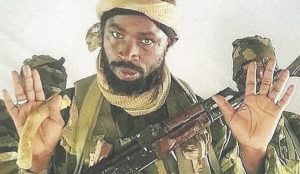
Founded by Mohammed Yusuf, an influential Muslim cleric and virulent advocate of Islamism in Nigeria, the Boko Haram group, whose official name is Jama’at Ahl as-Sunnah Wa lid Da’wah wa’l Jihad [Group of the people of Prophetic tradition of propagation and armed struggle] has as its ultimate goal the forceful obliteration of Nigeria and its replacement with an Islamic state.
True to their name, the Borno-based group started out in 2002 as an Islamist advocacy salafi movement that propagated [Da’wah] the return of the Muslim ‘ummah’ to the puritan prophetic tradition as a complete way of life [Ahl as-Sunnah]. And in the estimation of Yusuf, all forms of innovation not practiced by the Prophet of Islam, including Western education, a sin. But when the gradualist approach of Da’wah failed to achieve the implementation of Sharia in Borno State, an armed struggle [Jihad] was launched in 2010.
Since 2010 when the insurgency started, the Boko Haram terror group has killed thousands of people and displaced millions into camps both within and outside Nigeria. From staging massive bombing campaigns in urban centres, including Abuja, Nigeria’s capital city, to occupying territories in rural areas and sacking military formations, the Boko Haram insurgency has been Nigeria’s biggest security challenge after the Biafra/Nigeria civil war. And to contain what is essentially Nigeria’s greatest security challenge in supposedly peacetime, the federal government of Nigeria has equally launched the largest military operation to defeat Boko Haram and restore normalcy. Codenamed ‘Operation Hadin Kai,’ with air, land and water components, Nigeria’s military forces have been engaged in a war on terror and counterinsurgency in the North East for several years now.
While the military may have succeeded in containing and confining the insurgency to the north-east corner of the country, the war is nevertheless still raging with heavy civilian and military casualties.
Other News
And many worry that the confinement of Boko Haram insurgents to the North East might just be a strategy on the part of the terrorists to drain and exhaust the armed forces of Nigeria from one theatre of war and thereafter take over the country by a simple call to prayer.
The unending war on terror and the continuous loss of civilian and military lives calls to question the combat strategy of the armed forces and a need to review it urgently.
The armed forces of Nigeria, like counterparts all over the world, are not oriented for the asymmetrical and unconventional warfare that is being waged by the Boko Haram terror group. And this explains the limited success achieved so far in the theatre of war. To change the tide in the theatre of the war against terror and bring to a decisive end the decades-long conflict it will entail the armed forces changing the war from asymmetrical and non-conventional to symmetrical and conventional warfare as a final solution to this challenge.
And to achieve this final solution, Operation Hadin Kai should be renamed ‘Operation Wetie,’ as the new module of operation should shift from ground operations to sustained periods of aerial bombardment [wetting] of the entire combat area [Borno/Yobe axis] and to be followed with armoured and artillery clearance operations.
To avert civilian casualties, a safe corridor deep into Nigeria should be opened for mass evacuation of non-Boko Haram elements in the combat area, after which a comprehensive wetting of the area is sustained until insurgents are defeated once and for all. The leadership of the Nigerian state and the armed forces must adopt this option as the final solution before drone flying insurgents acquire sufficient air power capabilities enough to open another vista of the terror war on the Nigerian state.
The current spate of loss of military lives may be a strategy of the Boko Haram insurgents to make the North East theatre of war on terror Nigeria’s Vietnam, where they hope to exhaust the security forces of Nigeria before the entire country is left unprotected, hence falling under their control. Therefore, the authorities of the Nigerian state must not mistake the confinement of Boko Haram to the North East as a successful containment strategy. With bandits and other terror groups running riot across the country, the Boko Haram strategy of being restricted to the North East serves its purpose of making the region the Vietnam of Nigeria.
The only repentant terrorist is a dead one and, before it becomes too late, defence and national security policymakers must realize that the more time lags before this decisive approach is adopted as the final solution, the more legroom the Boko Haram insurgents have to outmanoeuvre Nigeria’s security forces and inch further towards their final objective. These policymakers must wake up to the reality that, for every one military life lost, a part of the Nigerian state dies and, if Nigeria loses all of its men, then Nigeria is lost the Boko Haram terror group.