Follow Us on Google

•Says N2trn loan applications awaiting funding
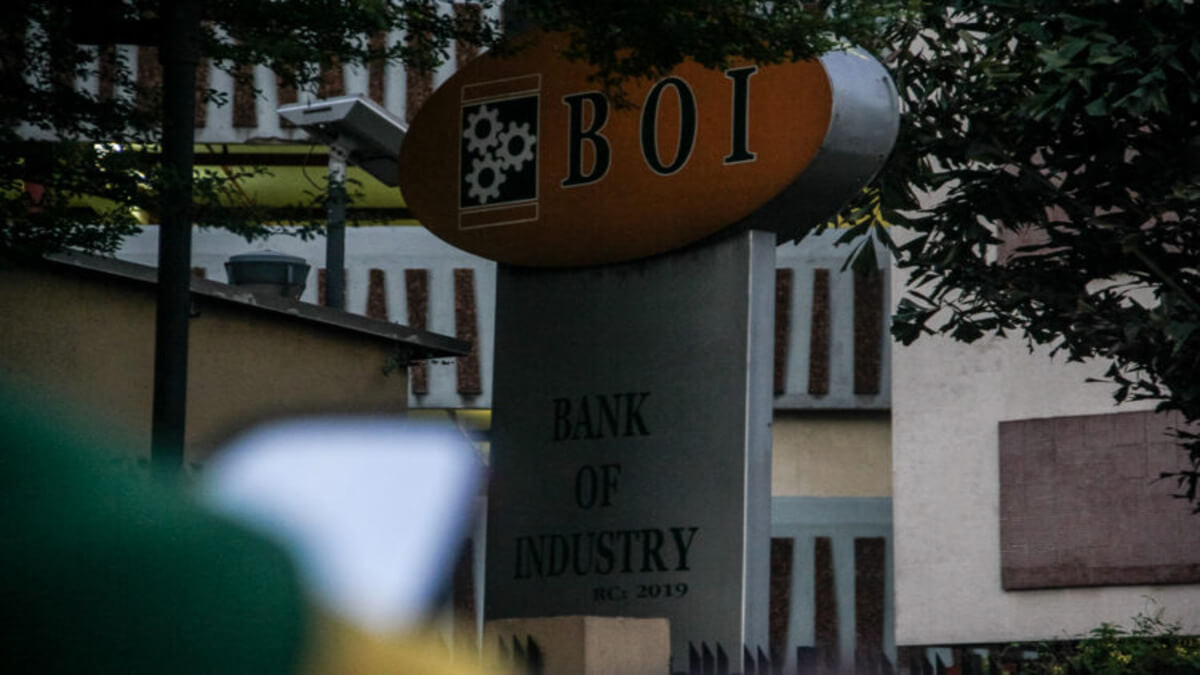
The Bank of Industry (BOI) is exploring cheaper funding options, including concessional loans from development finance institutions, to meet its financing needs and avoid returning to the international bond market if borrowing costs remain high.
The Managing Director of BOI, Olasupo Olusi, said the bank would consider issuing another Eurobond only if the cost was competitive with other available sources of funding.
He disclosed that the bank had secured a $200 million concessional facility from the African Development Bank (AfDB), with a 10-year repayment period, as part of efforts to strengthen its capacity to finance businesses and support economic growth.
Speaking on the bank’s funding strategy, Olusi said BOI was assessing different financing proposals and would prioritise sources that offered lower costs and a sustainable capital structure. He said: “Whether we will go back to the market depends on the price of other opportunities or options that we have. If a new bond is too expensive, we won’t even go back. We will go with other options.
“The objective is to optimise our sources of capital. The cheapest is an option, but it must also be one that we can grow with.” Olusi said the bank’s funding strategy was aimed at securing sufficient capital at competitive rates to expand its development finance activities.
He explained that proceeds from the N1.8 billion syndicated facility raised in 2024, alongside funding support from the Central Bank of Nigeria (CBN), had helped BOI increase financing to the manufacturing sector.
On the impact of its interventions, Olusi said the bank’s 2025 Annual Development Impact Report, audited by KPMG, showed that its activities funded 1.68 million jobs during the year.
He said BOI was strengthening its development impact reporting to provide verifiable evidence of its contributions to the economy rather than relying on unverified figures.
According to him, the bank does not independently measure its contribution to inflation, as such assessments are the responsibility of institutions such as the CBN and the National Bureau of Statistics.
However, he said BOI’s interventions help increase the availability of locally manufactured goods, reduce production losses and strengthen domestic supply chains.
On its 2026 outlook, Olusi said the bank was targeting better performance than it recorded in 2025, although he declined to disclose a specific financing target.
He said BOI had laid a solid foundation through its 2025-2027 strategy and was working to expand its reach across Nigeria’s production and entrepreneurial sectors.
The managing director also disclosed that the bank had a pipeline of loan applications worth more than N2 trillion awaiting funding, making additional capital mobilisation necessary to meet the financing needs of businesses.
He said BOI was strengthening its project development and financial advisory services to help businesses turn ideas into bankable projects.
To improve access to credit for micro, small and medium enterprises (MSMEs), Olusi said the bank had accredited auditors to help businesses improve their financial records and meet lending requirements.
He further disclosed that BOI had accessed a $50 million Federal Guarantee Fund to reduce lending risks and improve access to finance for businesses, particularly MSMEs.
He said: “We’ve also put together a solid de-risking mechanism to help Nigerians access finance. The President created a National Credit Guarantee Fund.
Other News
“For this particular reason. To ensure that they won’t de-risk projects. BOI internally got access to the $50 million Federal Guarantee Fund.
“Which will help us de-risk also MSMEs. Particularly those that are supported, those that are owned by a local government. So there’s a lot of opportunities.”
On agricultural financing, Olusi said BOI was working with the Bank of Agriculture (BOA), focusing mainly on processing, manufacturing and other downstream activities rather than primary farming.
He explained that the bank was supporting aggregators who obtain financing to provide smaller farmers with inputs and farming equipment while purchasing their produce as raw materials for manufacturing.
According to him, the arrangement would encourage local sourcing of raw materials, improve food security and strengthen the connection between agriculture and industry.
He stressed that Nigeria’s food security challenges required contributions from several financial institutions rather than depending on one development finance institution.
Citing CBN data, Olusi said BOI accounted for 6.5 per cent of the N3.4 trillion credit to the agricultural sector during the period under review, calling on other financial institutions to increase their contributions.
He said: “We are in collaboration with the Bank of Agriculture not in competition.
“But what we do is, where there is a gap and we can intervene in that gap, we definitely have to intervene. Yes, food security is very important to this nation. And we’re intervening in different ways when it comes to this.”
On manufacturing, Olusi said BOI’s interventions accounted for two per cent of Nigeria’s total manufacturing Gross Domestic Product (GDP), representing about 25 per cent of the sector’s eight per cent contribution to the country’s GDP.
He added that the bank was exploring investment opportunities in digital technology, climate and sustainability as part of efforts to broaden its development finance activities.
According to him, BOI’s digital sector programme is expected to attract more than $600 million in funding over the coming years, while projects in climate and sustainability are still being developed.
He expressed optimism that the initiatives would produce more visible economic results within the next one to two years.
Olusi said: “We are already advancing new capital raising engagements with quite a number of international partners, including the likes of the African Development Bank, the Agence Française de Dévelopment and also pursuing further fundraising opportunities that are available within our domestic capital markets.
“We have also expanded our financing toolkits with a non-interest banking products, which will enable us to promote financial inclusion and widen the range of financing structures available for eligible businesses who have interests in non-interest banking.”
He said BOI would continue to mobilise funds from domestic and international markets to sustain its lending programme and support businesses across different sectors of the economy.