Follow Us on Google
Football weekend in Nigeria starts before kickoff. The arguments begin in the morning, long before the teams walk out. Someone says Arsenal still cannot control midfield games. Someone else insists Chelsea are finally building a team that can survive a title race.
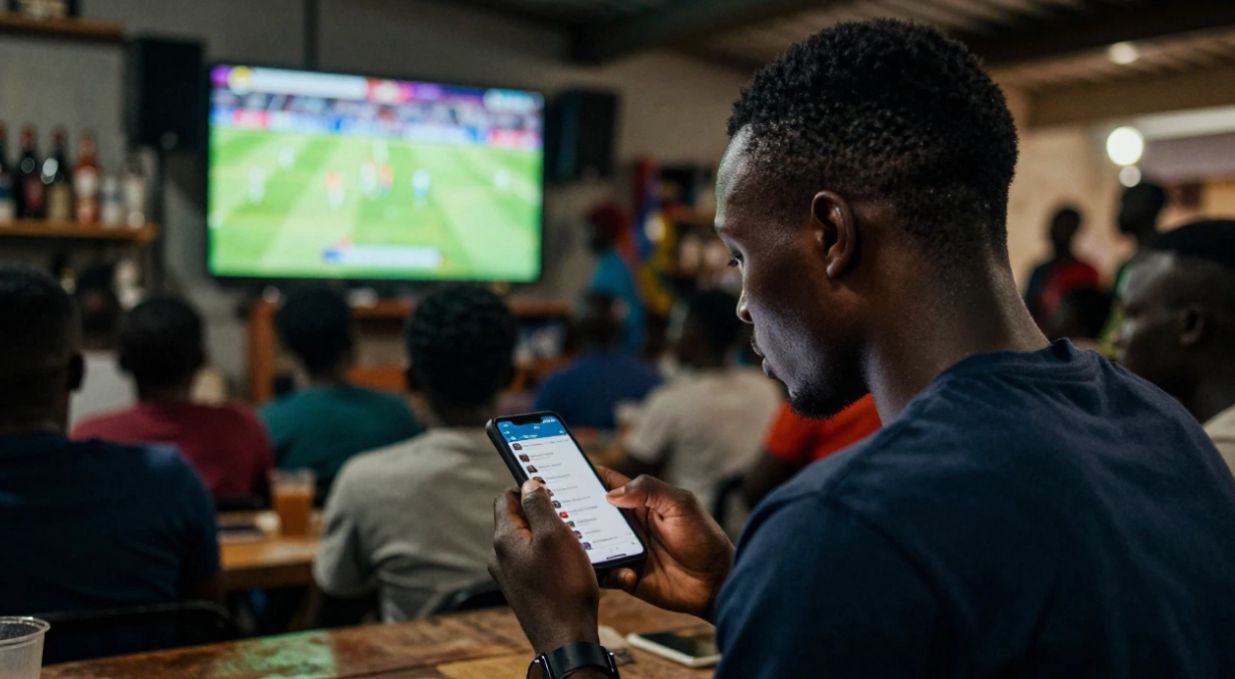
That ritual matters because it is bigger than entertainment. In Lagos, Abuja, Port Harcourt, and countless smaller cities, football is social currency. The viewing centre is not just a room with a screen. It is a stage where every fan becomes a tactician, scout, referee, and transfer expert for ninety minutes.
For years, that energy stayed inside the room. People shouted, mocked each other, celebrated, then went home. That is no longer how the cycle ends. The conversation now keeps moving through phones, and that shift has quietly changed the economics of fandom.
When Football Talk Becomes a Product
The loudest voice in the viewing centre used to earn reputation and nothing more. Today, the same person can host a post-match X Space, run a Telegram channel built around transfer rumours, or post fast lineup reactions on YouTube and WhatsApp. What once looked like raw fan energy can now be packaged into repeat content.
That is the real shift. Nigerian football passion has not changed. The infrastructure around it has. Cheap editing tools, mobile publishing, private communities, and always-on football discourse have turned casual debate into a digital asset.
The creators who understand this do not need a newsroom. A sharp admin in Surulere can build an Arsenal page around transfer drama and injury updates. Someone in Abuja can grow a Manchester United reaction channel. Another can focus on betting angles, team news, and short pre-match reads that people check before Premier League kickoff.
Why Virality Usually Leads Nowhere
The mistake is thinking attention alone pays. It does not. Plenty of football pages are noisy, highly shared, and full of comments, yet they never become stable businesses. Engagement looks impressive on the surface, but without structure it stays fragile.
The older model relied on random sponsored posts. A page landed a paid message, published it, took the fee, and waited for the next one. That can work for a while, but it does not build anything durable because the creator is still living from one-off moments instead of audience systems.
Smarter operators moved in another direction. They started treating football as recurring demand. There is always another title-race argument, another injury scare, another transfer panic, another referee scandal, another controversial result that sends people searching for reactions and explanations. Once that pattern becomes obvious, the goal stops being “go viral tonight” and becomes “build a repeat business around trust.”
The Business Layer Most Fans Ignore
This is where the conversation gets more serious. A football creator who can hold attention every week already owns something valuable. The page may still look informal, but underneath it is generating traffic habits, and traffic habits can be measured.
For small operators who run everything from a phone, the practical side matters more than the branding side. That is why interest in a Melbet partner app download makes sense in this context. Affiliate work is often just operational discipline: checking clicks after a big match, tracking registrations from a hot post, watching deposit movement, and seeing which content actually converts while the creator is still active in Telegram groups or matchday chats.
The bigger point is the model behind those tools. Affiliate marketing, in plain terms, means the creator brings users into a platform and gets paid based on measurable results instead of vague reach. That is a very different mindset from classic posting for impressions. It pushes football creators to think in terms of attribution, user behavior, repeat action, and long-term audience value rather than noise.
Why the Guidebook Angle Actually Helps
A lot of smaller football pages hear the phrase “affiliate marketing” and still do not fully understand what sits behind it. They know the idea of monetisation, but not the machinery: referral links, deep links, dashboards, filters, payout models, reporting logic, and conversion stages. That gap matters because creators often have audience instinct long before they have business clarity.
This is exactly where the explainer format becomes useful. The affiliate section under Melbet partners serves as a practical bridge, laying out the mechanics in a way that is easier to grasp than raw platform jargon. Instead of turning the topic into hard sell, it frames partnership as infrastructure: how traffic is tracked, why some campaigns suit RevShare while others fit CPA or hybrid models, and what a creator is actually looking at inside an account.
That matters in Nigeria because many of the strongest football communities are not giant media brands. They are compact, trusted circles built around club gossip, lineup reads, odds talk, and fast match reactions. For people running those circles, the hard part is rarely attracting football emotion. The hard part is turning that emotion into something measurable and repeatable without losing credibility.
From Chelsea Gossip to Monthly Income
The believable success stories rarely start with a business plan. Someone begins by posting Chelsea transfer updates because the audience reacts to every rumor. Another builds an Arsenal page around frustration, team news, and post-match analysis. A third opens a Telegram channel for lineups, short tactical notes, and odds movement before kickoff.
At first, the numbers are small. Then the same followers come back before major matches instead of finding the page by accident. That is the turning point. The creator is no longer posting for friends. The creator is managing a crowd with habits.
That is also where discipline separates hobby pages from real operators. Serious creators learn which clubs drive the best engagement, which headlines pull clicks without killing trust, and which formats bring useful traffic rather than empty reactions. Football does not become easy money. It becomes digital property that rewards consistency, judgment, and timing.
This is why the story goes beyond sport. Football in Nigeria is still identity, noise, tribal loyalty, and release. The viewing centre still matters. The arguments still matter. The emotional part has not gone anywhere.
What changed is what happens next. Debate becomes content. Content becomes community. Community, when handled properly, can become income. For a growing number of Nigerian fans, football is no longer only something to watch and argue about. It is becoming a niche, a skill, and, for the sharpest operators, a serious digital business.