Follow Us on Google
This article is presented in three interconnected parts, each examining a different layer of Nigeria’s present crisis. Taken together, they reflect on the warning signs history provides, the deepening fractures within our nation, and the growing temptation to look outward for salvation rather than inward for reform. In this first part, the focus is on how Nigeria arrived at this troubling moment – where persistent internal violence, failed leadership, and widening divisions have collided with unprecedented external scrutiny. It revisits earlier warnings, interrogates the dangers of personality cults in global politics, and questions the emerging belief that Nigeria’s redemption must come from a foreign strongman rather than from national responsibility and institutional renewal.
As a student of history, I have learned that nations rarely collapse without warning.
The signs are often written plainly – in blood, in broken trust, in reckless rhetoric, and in the growing distance between a people and those entrusted with their leadership. It is from this historical consciousness that I observe, with deep concern, recent developments surrounding our nation’s security: the persistent killings, the brazen acts of violence across regions, and what increasingly appears to be a deliberate effort by unseen hands to render Nigeria ungovernable.
These troubling internal challenges have now been compounded by external commentary. The recent statements attributed to the President of the United States, followed closely by what can only be described as a shameful and humiliating deliberation by the U.S. Congress on Nigeria, represent a new low in how our country is perceived on the global stage. For a nation that once commanded respect as Africa’s giant, such scrutiny is not only painful – it is alarming. History teaches us that when foreign powers begin to openly debate the fate of a sovereign nation, it is often because that nation has failed to put its own house in order.
This dangerous convergence of internal chaos and external judgment stirred something familiar in me. It took my mind back, vividly, to an article I wrote on this same column exactly five years ago, bearing the title “Nigeria, My Country, So Divided.” At the time, it was a warning – born not of pessimism, but of careful observation. That article was published in my weekly columns in The Sun, The Pointer, and online platforms, where it sought to draw attention to the widening fault lines threatening our national cohesion. It is doubtful – indeed, deeply regrettable that many of today’s leaders ever read that article. If they did, perhaps they dismissed it as alarmist, or as the musings of an aging observer. Yet, looking at Nigeria today, one cannot escape the unsettling feeling that the piece was not merely prescient, but prophetic. The divisions I wrote about then – ethnic, religious, political, and economic have not healed. Instead, they have widened, hardened, and become weaponized.
Ironically, I had almost forgotten about that article myself, buried as it was under the weight of time and newer national tragedies. That was until I received an unexpected call from a longtime friend. In a tone that blended humor with seriousness, he referred to me as “the man who saw the future.” That remark jolted my memory and forced me to revisit the article. As I read through it again, I was struck by how little had changed – and how much worse things had become.
What I saw was a mirror held up to our present reality: A nation fragmented by mistrust, governed by short-term calculations, and drifting dangerously without a unifying moral compass. The warning signs I identified five years ago are now impossible to ignore. They stare at us daily – from the headlines, from mass graves, from displaced communities, and from the quiet despair of ordinary Nigerians who no longer believe that tomorrow will be better than today.
Other News
Yet while our internal discord is tragic enough, there is now another development that should trouble every thoughtful Nigerian and global observer alike – an emerging narrative that what Nigeria lacks most is external salvation. We are watching, in real time, as some hold their breath for foreign intervention, as if our future hinges on a distant strongman rather than on our own resolve.
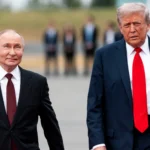
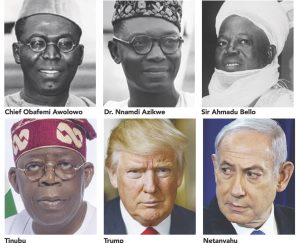
In recent months, there have been reports that senior NATO officials described U.S. President Donald J. Trump as uniquely capable of brokering peace in ongoing global conflicts. According to official White House communications, world leaders at an international peace summit praised Trump for his role in efforts toward a path to peace in Ukraine, with comments suggesting that such breakthroughs may not have been possible without his leadership. In addition, Trump himself publicly stated concerning Nigeria: “They’re killing record numbers of Christians in Nigeria.
They’re killing the Christians and killing them in very large numbers. We’re not going to allow that to happen… If we attack, it will be fast, vicious, and sweet, just like the terrorist thugs attack our CHERISHED Christians!”
Israeli Prime Minister Benjamin Netanyahu also weighed in, stating: “The persecution of Christians or members of any religion cannot and must not be tolerated. And the displacement and attacks against Christians in Nigeria, that too must end. And it must end now… Israel is the only country in the Middle East where Christians can practice their faith with full rights and in total freedom, where Christian pilgrims are embraced with open arms and are so deeply appreciated, where Christians can celebrate their traditions proudly and openly without any fear.”
If correct, this portrayal reflects more than admiration; it reflects a dangerous global fixation on the idea that peace must come from one man. History is not kind to such thinking. Twelve decades ago, a similar myth grew around Adolf Hitler, who was once seen by some as a strong figure who could restore order in Europe. Instead, his rise led to the deadliest conflict humanity had ever seen. World leaders of that era mistakenly believed that appeasing or relying on Hitler’s supposed greatness would secure peace; they were wrong. Appeasement did not prevent war – it emboldened aggression and widened catastrophe.
Modern political science has studied this phenomenon extensively. Personality cults, where societies elevate leaders to near-messianic status, carry enormous dangers.
Studies show that when leaders are portrayed as unique saviors, individuals above constraints of institutions or norms – governance becomes hyper-personalized and prone to instability. In some cases, such dynamics mirror religious devotion rather than critical political judgment. Examples abound. Around the world, figures like Venezuela’s Hugo Chávez and his successor stirred devotion not just through policy but through emotive identification with followers, often at the expense of
institutional checks and balances. Scholars have noted that populist leaders – whether in Caracas or Washington tend to centralize power and frame their leadership as indispensable for survival, a condition that undermines orderly governance.