Follow Us on Google
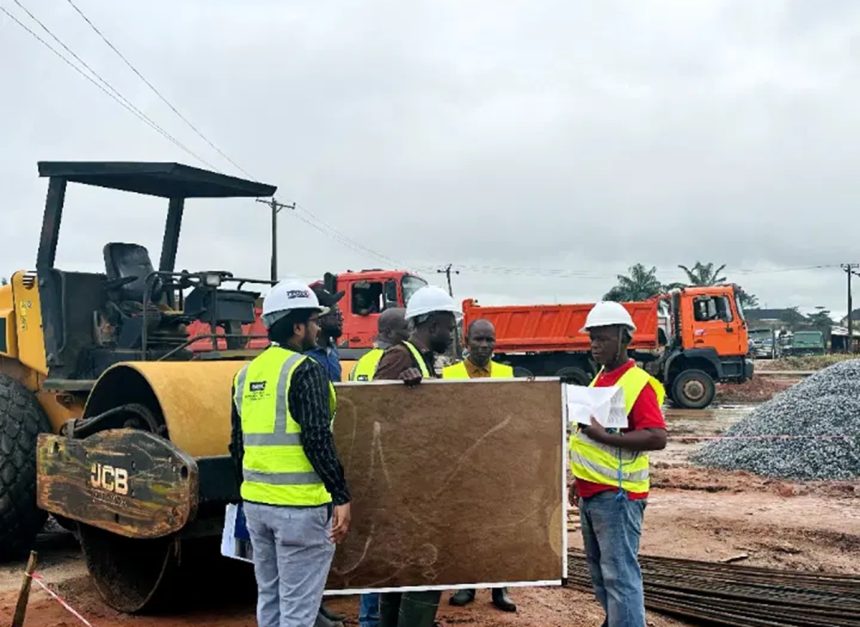
The controversy over the Benin-Asaba Expressway goes beyond the condition of a major highway or the performance of its concessionaire. It has also raised questions about Nigeria’s credibility in using Public-Private Partnerships (PPPs) to develop critical infrastructure.
The Benin-Asaba Expressway is being developed under a PPP arrangement in which private investors provide funding and technical expertise for a project traditionally financed by the government.
The concession was approved by the Federal Executive Council in January 2023 and signed in May 2023. It is structured as a 25-year Design, Finance, Build, Operate and Transfer arrangement.
Under the agreement, BAECC is not merely a contractor engaged to construct the road and leave. It is the concessionaire responsible for the road asset under a long-term agreement that defines the rights and obligations of both the government and the private sector.
This distinction has become important following suggestions that another contractor could be brought in to work on parts of the concessioned corridor.
While such an intervention could appear attractive given the complaints from motorists over the condition of the road, it raises questions about responsibility for the affected sections.
If another contractor reconstructs part of the highway, questions arise over who will be responsible for the work, who will guarantee it, who will finance its maintenance and who will be held accountable if the pavement later fails.
There is also the question of how the original concessionaire can remain responsible for the performance of an asset over which another company has assumed construction control.
These issues are central to the operation of PPPs because a concession agreement establishes a framework for the sharing of responsibilities, risks and obligations between government and the private sector.
BAECC maintains that the concession remains valid and that it has not relinquished any part of the corridor.
If that position is correct, any intervention by another contractor would need to take account of the existing contractual arrangement rather than treating the concession as though it no longer exists.
However, the existence of a concession does not remove the government’s responsibility to protect motorists or ensure that agreed obligations are met.
Where project milestones have been missed, they should be identified and addressed. Where engineering standards have not been met, corrective action should be demanded. And where motorists are facing unnecessary hardship, urgent measures should be taken to reduce the impact.
In the same way, accountability must operate within the contractual framework governing the project.
The issue has implications beyond the Benin-Asaba corridor because Nigeria needs large amounts of private capital to close its infrastructure gap.
Government revenue alone cannot finance all the roads, bridges, railways, power projects and other infrastructure required across the country.
Other News
Private investment is, therefore, expected to play a growing role in infrastructure development. But investors also need confidence that long-term agreements will be respected.
For investors committing billions of naira to projects lasting 20 or 25 years, key questions include whether contracts will remain valid when political administrations change, whether disputes will be resolved through established procedures and whether the government can enforce performance without undermining the contractual rights that encouraged the investment in the first place.
The outcome of the Benin-Asaba dispute will therefore be watched by banks, infrastructure funds, pension funds, foreign investors and other companies considering participation in Nigeria’s infrastructure sector.
The issue is not whether the government should demand performance from a concessionaire or whether a concessionaire should be allowed to escape its obligations. Both sides have responsibilities.
The central principle should be reciprocity: the government respects the concessionaire’s contractual rights, while the concessionaire fulfils its contractual obligations.
BAECC has acknowledged the difficulties faced by motorists and said substantial construction work has been carried out and billions of naira in private resources committed to the project.
The company has also attributed some of the challenges to persistent rainfall, which it said has affected earthworks, drainage, pavement stabilisation and asphalt operations.
Those claims, however, can be tested against the project’s agreed milestones, technical requirements and contractual obligations.
Rather than allowing the dispute to develop into competing public statements, the government and concessionaire can use the existing contractual and institutional mechanisms to establish what has been completed, what remains outstanding and what corrective measures are required.
Where emergency intervention is necessary, it can be coordinated within the existing framework. If additional technical capacity is required, the parties can determine how another contractor or technical partner can be involved without creating confusion over responsibility.
And if the concession arrangement ultimately becomes unsustainable, the agreement should provide the process for resolving the situation.
For motorists travelling between Benin and Asaba, however, the immediate concern is much simpler: they want the road fixed.
That urgency should not be lost in the broader debate over PPPs.
At the same time, how the road is fixed matters because Nigeria will require many more privately financed infrastructure projects in the years ahead.
The Benin-Asaba Expressway therefore presents an opportunity to demonstrate that the government can protect citizens and enforce performance while respecting valid contracts, and that private companies can be held accountable without making long-term investment agreements uncertain.
The road carries motorists, goods and economic activity between two major cities. But the manner in which its challenges are resolved could also influence confidence in Nigeria’s ability to use private capital to deliver critical infrastructure.