Follow Us on Google

• We sleep, wake up in distress –Parents • Ohanaeze, Afenifere call for state police, halt in political activities, Northern groups task FG to focus on rescue efforts
• NSCDC retool Safe Schools Initiative, say programme has prevented many abductions
By Oluseye Ojo (Lagos), Kunle Olafioye, Lagos, Noah Ebije (Kaduna), Isaac Anumihe, Abuja and Jude Chinedu, Enugu
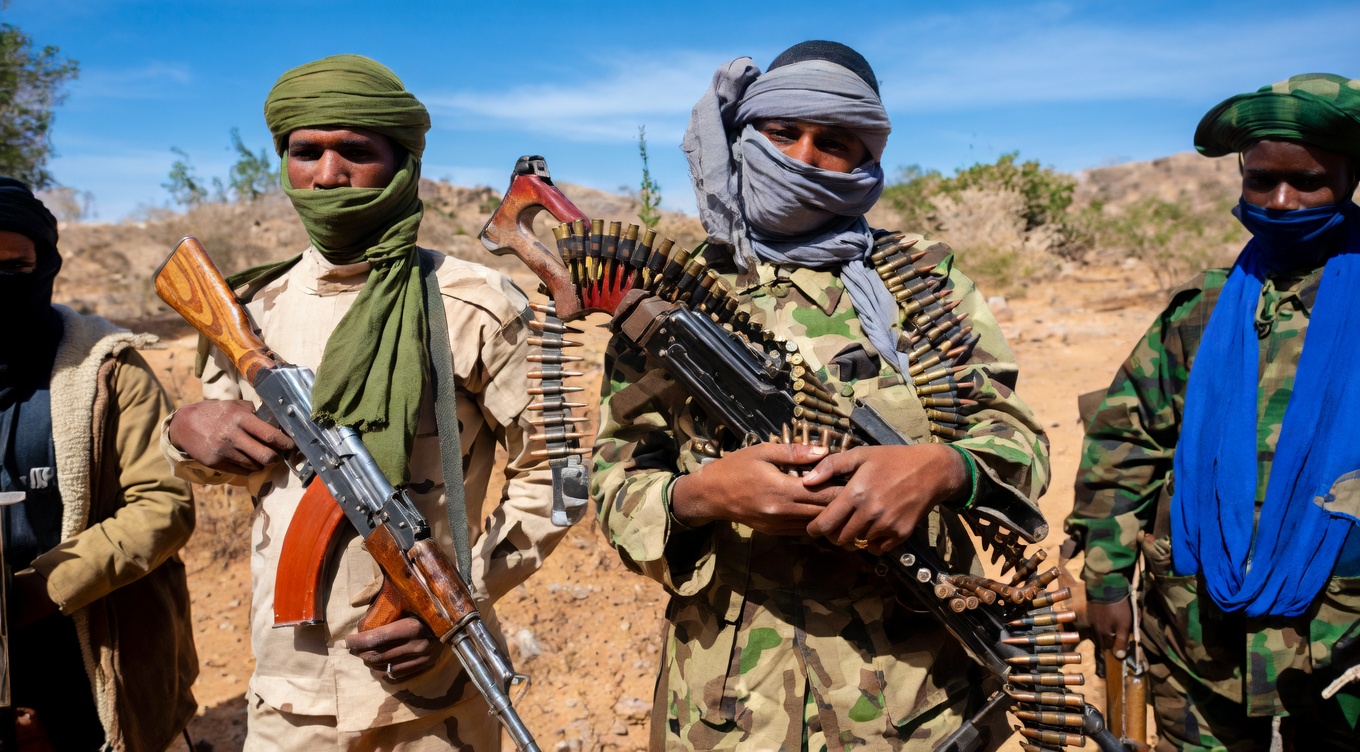
Attacks by terrorists within the last one month and the mass abductions of pupils and their teachers, as well as the deaths of some of the innocent victims, has struck fear in parents and heightened concern over the situation of the kidnap victims, who have been in captivity for 28 days.
The sudden and desperate move by bandits to abduct children from schools has engraved palpable fear and emotional torture in the minds of many children. Indeed, at the moment, learning in some parts of the country is gradually becoming a nightmare.
There is apprehension among pupils, teachers, parents and guardians, as the governments seems unsure of how to curtail the problem.
In the past four weeks, there have been a number of attacks on schools across the country. But two remain unforgettable experiences.
On May 15, 2026, armed bandits attacked three schools in the Oriire Local Government Area of Oyo State, abducting 46 individuals. The captives include 39 students (ranging from primary pupils to secondary students) and seven teachers. One teacher and an assistant headmaster were killed during the initial raid, and a mathematics teacher was beheaded in captivity.
On the same day, suspected Boko Haram insurgents attacked schools in the Mussa community of Askira-Uba Local Government Area, Borno State, abducting between 42 and 50 schoolchildren. The brazen raid targeted the Mussa Central Primary School, Government Day Junior Secondary School, and a local SUBEB school.
On Wednesday, there were reports of tension and sorrow in the Iluke Bunu community in Kogi State, as bandits reportedly killed the Vice Principal of Government Secondary School, Iluke and abducted candidates preparing for the West African Examinations Council.
And on Thursday night, another fresh round of abductions took place in Ifelodun Local Government Area of Kwara state, involving many victims.
There have been several rumours of abductions and schools shutting down and dismissing students to avert mass abductions of their students since then. But the police and other security agencies have described such rumours as fake news.
The desperation and the ease with which the terrorists operate and get away, has posed a serious concern to Nigerians with many parents withdrawing or stopping their children or wards from going to school.
Also, teachers and school operators live in fear of the unknown. They shut their schools intermittently and send their students home at the slightest terror rumour.
In the wake of the abductions and other terrorist strikes across the country, people from all walks of life have been speaking on the rapidly deteriorating security situation, even as they fume that the political parties have carried on with their schemes towards the 2027 General Elections.
Parents in panic mode
A parent known in the community as Abuchi and whose child is schooling in Christ Redeemers Academy in Nasarawa State, said that he is very apprehensive on the consistent attacks against students across the country.
According to him, his wife had to rush to the school one day to pick his child when there was a rumour that kidnappers were lurking around the vicinity.
“The government should deploy enough security to guard the schools. And the schools should not be a prison yard. Their fence should be low so that people will know what’s happening,” he said.
Mrs Nana Florence who has his daughter at Methodist High School, Masaka, told Saturday Sun that she once had a ward but that, because of the indiscriminate attacks and kidnappings in the country, she had to take her back to her parents. For her, it’s like the government has lost control of security and everyone is on their own.
Adeola Sampson, whose daughter is in boarding school in Jos, said that she sleeps and wakes up in fear without knowing what to do.
“In my office, my mind is on my child. It affects my productivity. The government should help us. Does it mean that the children cannot go to school? I have discussed with my husband to bring her closer to us” he stated.
Leaders of ethnic nationalities raise concerns
Leaders of the notable ethnic nationalities have been strident in advocating that the Federal and State governments should wake up, confront and break the worsening siege against the country.
The Yoruba pan-political organisation, Afenifere, said that Nigeria is facing a grave security emergency that requires extraordinary measures.
National Publicity Secretary of the organisation, Mr. Jare Ajayi, expressed the position of Afenifere, when contacted by Saturday Sun.
“Nigeria cannot afford to allow mass abductions, terrorism and banditry to become the norm. The time for half-measures has passed. What is required now is bold leadership, urgent action and a clear demonstration that the safety and security of Nigerians remain the foremost responsibility of the government,” Ajayi.
In addition to the recent abduction incidents, he cited attacks on security offices in different parts of the country, sporadic kidnappings such as that of Mrs Olaide John-Paul as well as Major General Rabe (rtd) and his wife.
According to him, the situation has not only made people to be living in fear, various economic activities, particularly agriculture, are suffering greatly as workers in the sector are afraid of the apparent threats to their lives and property.
“Afenifere has consistently maintained that the present security architecture has become overstretched and is no longer sufficient to effectively confront the challenges of terrorism, banditry, kidnapping and other violent crimes that are now rife in various parts of the country.
“This is why we have repeatedly called for the immediate establishment of state police. The current situation has further reinforced the urgency of that demand. Indeed, such a police formation should go down to the community level.
“Criminals are becoming increasingly sophisticated and heavily armed. It is therefore necessary for lawful security structures at the sub-national levels to possess the capacity required to protect lives and property within the ambit of the law.”
On the issue of ransom payments, Afenifere maintained that the government must focus on making kidnapping and banditry unprofitable ventures.
Ajayi noted that while families often find themselves in painful and desperate circumstances when loved ones are abducted, the long-term solution lies in strengthening intelligence operations, dismantling criminal networks, rescuing victims promptly and ensuring that kidnappers face swift justice.
Afenifere spokesman also said that possible foreign interests or involvement should not be ruled out.
Concerning calls made on the government to engage mercenaries, Afenifere stated that the overriding consideration should be the effectiveness of any strategy adopted to defeat terrorists, bandits and kidnappers.
“Where existing approaches are proving inadequate, the government should be willing to consider every lawful and practical option that can help restore security, provided such measures are not detrimental to Nigeria’s sovereignty and national interest.
“Afenifere also believes that the escalating insecurity in the country should compel political leaders across party lines to demonstrate greater sensitivity and patriotism.
“The protection of lives and property is the primary purpose of the government. Political activities should not distract attention from the urgent task of securing the country and restoring public confidence.”
“The Federal Government must therefore treat the current situation as a national emergency. Beyond immediate rescue efforts, there is an urgent need for far-reaching reforms, including state police, improved intelligence gathering, modern security technology, better inter-agency coordination, stronger border control and greater support for legitimate community-based security initiatives.”
Speaking from Kaduna State, the current National President of the Southern Kaduna Peoples Union (SOKAPU), Samuel Tabara Kato, who spoke with Saturday Sun, fumed over the deepening menace of the terrorists all over the country, particularly the abduction of school children in Borno and Oyo states.
“Enough is enough of the banditry and terrorism in Nigeria. SOKAPU demands immediate rescue of abducted children and sweeping security reforms. Payment of ransom amounts to state and citizens sponsorship of terrorism.
“Nothing short of total incarceration of the sponsors and perpetrators of terrorism will be the solution. It will not be out of place to suspend electioneering activities in the entire country until these children are recovered. There is urgent need to broaden the scope of military cooperation with the USA government to tackle this menace comprehensively,” Kato said.
On his part, National Publicity Secretary of the Arewa Consultative Forum (ACF), Tukur Muhammad-Baba said: “The problem of banditry and terrorism has been allowed to fester for too long. It seems to me that the government has been very slow in fighting this scourge. So it’s not surprising that all these desperate measures have been suggested.
“The simple fact is that this banditry and terrorism problem is expanding and the response from government has not been encouraging. Why? The reason is that the government’s measures have not been effective.
“The problem keeps expanding into many dimensions. Of course, nobody wants to pay ransom to terrorists and kidnappers, but then when you have a family – the husband, children, wife, the mothers and so on, are under the control of bandits, what else do you want them to do if they don’t pay ransom?
Mohammad-Baba urged the government to address the issue of state police, because for too long, successive administrations had paid lip service to the issue, noting that it is a constitutional issue.
His words: “There is just no seriousness in fighting this scourge. Nigerians want to see action. That is why I fully endorse the recent call by the Emir of Argungu, who said that communities need to stand up and rescue themselves. So, government should look into the possibility of making that practical.
Other News
“We cannot just sit down and allow terrorists to be taking over our lives, stopping us from farming, traveling, and harassing our families.
“There has to be a strategy that is implementable. It goes beyond mere rhetoric and pronouncements and so on. The country wants results and nobody cares about where it comes from, even if the government will bring in mercenaries.”
Chairman of Northern Christian Elders Forum (NOSCEF), Elder Sunday Oibe, lamented the situation saying, “It is unfortunate. This is a thing that I don’t want to be talking about. But I’m forced to talk about it because Nigeria is in a very dire state that all of us need to cry out.
“In the first place, there is no organized group that can be stronger than government. If the government is determined to win this war, this war could have been won against the bandit. What is the percentage of the bandit compared to the number of the military we have?
“If the government demonstrates the willpower, this issue of banditry can be done with in this scientific age. Why would the government not invest in using drones to smoke these people out from their hideout?
“Again, most of these people who are said to be the sponsors are in government. Why is government pretending? Have you forgotten that not quite long ago, we had some political appointees saying that these bandits are their brothers? People like that should be held accountable. Some of the people who caused this problem, when they recruited them to overthrow Jonathan to bring Buhari in, are still alive and some of them are in government. So we have had enough of this hide and seek. Nigerians are tired of it.
“In my opinion, it is not the lack of the capacity of the police, the military and the Department of State Services to crush these people. It is the lack of the political will by the political leaders to descend on these people.
“We have to deal with a number of questions: what is the job of some of these people who call bandits their brothers? What are they doing in government? Why is President Bola Tinubu keeping quiet? The first thing is to prove to Nigerians that they are serious. To show that they are concerned about this, the Federal Government should have suspended anything to do with the Democracy Day, because you cannot go into a celebration where our children, innocent children who went to school to better their tomorrow are in the hand of those bandits. What are you celebrating?
“If their own sons and daughters were in the hand of the bandits, would they celebrate? There should be nothing like that in this country. We are in a mourning situation. Nigeria is mourning. And until that is done, we should not go into that. Every political activity should be suspended until these people are brought back.
Every day they are killing our soldiers. If the soldiers want to engage them, they say there is no order from above. Let them use this modern technology to smoke these guys out. That is the call from Nigeria.
It is not whether it is the state police or the local government police or the world police. That is not the answer to this.
The question is: do we have the capacity to demonstrate the political will to smoke these guys out? Do we have the capacity? The Nigerian government has the capacity. Do we have the political will?
They don’t want to demonstrate political will because they are part and parcel of these bandits who are causing us pain.
In similar manner, Convener of Arewa Think Tank (ATT), Muhammad Alhaji Yakubu, expressed deep concern over the disturbing resurgence of mass abductions of school children and innocent citizens across parts of the country.
He said that the recent abductions in Borno and Oyo states had once again highlighted the urgent need for sustained and decisive action against terrorism, banditry, and other forms of violent criminality threatening the peace and stability of Nigeria.
“While acknowledging the significant gains recorded in recent years against insurgency and banditry in several parts of the country, he said that the latest incidents demonstrate that more coordinated and robust measures are required to completely dismantle the networks of terrorists and kidnappers.
The Arewa Think Tank noted with interest the growing public calls for drastic interventions, including the engagement of specialised security expert, where necessary, accelerated consideration of state policing, the strengthening of community-based security structures, enhanced support for vigilante organizations operating within the ambit of the law, and improved intelligence gathering and surveillance capabilities.
Still speaking on behalf of ATT, Muhammad emphasised that the activities of kidnappers and terrorists must never be allowed to become a profitable enterprise. He said that government at all levels must continue to develop strategies that deny criminal groups the resources, logistics, and operational freedom that sustain their activities.
Security experts offer caution
Security experts say Nigeria’s critical security challenge comes with limited viable options. While many Nigerians have called on the government to explore the option of mercenaries in tackling the rising banditry and kidnapping in the country, security experts said the suggestion could pose graver consequences for the nation. A frontline security expert, Jackson Lekan-ojo called for caution, warning that such a move could create more problems than it solves.
According to him, Nigerians must first ask critical questions: “Who are the people perpetrating atrocities across the country? Who sponsors them, and where do they obtain the sophisticated weapons they use?
“When you see individuals who appear impoverished and poorly equipped in every other respect, yet they possess bombs, rocket launchers, submachine guns and general-purpose machine guns that are clearly beyond their means, you have to ask where these weapons are coming from. They are certainly coming from somewhere, and someone is providing them,” he said.
He further recalled predictions made years ago by some foreign interests that Nigeria would break apart, noting that the country has remained united despite numerous challenges.
“Engaging foreign mercenaries could amount to giving legal access to the very people or interests that may be sponsoring or encouraging the insecurity we are facing today. We must therefore be extremely careful,” he warned.
On whether the government should ban ransom payments, he said: “From a global security perspective, discouraging ransom payments is the ideal approach because ransom ultimately finances criminal networks and enables them to carry out further attacks.”
However, he noted that where the government lacks the capacity to secure the release of abducted victims through security operations, families are often left with no alternative.
“The easiest way to dismantle these criminal networks is not necessarily to ban ransom payments outright, but to use intelligence and technology to track and apprehend the perpetrators. Communication channels can be monitored, ransom delivery routes can be tracked, and surveillance assets can be deployed to identify and arrest those involved.”
He expressed concern over situations where some kidnap victims remain in captivity for extended periods while others are rescued quickly because of their status or influence.
He concluded that Nigeria’s security strategy should prioritise human intelligence, advanced surveillance technology, CCTV coverage and other modern intelligence-gathering tools, describing them as more effective and sustainable solutions to the country’s security challenges.
Also speaking, a security consultant and safety administrator, Rotimi Aromolaran, said encouraging ransom would fuel criminal activities and undermine government’s efforts to fight insecurity.
His words: “Extracting ransom is a grave crime, and exchanging money for the release of kidnapped victims only fuels criminal activities and undermines efforts to curb the menace.
“The payment of ransom to bandits is unacceptable and requires serious national reconsideration. The exorbitant sums being demanded and paid have become unbearable, making it imperative for the government and relevant stakeholders to adopt more decisive and effective measures.”
Aromolaran also kicked against the use of mercenaries in fighting insecurity in the country. Rather, he wants the government to localise the war against insecurity.
“Community involvement in security should be strongly encouraged rather than relying on foreign mercenaries. The forest guard initiative represents a community-based security strategy that can significantly strengthen security in the country. Local residents possess valuable knowledge of their environment and can provide timely intelligence on suspicious activities.
“ In addition, our police force should be equipped with more advanced training, modern technology, and efficient information-sharing systems to enhance intelligence gathering and rapid response capabilities. A combination of community participation and a well-trained, well-equipped police force offers a more sustainable approach to addressing security challenges,” he said.
Human rights advocate, Dr Lemmy Ughegbe suggested a consistent bombardment instead of attacking and allowing them to recover and regroup.
In his opinion, Nigerian security is inadequate and so the government should seek help from Israel, Turkey, and United States of America. He equally gave a thumbs down on corruption which remained an albatross to good policies in Nigeria.
“So what we require is help from Israel, Turkey and help from the USA. But it must be sporadic and consistent so that we can reduce to the barest minimum these terrorists who are all over the place” he said.
We’ve averted many abductions silently –NSCDC
Despite the outrage, Nigerian Security and Civil Defence Corps (NSCDC) said that it has strengthened and retooled its network to ensure that schoolchildren are secure.
According to the Assistant Commandant of Corps (ACC), and National Public Relations Officer (PRO) of NSCDC, Babawale Afolabi, because of the sporadic attacks by the bandits, the corps has established sub-centres across all 36 states, further supported by dedicated Safe School Desk Officers across the 774 Local Government Areas.
He further noted that the corps had foiled many attacks and pre-empted attacks which were not in the public glare, adding that the silence on the victories is a matter of operational security, not inactivity.
“The Safe School Initiative remains a top priority for the Federal Government, and the Nigeria Security and Civil Defence Corps (NSCDC) is unyielding in its commitment to securing our educational institutions.
“While the threat environment is dynamic, it is important to understand the massive framework the corps has established to combat this menace
“The National Safe Schools Response Co-ordination Centre (NSSRCC) is fully operational at our National Headquarters. This is not a standalone effort; it is a highly integrated hub featuring dedicated desks from the Department of State Services (DSS), the Nigerian Army, and other sister agencies.
“To ensure rapid response, we have successfully decentralised this initiative by establishing sub-centres across all 36 states, further supported by dedicated Safe School Desk Officers across the 774 Local Government Areas.
“Media reports naturally focus on incidents that occur, but what remains largely unseen are the countless tragedies our operatives successfully avert. Due to the highly sensitive nature of counter-terrorism and intelligence operations, many foiled attacks and pre-emptive interventions cannot be broadcast to the public. Our silence on these victories is a matter of operational security, not inactivity.
“Furthermore, we have institutionalised a culture of proactive engagement. The NSCDC continuously collaborates with teachers’ associations, school administrators, and community stakeholders, conducting regular security audits and awareness campaigns to harden potential targets.
“Our vulnerability assessments reveal that many schools still lack basic security infrastructure, such as perimeter fencing and controlled access points. While we continue to advise relevant authorities on these structural necessities, the absolute cornerstone of modern policing is intelligence-led security.
“Security is inherently a collective responsibility. The reality of asymmetric warfare is that state actors and uniform personnel cannot be stationary at every single school simultaneously. However, the perpetrators of these crimes live within our communities.
“This is not a time for blame or despondency; it is a time for heightened vigilance and national synergy. We call upon traditional rulers, community leaders, religious bodies, and citizens to actively partner with us.
“The most effective security strategy begins with localised intelligence. When citizens ‘see something and say something,’ it empowers our constantly deploying patrols to act swiftly. The NSCDC, alongside our sister agencies, remains entirely resolute. We will not relent in our constitutional duty to safeguard the future of Nigeria and our children,” Afolabi said.