Follow Us on Google

By Benjamin Tochi Praise
Every nation keeps two ledgers. One records what has gone wrong: the broken road, the delayed salary, the promise that evaporated between the podium and the budget. The other records what has been built, often quietly, by people who had no appointment to do so and no guarantee of applause.
Nigeria’s first ledger is well kept. We read it daily. We recite it at the roadside, in the market, in the newsroom and, increasingly, on the screens in our palms. It is thick, and it is honest, and I have contributed to it myself. A journalist who flinches from recording national failure has no business holding a pen. But a hard journalist must be an honest one, and honesty is not the same as gloom. A reporter who tallies only the wreckage has not told the whole truth. He has told the convenient half. The second ledger, the one recording what Nigerians have made, mended, taught, planted and printed, is thinner only because we have stopped.
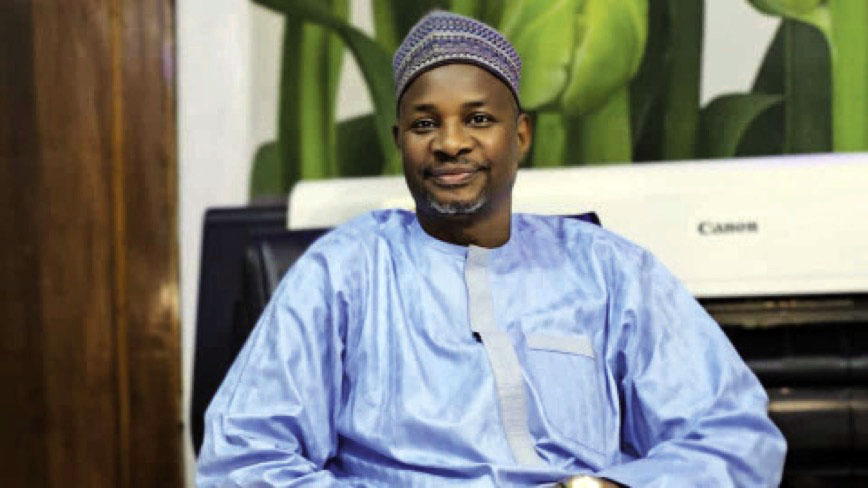
It is in this light that I invite the reader to consider the life and work of Badamasi Shuaibu Burji. The name of Badamasi Shuaibu Burji may be familiar to readers in Kano and in the publishing and manufacturing circles of Abuja. To the wider public, it deserves to be more so, for this is precisely the kind of story Nigeria tells too seldom. Dr. Burji is a journalist, an author, an industrialist and a philanthropist. He celebrated his birthday yesterday. He comes from Kano State, and his work has remained tethered to the soil that raised him. Rather than treating his success as a passport out of his community, he made it a bridge back into it.
In 2017, he established the Badamasi Burji Foundation. Its purpose was not ornamental. The foundation built nursery, primary, and secondary schools at scale, and in his hometown of Burji in the Doguwa Local Government Area of Kano State, the First Agricultural Academy, which is free to attend. Consider what those words mean in practice. In a country where millions of children are out of school, a man looked at the statistic that so many of us merely lament and decided to convert it into classrooms. The schools have since provided full scholarships, free uniforms, and learning materials to more than 5,000 underprivileged and out-of-school children.
Five thousand is not an abstraction. It is 5,000 children who might otherwise have spent those years on the margins: five thousand reading primers opened, 5,000 uniforms pressed, 5,000 futures nudged from the improbable towards the possible. And because education compounds, each of those children will in turn influence households, trades and communities that neither they nor we can yet count. Charity that only feeds is noble. Charity that equips is transformative.
The agricultural academy is telling it all in this regard because it reflects an understanding that a nation does not merely need educated citizens; it needs citizens who can produce. Dr. Burji’s philanthropy has been notably directed at creating economic opportunity for vulnerable children and women. That emphasis is neither sentimental nor accidental. A society’s resilience is measured by how many of its members can stand on their own economic feet, and women and children sit at the most fragile end of that measure. To strengthen them is to reinforce the whole structure.
This is philanthropy as nation-building, and it is worth distinguishing from the performative kind. Where the latter seeks a photograph, the former seeks a graduate, a farmer, a trader, a self-reliant mother. Philanthropy of this scale requires a foundation, and I do not mean only the institutional one. It requires a commercial engine that generates the means. Here, too, the record is instructive. Dr. Burji is the group managing director and chief executive officer of the First Class Group, whose subsidiaries include First Class Refreshment Ltd, Century First Class Printing & Publishing Company Ltd, First Class Zip-Packs Ltd, and First Class Farms & Agro-Allied Products Ltd. The group manufactures and packages foods and beverages and exports high-quality Nigerian tea and refreshments to the international market.
Let that sentence sit for a moment. Nigerian tea, exported. In an economy too long defined by what it imports, here is a Nigerian enterprise shipping a Nigerian product into foreign markets and competing on quality.
The group’s partnerships span Saudi Arabia, the United Kingdom, the United Arab Emirates, Malaysia, Turkey and the United States. These are not casual acquaintances. They are commercial relationships in which Nigerian enterprise sits at the table as an equal. Each is a small rebuttal to the lazy notion that Nigerian business cannot meet global standards.
What sets Dr. Burji apart from many captains of industry is that he has never been merely a businessman. He remains, at root, a man of the written word. He is the author of 37 books, among them the biography of the late General Hassan Usman Katsina (Rtd), former Military Governor of the defunct Northern Region. To write a biography is to accept a burden of memory. It is an act of stewardship, rescuing a public life from the erosion of time and handing it, documented, to the next generation.
A nation that does not record its builders forgets that building is possible.
He is a former chairman of the Association of Nigerian Authors and the founder, in the late 1990s, of Concerned Magazine, which he continues to publish. He was also an active member of the Nigerian Guild of Editors. His instincts, in other words, have always been those of the newsroom and the library: to observe, to document and to inform.
He has served, too, as a consultant to the Nigerian Governors’ Forum on Research and Documentation during the Obasanjo and Yar’Adua administrations, and co-authored Nigerian Governors’ Forum: Prospects and Challenges. This is the work of a man who has not merely criticised governance from the gallery but has studied it, documented it and offered his expertise to it.
Those who have watched his work closely have not been silent. Leadership Newspaper named him its 2020 Impact Person of the Year. The UN SDGs Leadership Excellence Award named him Most Outstanding Entrepreneur of the Year in 2022. ISCG University in the Republic of Benin conferred on him an honorary doctorate in business and entrepreneurship in September 2019. He has also received recognition from the National Parent-Teacher Association of Nigeria, the National Association of Nigerian Students and the Ahmadu Bello University Students’ Representative Council.Notice the range of those who have honored him: a newspaper, a global development framework, a university, parents and students.
When such different constituencies arrive independently at the same verdict, it is seldom flattery. It is evidence. His affiliations read like a map of productive Nigeria. He belongs to the Nigerian Association of Small-Scale Industrialists, the Nigerian-Malaysian Business Council, the Nigerian-American Chamber of Commerce, the Nigerian-Saudi Chamber of Commerce, and the Saudi-Nigerian Business Council. He presently chairs the FCT chapter of the Nigerian Association of Small-Scale Industrialists and the Nigeria-Kenya Chamber of Commerce, Industries, Mines and Agriculture.
Other News
These are not vanity titles. Chambers of commerce and industrial associations are the connective tissue of an economy. They open doors for small manufacturers, broker partnerships across borders and give enterprises a collective voice. Men and women who accept the labour of leading them perform a public service that rarely makes the headlines.
There is, finally, the human detail that reminds us that builders are people. He loves swimming, polo and reading.
He has travelled to some 43 countries. One suspects the reading and the travelling are connected. A mind that has seen how other nations organize themselves and observed widely how they came to do so returns home not with despair but with comparisons, and comparisons breed ambition.
There is a cynical reflex among us that greets every public tribute with a raised eyebrow. Another celebration, another round of speeches. I understand the reflex. Nigeria has certainly known its share of praise handed out carelessly.
But the cynic misses the function of recognition in a healthy society. Consider what we are really saying when we celebrate someone publicly on such a day.
We are saying, first, this is what excellence looks like here. Standards are taught by example far more than by lecture. The young entrepreneur in Kano, Aba, or Ibadan who sees an industrialist celebrated for building schools and exporting tea learns that the path exists and that it leads somewhere respectable.
We are saying, second, your effort was seen. Anyone who has built anything knows the loneliness of it: the years when nobody applauds, when the bank is unmoved and the critics are plentiful. Recognition does not pay the bills, but it restores the spirit, and a restored spirit builds more.
We are saying, “Third,” and perhaps most importantly, others may follow. A story told well is a seed. Every Nigerian who reads that five thousand children now have schooling because one man chose to act may ask himself what he, in his own sphere, might do. That is how a culture of building spreads: not by decree, but by contagion.
A society that celebrates only its politicians, its footballers, and its entertainers—honorable as many of them are—sends a narrow signal about what is worth aspiring to. A society that also celebrates its educators, its manufacturers, its authors, its farmers, and its philanthropists widens the signal. It tells the young that there are many honorable ways to serve a nation and that the country notices. Dr. Burji is not a miracle of nature but a man who made a sequence of decisions: to educate, to manufacture, to write, to give, and to persist. Those decisions are open, on a varying scale, to anyone. The entrepreneur who employs ten people where there were none, the teacher who stays late for a struggling pupil, the farmer who adopts a better method and shares it with his neighbors, and the young writer who documents her community—all are working on the same project.
To those who say that one man’s philanthropy cannot fix a nation’s problems, I answer that they are right, and that it is beside the point.
No single person has ever fixed a nation. Nations are repaired by multitudes doing small and large things in their own corners and by the culture that encourages them to begin. To those who ask why we should celebrate the wealthy, I answer that we are celebrating what the wealthy do. The distinction matters. Wealth in itself is neutral. Wealth converted into classrooms, jobs, and exports is something else entirely. It is a model, and a society that wants more of it must be willing to say so aloud.
To those who have given up on Nigeria, I ask only for a moment’s patience. Read the second ledger. Count the schools. Count the exports. Count the children in uniform who would have been outside the gate. Then decide whether the country deserves the obituary that so many are in a hurry to write.
In the end, a nation is partly a story told by its citizens to themselves and to the world. The facts of a country are fixed only in part. The rest depends on which facts we choose to lift up, repeat, and pass to ourchildren.
We can tell the story of a failed state and be proved right in the telling, because despair is a self-fulfilling prophecy. Or we can tell the fuller story of a country that is difficult, demanding, and unfinished, yet also full of people who look at its problems and see work to be done: people who pick up a brick, a book, or a bag of tea leaves and begin.
Today, one such Nigerian marks another milestone. I congratulate Dr. Badamasi Shuaibu Burji, wish him good health, wisdom, and many more years of service, and thank him for the evidence he has supplied that enterprise and compassion can travel together.
• Praise wrote in from Abuja.