Follow Us on Google
By Islamiyat Kareem
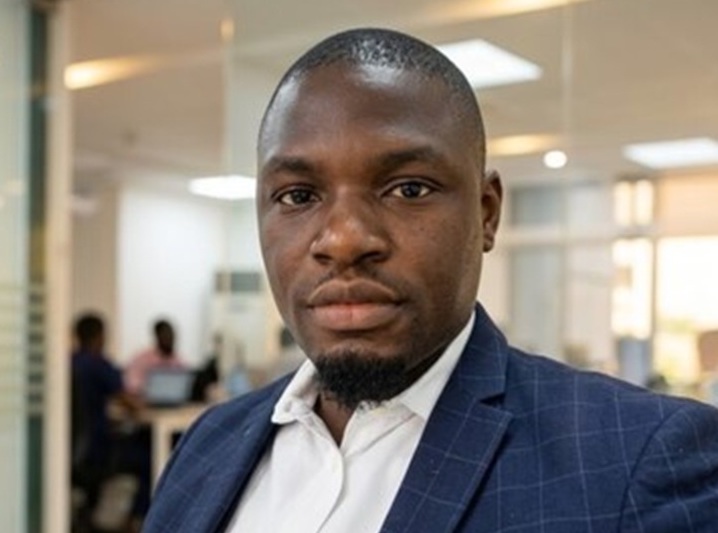
In the shifting landscape of global engineering, few young professionals in Nigeria have blended design, data, and innovation as seamlessly as Ayodeji Ajuwon. Between 2019 and 2020, he emerged as one of the country’s most forward-thinking engineering minds working at the intersection of 3D modeling, machine learning, and immersive education technology.
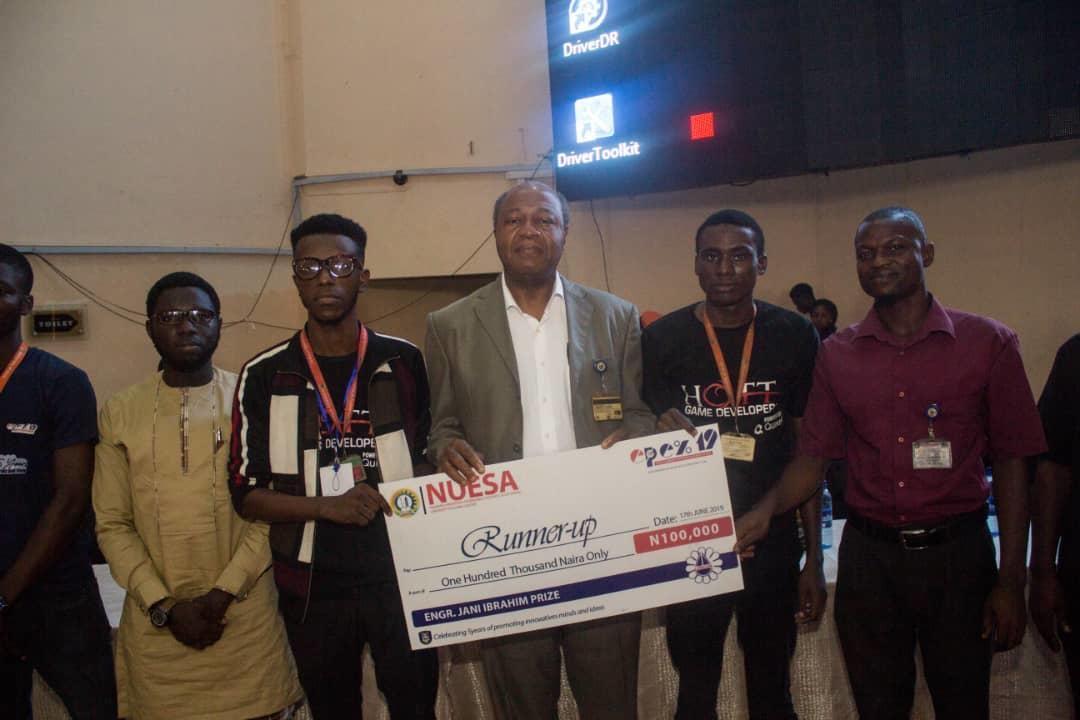
In 2019, Ajuwon teamed up with Hammed Arowosegbe and Fatai Babatunde to create VR-LAD (Virtual Reality Mechanical Engineering Labs), a pioneering project designed to give engineering students virtual access to laboratory experiments otherwise unavailable due to equipment shortages.
Built using a custom 3D environment and VR interface, VR-LAD allowed students to conduct mechanical and thermodynamics experiments in an interactive digital space, manipulating tools, observing outcomes, and visualizing principles in real time.
“We saw how many schools lacked proper lab facilities,” Ajuwon recalls. “So we decided to build one that didn’t require walls, wiring, or budgets, just curiosity and a headset.”
The innovation drew attention from educators and researchers for its potential to democratize engineering education in resource-limited settings, marking one of the earliest Nigerian experiments in VR-enabled learning.
While serving on the R&D team at DiRoots, a UK-based design-technology company, Ajuwon explored how artificial intelligence could enhance Building Information Modeling (BIM) processes. He led early-stage research using point-cloud data to reconstruct detailed 3D environments, an innovation that significantly improved the speed and accuracy of architectural modeling.
At DiRoots, Ajuwon was part of the research and development team focused on 3D modeling and point-cloud data reconstruction. He also authored some of DiRoots’ first published articles on artificial intelligence and machine learning applications in construction technology, helping the company articulate its thought leadership in the emerging space of computational design.
Beyond research, Ajuwon created several graphical programming scripts using Dynamo, Autodesk’s visual programming interface, to explore generative design systems that could automatically optimize architectural layouts for light, balance, and energy efficiency.
“I am fascinated by how design can evolve on its own,” Ajuwon recalls. “Using data as a design material meant we could generate hundreds of intelligent variations in seconds, a process that redefines what creativity means in engineering.”
Parallel to his DiRoots work, Ajuwon contributed to Creele Studios, where he helped advance research and creative visualization in immersive storytelling. His focus was on integrating procedural modeling and data-driven design for high-impact visual simulations that bridged engineering and art.
This dual experience, combining commercial design automation with visual experimentation, has become a foundation for Ajuwon’s growing expertise in data-driven tech and machine learning technology.
As of today, Ajuwon’s body of work painted a portrait of a technologist driven by one idea: that the future of engineering lies in systems that learn, adapt, and communicate. Whether writing code for generative design, modeling point-cloud datasets, or building a virtual lab for students, his focus remained the same, bridging human creativity and computational intelligence.
“Technology should simplify access,” Ajuwon says.