Follow Us on Google
To secure Great Britain’s historic claim of victory in two World Wars and one World Cup against Germany, their European cousin, English soccer Great, Geof Hurst, had to score three goals to help defeat West Germany in the finals of the 1966 FIFA World Cup. In sports parlance, the feat of scoring three goals by one player is called a hat-trick. And a hat-trick, more often than not, places a team ahead of its rival towards victory. Interestingly, this seems to be the current situation in the Nigerian polity ahead of the 2023 presidential election, where leading opposition candidate and former Vice President, Atiku Abubakar, appears to have pulled a hat-trick early in the game, which may have thrust him head and shoulders above his main rival and incumbent President, Ahmed Bola Tinubu.
In the three years since President Tinubu assumed office on May 29, 2023, we have witnessed a steady but predictable eroding of opposition party politics in Nigeria. While the main opposition Peoples Democratic Party (PDP) sank into oblivion as rightly predicted for committing the grievous sin of violating the principle of zoning and rotation of power when it fielded Atiku, a northerner, in the 2023 presidential election, at a time when the wind of presidency was blowing south, other political parties were simply lured to bed by President Tinubu and given the kiss of death. With elected opposition governors and National Assembly members emptying into the ruling All Progressives Congress (APC), the political stage appeared set for dominance by one party. To make matters good for the ruling party, the opposition in the last three years could not come up with an alternative to President Tinubu’s twin policy of removal of subsidy on petrol and floatation of the naira. As a matter of fact, both Atiku Abubakar of the PDP and Peter Obi of the Labour Party committed to the same policy of subsidy removal on petrol and floatation of the naira. So, when the policy plunged Nigerians into an unprecedented level of cost of existence, the opposition in Nigeria and its leadership lost their voices as they lacked the moral courage to criticize a policy they mostly subscribed to.
To further complicate matters for the opposition, Atiku Abubakar, whose ambition sank the PDP into oblivion, moved into the African Democratic Congress (ADC), along with his supporters, and clinched the presidential candidacy, signalling his intention to violate zoning a second time. And because Atiku’s policy plan and neo-liberal economic orientation are a replica of Tinubu’s own, the general feeling in the country was that there was no urgent need to replace a Tinubu southern presidency with an Atiku northern presidency, if both of them are reading from the same neo-liberal economic hymn book that has plunged Nigerians into hunger, poverty, misery and destitution. This was why the ADC and Atiku’s candidacy did not gain traction, leaving its momentum low even when President Tinubu is perhaps Nigeria’s most unpopular incumbent on the eve of a presidential election. Even the President was so confident of a near-no- contest situation in the 2027 presidential election when he openly challenged the opposition to come up with their own alternative to the administration’s policies of subsidy removal on petrol and floatation of the naira. And with Peter Obi from the South of Nigeria in the race for the presidency, that meant that the northern and southern flanks of the opposition in Nigeria were going into a contest with a ruling party with its house firmly united across all divides.
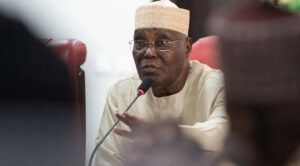
However, this scenario changed suddenly when, in an unexpected move, Atiku Abubakar, took up President Tinubu’s challenge to come up with an alternative to his policy decisions by declaring in an unshaken voice that, if elected by Nigerians in 2027, he will restore subsidy on petrol in Nigeria. Like a thundering lightening, this declaration by Atiku sent shockwaves across the polity and, by the time people recovered from his proposition to reverse President Tinubu’s most consequential policy, the former Vice President doubled down on his new direction by addressing the world on why Nigerians deserve the benefit of their God-given oil mineral wealth. For Atiku, this was his Road to Damascus moment, as three years of the failure of his lifelong economic orthodoxy was enough to see the light and hearken to voices of reason.
By this singular pledge to restore subsidy on petrol for the benefit of Nigerians, which also translates into commitment to reversing President Tinubu’s “subsidy is gone” policy, Atiku has redefined the 2027 presidential election, scoring a hat-trick against his old friend-turned-rival. First, by finding the courage of St. Paul, an avowed enemy of Christ Jesus who later accepted and propagated his Gospel, Atiku, the father of Nigeria’s neo-liberal capitalism, has provided the much needed alternative from the opposition to what the government in power has provided in the last three years.
Second, by providing this clear-cut alternative to what many Nigerians blame for their current woes, there is now a realignment of people-powered political forces around pro and anti-subsidy to such an extent that ethnicity, religion and region of origin appear to have taken a back seat in the consideration of many Nigerians, thereby relegating what would have been Atiku’s greatest albatross going into the 2027 presidential election, which happens to be a zoning arrangement that currently favours the South. But because, for many Nigerians, petrol subsidy is simply affordable energy within the framework of energy security, which allows them to breathe economically and survive, both northerners and southerners are united against their common enemy of energy insecurity arising from unaffordable petrol. And because what is at stake is survival, a most existential matter, Atiku is pledging to restore life from where President Tinubu took it with Nigerians desperately gasping for breath, the least worry for them is not whether the Messiah is from Nazareth.
Third, Atiku’s popularity and public perception profile have surged considerably with his candidacy now gaining more momentum and acceptance across the country, making President Tinubu and the ruling APC rattled for the first time since 2023. For the first time in his political career, Atiku is having an organic support base with a strong reason to flood polling units on election to vote and insists on their votes being counted to count. And just like Peter Obi benefited from the EndSARS movement in the 2023 presidential election, Atiku is likely going to benefit from the EndHunger protest movement that rocked most parts of northern Nigeria and Lagos. Rattled and uncomfortable, both the Presidency and the ruling APC have been trying to shoot down Atiku’s subsidy restoration as a fantasy journey to utopia, while in some instances dismissing his position as “economic illiteracy”. But the grim reality is that Atiku has thrown a deadly blow that has created a balance of forces between the APC government and the opposition.
And this is the beauty of democracy. Atiku’s Road to Damascus moment is a commendable demonstration of strength of character and intellectual humility, something that is clearly lacking in the Tinubu administration. ordinarily, three years of sorrow, tears and blood that trailed Tinubu’s neo-liberal economic implementation was enough for both government and opposition to have a reappraisal; more so the government. The move to review, modify and reverse any aspect of a government policy decision is the core responsibility of the government. But when a government has thrown Nigerians into a hole and still keeps digging, it creates an atmosphere of renewed hopelessness. For the many Nigerians in this hole of hopelessness, Atiku represents hope that there will light at the top of the hole, once he pulls them out.
The Tinubu government still has the opportunity to urgently embarking on its Road to Damascus, by taking a left turn to stir Nigeria to the right direction. Petrol subsidy, within the context of the Nigerian economic situation, is energy security, which is an integral part of national security, making it part of the primary responsibility of government. Therefore, any government that removes subsidy on petrol, Nigeria’s most utilized energy product, did not demonstrate courage or boldness but a cowardly abdication of an important part of its primary responsibility.