Follow Us on Google

From Juliana Taiwo-Obalonye, Abuja
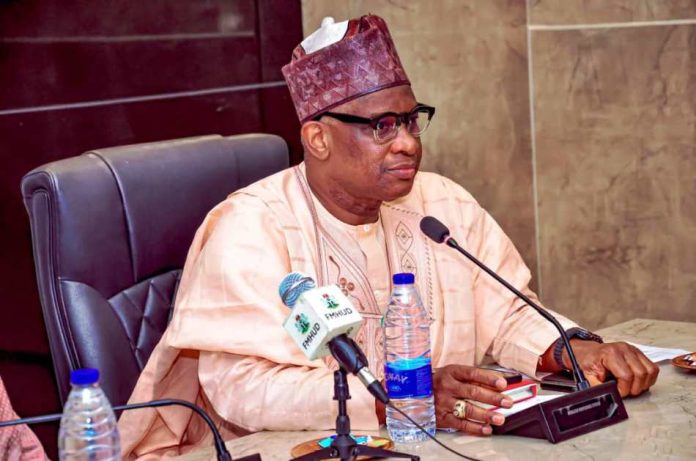
Governor Babagana Zulum of Borno State, has disclosed that over 90,000 repentant Boko Haram ISWAP terrorists have voluntarily surrendered to the Army for disarmament, de-radicalization and reintegration.
He made the disclosure at the High-Level event organised on the margins of the 77th UN General Assembly in New York.
The event had the theme “Strengthening Resilience and Sustaining Development: A Humanitarian Development Peace Approach to Leaving No One Behind.”
He told the audience made up of President Muhammadu Buhari, Deputy Secretary General, Amina Mohammed, Under-Secretary-General for Humanitarian Affairs and Emergency Relief Coordinator, Office for the Coordination of Humanitarian Affairs (OCHA), Martin Griffiths, the Minister of Humanitarian Affairs, Disaster Management and Social Development, Hajia Sadiya Farouq, governors and other dignitaries that: “I want to bring to the notice of this gathering that within the last one year, Borno State government, and indeed the federal government has so far received over 90,000 repentant Boko Haram and ISWAP members.
“This has never happened anywhere in the world. In the history of the world, the insurgency is coming to an end. I’ve started seeing light at the end of the tunnel. Peace to the end tire north east subregion entails peace to the entire Europe, peace to the entire Europe means to the entire world.”
According to him, the acute humanitarian crisis, has been devastating on social and economic impact on the population, other deepening fragility and poverty in the north east sub region.
“I must use this opportunity to commend the President of the Federal Republic of Nigeria and Borno State is the epicenter of the Boko Haram insurgency.
“Before assumption of duty of Mr President of the Federal Republic of Nigeria, 22 local government areas in Borno state out of the 27 local government areas that we have, were under the control of Boko Haram insurgents. But today, none of our local government areas are under the control of Boko Haram insurgents.
“The Borno State government with the support of the federal government, and indeed, the entire UN family has strengthened the resilience of the community. And that has ensured peace building social cohesion, and sustainable development in the entire north east sub region of Nigeria.
“The nexus between peace, security and development need not to be over emphasize. If there is no peace, there will be no security. And if there is no security, there is no development.
“I’m glad to inform you that the President has also inaugurated the committee for the repatriation of all Nigerians that are living in the Republic of Chad, Cameroon, as well as Niger. And to this effect funding have been approved. And before the expiration of the tenure, we shall ensure complete repatriations of all the Nigerians that are living in other countries.”
Zulum urged the government of Nigeria, the UN and other development partners to shift their focus on providing immediate humanitarian support to medium and longer term sustainable and durable solutions that will address the increasing problems.
He said: “This is very important, as it has been said, by the UN undersecretary, the root causes of the insurgency are leading to endemic poverty, advancing illiteracy, social inequality, drug abuse, mitigate climate action, among others, and therefore, we shall do everything possible to address these challenges.
“Therefore, I’m also asking the UN to ensure establishment of a strong monitoring and evaluation mechanism that ensure sub national governments take the lead through effective community participation. That’s the only way.
“The UN partners that are coming to the north east must partner with sub national governments. This is something that has to be done in order to address the root causes.”
He commended the federal government, UN Deputy Secretary and let me also most importantly commend the Secretary General for the historic visit that he had to Nigeria and indeed to Borno State.
“The UN under Secretary Humanitarian Affairs was in Borno state and all of them have seen how far the federal government and the Borno State Government are working tirelessly at assiduously in addressing the challenges of climate vulnerability, addressing the challenges of poverty and also addressing the challenges of hunger.“
Farouk, at the event showcased some of the social investment programmes carried out to tackle poverty and ensure social inclusion in the country.
The social investment programmes showcased were the Home-Grown School Feeding Programme, the Conditional Cash Transfer Programme, the N-Power Programme and the Government Enterprise and Empowerment Programme, among others.
In her remarks, explained that the humanitarian interventions (programmes) had been tremendously beneficial to Nigerians from all walks of life, especially through the National Social Investment Programmes (NSIP).
“The NSIP is delivered through the N-Power, National Home-Grown School Feeding Programme, Conditional Cash Transfer and the Government Enterprise and Empowerment Programme, which are anchored on TraderMoni, MarketMoni and FarmerMoni, and the recent Grant for Vulnerable Groups.
“These interventions are intended to ultimately eliminate hunger, build human capital and contribute to lifting a hundred million Nigerians out of poverty by 2030, as envisioned by Mr. President,’’ she said.
In addition, the minister said it would be difficult to talk about development without speaking about building human capital as it is a key pathway to restore peace and reduce poverty.
She said the N-Power Programmes through N-Agro, N-Tech, N-Creative, N-Build and N-Skills focuses on teaching youth agricultural, technological, web design and animations and construction work respectively to promote self-reliance.
“We are also empowering women at the grassroot levels through various skills acquisition trainings to ensure women are no longer marginalised economically.
“Youth, women and other vulnerable groups are regularly given empowerment opportunities to build their skills and competencies for them to learn, to earn and to grow,” she said.
The Federal Commissioner, National Commission for Refugees Migrants and Internally Displaced Persons, Imaan Suleiman-Ibrahim, on her part said, 500,000 Nigerians awaiting repatriation from Chad, Cameroon, and Nigeria.
She said: “As you have heard, there is a presidential Committee on repatriation in the north east. The committee is to complement the Technical Working Group on repatriation, which is chaired by the Commission. And it’s a process that has been ongoing. We have started repatriation, we are experiencing involuntary returns.
“So it’s going to happen before the end of Mr. President’s tenure we would have brought everybody back home. And there’s funding.”
On the number of those awaiting repatriation, she said: “We have almost about 500,000 awaiting repatriation. The next batch will consist of 1000 people and like I told you it’s spontaneous returns that happening now and we’re looking after them as they come back. They are coming from Niger, Chad and Cameroon.”
In his remarks, Under-Secretary-General for Humanitarian Affairs and Emergency Relief Coordinator, Mr Martin Griffiths said Nigeria is a good example of a country with great initiatives.
He said Nigeria had great initiatives and potential for more sustainable solutions for internally displaced people which will allow displaced to get back on their feet.
“The National Policy for Internally Displaced Persons in Nigeria, facilitated by the Honorable Minister, is showing the way for the realisation of the rights, dignity and wellbeing of vulnerable populations through durable solutions to internal displacements.
“And while I heard in January from IDPs in Bama and Damasak in Borno State of how dreadful the security situation continues to be, we know that it gives hope.
“It gives hope when local government authorities, community organisations and UN agencies are able to come together and support IDPs in more sustainable manners on education, integration, disability rights and so forth,’’ the UN official said.
According to him, multiple challenges remain, especially when it comes to protecting civilians and many of these initiatives are still at small scale.
“But if we can replicate and adapt these new approaches, we can help chart the way forward,’’ noting that this entails a few steps of two
“First, we need to focus on implementation and results. This involves ensuring international humanitarian and development planning frameworks align with national strategies.
“Second, and crucially, funding needs to be better aligned with common priorities. Almost 10 months into 2022, we have only about 35 per cent covered of our financial requirements to meet urgent humanitarian needs.
“It’s time for us to work with donors – and investors – to break open funding siloes and find more flexible financing solutions”, he said.
Also speaking, International Organisation for Migration (IOM) Deputy Director for Operations, Ugochi Daniels, said Nigeria is the biggest operation of the organisation on the continent.
According to her, IOM has staff of 1,400, across five offices and nine humanitarian hubs in the Northeast which enables all UN and NGO partners to deliver.
Daniels said following the launch of the National Action Plan, and commitment from the highest levels of Government, ther was clearly an opportunity to advance solutions to conflict and displacement.
“Political willingness is the most important enablers for durable solutions to displacement in fragile contexts. There are a few other key enablers which are needed for locally-led solutions to crisis to work.
“The first is mobilising development financing in support of large community-based peace, recovery and development programmes – such as IOM has done with the KfW or the World Bank in Ukraine and South Sudan.
“Development financing enables government leadership, multi-year timeframes and a stronger integration with national policies and planning frameworks,’’ she said.
The second, IOM official said was catalyzing the role of the private sector to provide economic opportunities to populations residing or returning to crisis affected areas.
“Through the ‘Enterprise Development Fund’ in Iraq, for example, IOM capitalises local businesses to increase their capacity to recruit displaced populations returning to their homes and increase productivity overall.
“Third, we need to ensure the data we collect contributes to the objectives we want to pursue,” she said.