Follow Us on Google
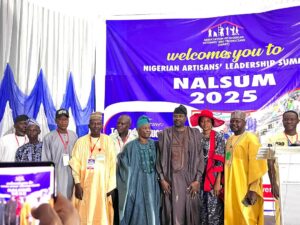
The Industrial Training Fund (ITF), Small and Medium Enterprises Development Agency of Nigeria (SMEDAN), the Association of Nigerian Artisans and Technicians (ASNAT) and other major stakeholders have demanded recognition and licensing of artisans in the country.
The critical stakeholders in formal and informal sectors also called for a national framework to train, certify and license Nigerian artisans to eliminate quackery and promote global competitiveness in the sector.
They made the call during the two-day Nigerian Artisans’ Leadership Summit (NALSUM), with the theme “Towards a Successful NATEF 2025”, organised by the Association of Nigerian Artisans and Technicians (ASNAT), held at the Women Development Centre, Abuja, on Wednesday and Thursday.
Speaking during the summit which was solely sponsored by the Industrial Training Fund (ITF), the Director-General of the Industrial Training Fund (ITF), Dr Afiz Ogun, said the initiative to train artisans was driven by the vision of President Bola Tinubu to upskill Nigerian artisans to international standards through proper training and certification.
Ogun noted that previous training programmes have failed to yield tangible impact because artisans were left without opportunities to showcase their skills or access support, noting that the government is now committed to training artisans and empowering them through different programmes and initiatives.
He said: “Licensing every artisan in Nigeria will eliminate quackery. What we see now is not that artisans are not good enough, but too many quacks have infiltrated the space. This initiative will separate trained hands from unskilled ones.”
“In the past, they got trained and returned home to ride motorcycles or remain idle because no one carried them along, but the president has now given ITF the mandate to change that narrative.”
Other News
Ogun also revealed that ITF was working with the Manufacturers Association of Nigeria and the Nigeria Employers’ Consultative Association (NECA) to ensure local industries prioritise Nigerian artisans over foreign labour.
“Some companies still go as far as China or the Philippines to hire workers; that has to stop because we have competent artisans right here, and we will build their capacity to match global standards,” he said.
Also speaking, the National Coordinator of ASNAT, Adeshina Akinyemi, said the summit was designed to strengthen leadership across artisan associations and prepare them for the upcoming Nigerian Artisan Talent and Exhibition Fair (NATEF), slated for September.
“This particular programme is to give our association leaders the right training in areas like data and information management, as well as association administration. We want them to return to their states with knowledge that will change how they operate and lead,” he said.
In his address, the Director-General of the Small and Medium Enterprises Development Agency of Nigeria (SMEDAN), Mr Charles Odii, who was represented by the Head of Corporate Affairs, Mr Moshood Lawal, emphasised the collaborative role of government institutions in artisan empowerment.
He said: “The Bank of Industry, SMEDAN, and ITF are sister agencies under the Federal Ministry of Industry, Trade and Investment. While ITF handles technical training, BOI provides funding and SMEDAN takes care of entrepreneurship education.
“You cannot leave artisans with only technical knowledge; they need financial access and entrepreneurial skill to grow. We are working to ensure artisans get affordable funding at single-digit interest rates, unlike the high rates from commercial banks.”
In his remarks, former Speaker of the Zamfara State House of Assembly and National Patron of ASNAT, Rt. Hon. Sanusi Rikiji, stressed the central role artisans and technicians play in Nigeria’s private sector, describing them as the “movers of the micro-economy”.
Rikiji also applauded the ITF’s effort in building a national artisan database, revealing that more than 1000,000 artisans had already been registered.
He said: “We have over 30 registered trade associations under ASNAT, and they are a major source of employment for our youth. This annual summit brings members from all 36 states and the FCT together to exchange ideas and plan a roadmap for the future.
“The target is about 8 million. That national register will help our members benefit from programmes by the World Bank, Bank of Industry and other institutions. It is a game-changer in accessing loans and support.”