Follow Us on Google

The International Labour Organisation (ILO) has called for urgent policy action to ensure that productivity growth, including gains generated by artificial intelligence (AI), translates into better wages, decent jobs and stronger social protection for workers worldwide.
In a statement to the Development Committee and the International Monetary and Financial Committee at the 2026 Annual Meetings of the International Monetary Fund (IMF) and World Bank Group, ILO Director-General Gilbert F. Houngbo, warned that economic progress was not benefiting workers equitably, with persistent income disparities and weak job quality threatening inclusive and sustainable growth.
“Productivity growth is the foundation of rising living standards,” the ILO said in its statement issued on October 12, stressing that the benefits depend on how gains are distributed between businesses and workers, across enterprises and throughout society.
The warning comes amid mounting global economic pressures, including the spillover effects of conflict in the Middle East, rising energy, food and fertilizer prices, supply-chain disruptions and renewed inflationary pressures. These challenges are compounding existing difficulties linked to high public debt, trade fragmentation and limited government resources.
Although headline labour market indicators have remained broadly stable, the ILO cautioned that the figures mask deeper vulnerabilities. Economic shocks are increasingly being absorbed through weaker recruitment, falling real wages, persistent informality and deteriorating working conditions rather than outright job losses alone.
The organization estimates that about 2.1 billion workers, representing 58 per cent of the global workforce, remain in informal employment. It warned that the historical decline in informality associated with economic growth has stalled, leaving millions without adequate employment protections and exposing vulnerable households to further economic shocks.
“The burden falls disproportionately on low-income households, informal and migrant workers, young people and Micro, Small and Medium-sized Enterprises (MSMEs),” the ILO said, highlighting the uneven impact of global economic instability on workers and smaller businesses.
The agency also raised concerns about the widening disconnect between productivity growth and workers’ incomes.
While labour productivity has increased over the past two decades, progress has been uneven, with middle-income economies benefiting more strongly than many low-income countries. In high-income countries, the gap between productivity and workers’ incomes has widened, limiting the extent to which economic expansion improves living standards.
Other News
Market concentration and weak worker bargaining power are among the factors contributing to the problem, according to the ILO. Smaller enterprises, which account for a substantial share of global employment, often struggle to access finance, technology and markets, while economic activity and capital are increasingly concentrated among a relatively small number of large firms, particularly in the technology sector.
The organization warned that artificial intelligence could deepen these inequalities if its benefits remain concentrated among a handful of companies and countries.
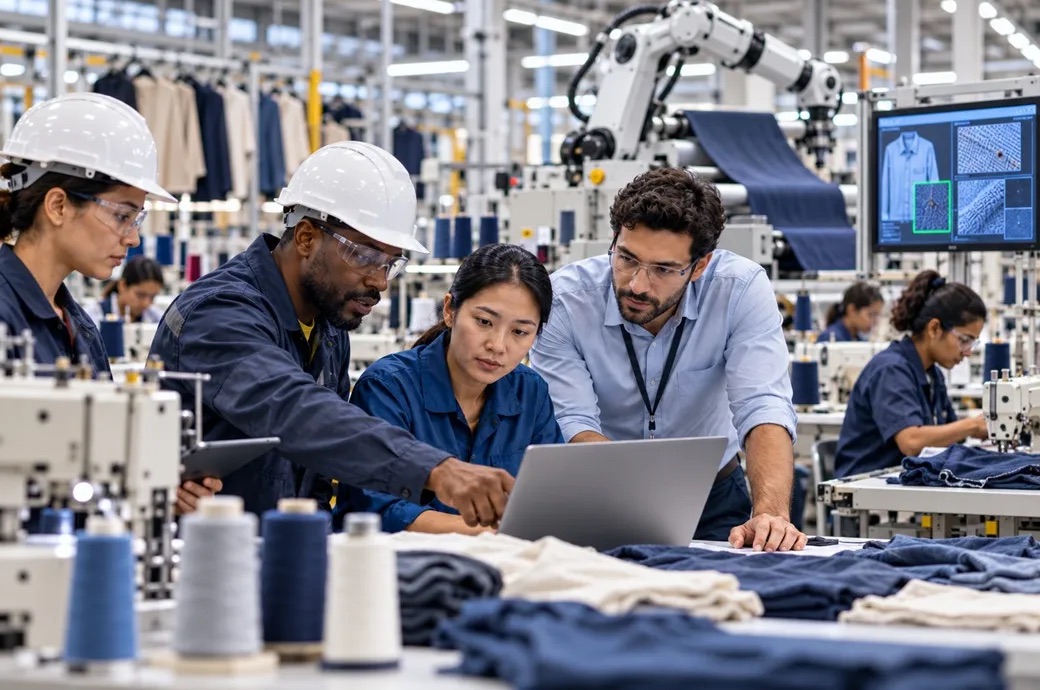
Around one-quarter of global employment is in occupations exposed to generative AI, with women in high-income countries facing higher levels of exposure. Current evidence suggests that AI is more likely to transform tasks and jobs than eliminate employment on a large scale, but the costs and benefits of that transition may be distributed unevenly.
In many developing countries, workers and businesses could face disruption before realizing AI’s productivity benefits. Limited access to computers, reliable internet, digital infrastructure, finance and relevant skills could prevent workers and smaller enterprises from taking advantage of emerging technologies. The ILO cautioned that this imbalance could widen inequalities both within countries and between economies.
To address these challenges, the organization called for stronger labour market institutions, adequate minimum wages, collective bargaining, effective competition policies and greater support for small and medium-sized enterprises.
It also urged governments to expand access to finance, skills development, lifelong learning and digital technologies while protecting workers’ rights and strengthening social dialogue.
Social protection and sustainable public financing were identified as essential components of a strategy to make productivity growth more inclusive. The ILO urged policymakers to preserve investment in social protection, skills and active labour market programmes despite fiscal constraints, while pursuing fair taxation, formalization and international tax cooperation to broaden the revenue base.
The organization also called on the IMF and World Bank Group to give greater attention to wage distribution, job quality, market concentration and labour market institutions in their economic analysis, policy advice and, where appropriate, programme design. It welcomed the World Bank Group’s renewed focus on jobs, arguing that development finance should prioritize employment that improves productivity, earnings, skills and workers’ prospects.
Concluding its statement, the ILO stressed that economic stability and social justice are closely connected, warning that unequal access to the benefits of growth can undermine public trust, social cohesion and the sustainability of economic reforms. “Productivity growth that translates into better incomes, jobs that allow people to learn and advance, and institutions that give workers and enterprises a voice” are, the organization said, among the essential foundations of resilient economies and inclusive societies.