Follow Us on Google
By Merit Ibe
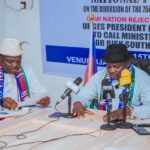
The Advertising Regulatory Council of Nigeria (ARCON) and the Centre for Media Law and Development (CMLD), are seeking strict adherence to local policy and enforcement of the advertising regulatory framework and digital platforms enforcement.
The stakeholders made their views known yesterday in a TV interview where they emphasized that the advertising space is under regulated which is not supposed to be as the advertising space is an economic enabler.
Throwing light on the topic: “Nigeria Advertising Regulatory Framework and the Digital Platforms Enforcement,” Director General, ARCON, Dr. Olalekan Fadolapo, explained that the advertising content is divided into three categories: the digital media space, or traditional media: information, entertainment, or advertising.
He empahsised that ARCON does not regulate information or entertainment; “we only regulate advertising, whether on traditional or digital media, adding that the notion that ARCON regulates the entire digital media space is wrong. “ARCON regulates advertising on the digital media platform.”
He noted that Nigeria has a dual-regulatory framework where some bodies come together for self-regulation, and the federal government, by statute, established ARCON for statutory regulation. He pointed that advertising regulation can be punitive or corrective.
“ In Nigeria, we practice a corrective regulatory framework.
“The law requires that before an advert is exposed, whether on traditional or new media, it must be submitted to ARCON for vetting. If there’s any mischief, misinformation, or disinformation, it’s resolved before exposure. So, it’s more corrective than punitive.”
He noted that advertising regulation on the digital media space is not new and there’s a high level of compliance in traditional media.
“We’ve moved from e-commerce to a full digital economy, where all elements of a physical market are available. In this space, there are three key stakeholders: operators (business people), the public (vulnerable), and the government (gatekeeper).”
He noted that without government oversight, operators could exploit the public through advertising, noting that that is where ARCON acts as a speed breaker to ensure advertising is decent, legal, and not exploitative.
“We are not regulating the digital media space itself but the advertising exposed to the Nigerian market via digital platforms.”
Fadolapo said that advertising is an economic enabler and so the space cannot be left unregulated.
Though he noted that there’s significant improvement in advertising regulation and practice, Fadolapo decried that In the digital space, there’s a lot of mischief, misinformation, and deceptive advertising.
“For example, an advert promoting abortion was recently targeted at Nigeria. Many online vendors lack physical addresses, making enforcement challenging. We’re working to improve monitoring and enforcement.
“ In the business of advertising, there are three key stakeholders. We have the advertiser, the agency, and the media. Don’t forget, the media thrives on advertising revenue. Indeed, because in some cases, I’ll tell you, for may be government agencies, may be 70-80% of their income is from advertising. But from the private sector, in most cases, over 90%. Now, if advertising business is not done within the normal regulatory framework, how do you want to thrive? The simplest example that comes to mind is the payment threshold. Globally, there’s payment thresholds.
Other News
“So there is need for regulatory framework. ARCON, some years ago, came with a zero-debt policy for the Nigerian advertising industry because they discovered that people even buy media on credits. So that is one of the essences of a regulator.
We are trying to moderate the entire system. We are always on our toes to ensure that there is sanity in that space. For example, there’s a pitch rejection fee. There’s a disengagement protocol which means that you can fire your agency. However, if you are firing your agency, make sure you close
the account and bring the business to a closure. You can’t be owing me N500 million and you fire me. That is the essence of regulation. If agency C is coming into this, there must be some sanity, there must be some ethical requirement that this person needs to comply with. So we are involved in so many things. Not just vetting or exposure. We need to ensure that the space is not only seen, it’s also adding to the entire effort, the basket of efforts from the federal government. Don’t forget that advertising is an economic enabler.
“Economic enabler to the extent that anything that happens, a bank can declare one billion or one trillion. The advertising activities that generate that money, you would imagine how big it is. So you cannot just leave that space unregulated. So we’re talking about the business of advertising. We’re talking about regulating even the advertisement itself. So it’s a huge thing. We have capable hands within the agency and we are pushing the frontiers.”
He pointed out that if advertising business is not done within the normal regulatory framework, businesses will not thrive.
“How do you want to thrive? The simplest example that comes to mind is the payment threshold. Globally, there’s payment thresholds.
On the Local Content Policy, Fadolapo noted that it encourages agencies to look inward, promote local talent, and develop the advertising sector.
“Producing an advert requires a village—models, makeup artists, costumers, voiceover artists, production engineers, sound engineers, and light engineers. For example, the Gulder Ultimate Search advert reportedly cost 1 million pounds years ago. Today, producing an advert for the Nigerian market can cost 750 million to 1 billion Naira, depending on the budget and brief.”
He said Nigeria has over 240 million people, the largest population in Africa, and over 120 million active internet users. When you produce an advert abroad for the Nigerian market, costing 1 billion Naira, and bring it back on a flash drive, you invest in another economy without using Nigerian models, voiceover artists, or production facilities. Are Nigerian men and women not beautiful or talented enough? The policy demands that if you’re selling in Nigeria, you use Nigerians to speak to us, ensuring the advert grows the Nigerian advertising ecosystem. This aligns with the federal government’s efforts to promote the local economy.”
On advertising law, freedom of speech and series of judgments, Director General, Centre for Media Law and Development (CMLD), Charles Odenigbo, noted that advertising law from the perspective of Nigeria, provides the framework by which advertising is carried out, the advertisement, which is the final product that goes out, the marketing communication, which deals with different kinds of integrated marketing communication combined.
Odenigbo viewed that the apex law that regulates advertising today in Nigeria is the ARCON Act 2022. “Now, it became what it is today in the sense that a community of the industry were brought together under one basket. So it deals with advertising, advertisement, and marketing communication, as well as the industry as a whole, and protects vulnerable members of society, as well as consumers.”
He noted that when dealing with advertising law, apart from ARCON, being the regulator, there are other statutory bodies that play a prominent role in the industry. “Take, for instance, the Banks and Other Financial Institutions Act of 2020. Now, Section 44 makes provision for financial advertisements,”among others .
“These things are driven by adverts. You know how many people have lost their entire investments? So, what we are doing is trying to improve our regulatory and enforcement.”
He lamented that the advertising space is still underregulated because the greatest culprits are found in the digital space.
“We are still scratching the surface. Because when you look at the structure of advertising law worldwide, the fundamental elements of advertising law worldwide is that all adverts must be legal, decent, honest, and truthful. That is it. So if you come here and you say, is it overregulated? The quantum of abuse going on in the media space in the name of advertisement is scary. You seated here may be scared of what your daughter or son may be watching in the street. And they will come as if they are doing entertainment and the next thing is they will position a material that your little child cannot explain. So when we come to regulation, whether it’s been overregulated, the digital space is too wide. And then we have offshore adverts that are being thrown into Nigeria. And you now look at the tribunal now having to go after offshore adverts that are destroying children in Nigeria, that are deceiving people in Nigeria. We cannot be talking of overregulated. “We are talking of what’s underregulated because the greatest culprits are found in the digital space. An on-air personality may not know that the new definition of advertising includes on-air personality, hyping. An on-air personality cannot hype a product under section 63 of the new act. Because if what you’re hyping, is it in the category of product or services that require the approval of the advertising standard panel, so it is underregulated, we are still scratching.”