Follow Us on Google

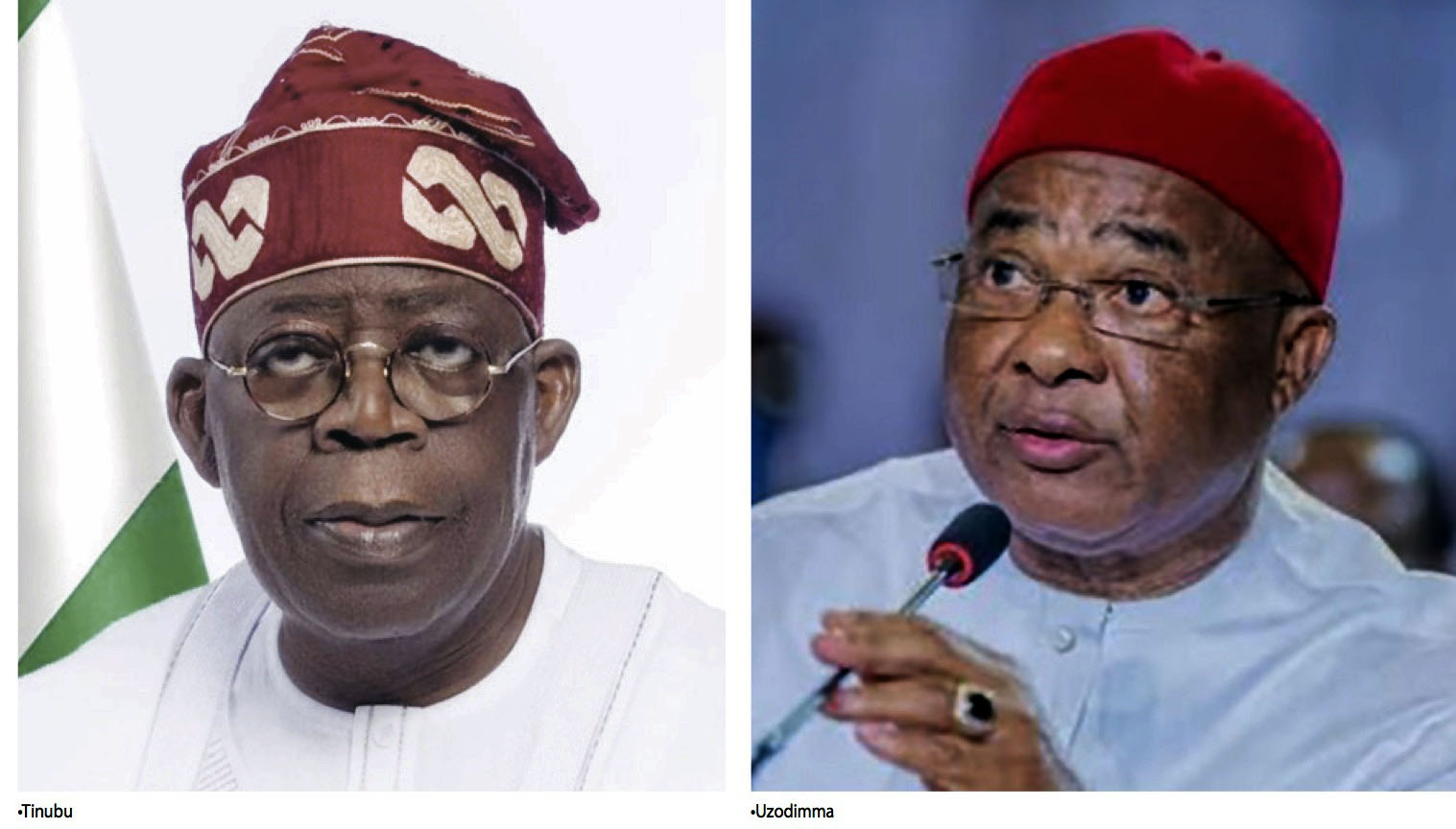
The hatred, apathy, rumblings and internal wrangling that have characterised the All Progressives Congress (APC) build-up to President Bola Tinubu’s re-election bid have dominated political discourse for the past few months.
As the 2027 general elections draw closer, norms have collapsed, rules have died and the bolts that hold the country together have loosened, exposing the truth that a huge pall of mystery hangs over Nigerian government and politics.
The campaign towards next year’s poll has so far been clouded by positives and negatives, in line with the build-up to every major election since the return to the Fourth Republic.
The usual expressions of a million-man march, the ruling party brazenly muscling and intimidating opposition parties, intolerant threats and brute force, deployment of material and financial resources, internal sabotage, empty promises from political actors and stakeholders, and unending assurances of mobilising millions of votes to ensure outright victory for the incumbent have remained the style.
Expectedly, the ruling party has followed that trajectory in the build-up to next year’s presidential election. So far, it has exhibited violence, threats, cold war, internal wrangling, intolerance, intimidation of the opposition, insensitivity and a suspicious orchestration of plans to collaborate with the Independent National Electoral Commission (INEC) to rig the election.
From the controversies surrounding the composition of the APC Presidential Campaign Council (PCC) to the bickering over the desirability of the Rainbow Coalition arrangement, from the unending psychological warfare and sporadic attacks among political gladiators scheming to fulfil their inordinate ambitions to, worst of all, the President’s confirmation that he plans to skip some campaign trails, the build-up has been both ugly and beautiful.
The campaign has also been laced with evidence of brute force, intolerance and draconian tendencies aimed at weakening, defaming, belittling and possibly eclipsing the opposition candidates in the eyes of the electorate through deliberately insensitive, obnoxious and heavy-handed impediments.
Either the ruling party-led administration is planting landmines against the opposition, by defaming it and deliberately pegging high fees for billboards and posters, or subnational governments are issuing outright security threats, or the party’s men are brazenly deploying ruthless hate speech and unleashing physical attacks on other parties’ candidates.
In retrospect, the build-up to Tinubu’s re-election has been anything but peaceful, tolerant and diplomatic. It has been a continuous, loud beating of war drums.
Of major concern is that, despite strenuous efforts by the APC’s national leadership and major stakeholders to dissuade doubters and paint a facade of El Dorado, the cracks continue to widen by the day.
Most major stakeholders continue to wallow in self-denial and cast aspersions on opposition forces, claiming the ruling party has disappointed those who expected it to implode after its controversial primaries.
Even while boasting that the party is waxing strong and standing tall, its eggheads have tacitly admitted a crisis of confidence and a cold war in the build-up to President Tinubu’s re-election, to the point that references to it feature in speeches at most functions, big or small.
Only recently, the party chairman, Prof. Nentawe Yilwatda, told supporters and leaders at the inauguration of PCC members at the Aso Rock State House that the ruling party had proved its enemies wrong.
“Many, particularly the opposition, who thought, prophesied and even predicted doom and implosion for our party shortly after our primaries should now bury their heads in shame, seeing that our party is as fit as a fiddle and waxing very strong to win the election next year,” he quipped.
But his claims did not eclipse the visible cracks, exemplified by the face-off between the APC Progressive Governors’ Forum (PGF) and the Minister of the Federal Capital Territory (FCT), Nyesom Wike, over the threat the Rainbow Coalition poses to the ruling party’s prospects.
Since the rift began, there has been unending crossfire among the heavyweights. If Wike is not attacking the PGF chairman, Governor Hope Uzodimma, some forum members, such as the governors of Ebonyi, Zamfara and Benue states, Francis Nwifuru, Dauda Lawal and Hyacinth Alia respectively, join the fray to attack Wike.
To say the least, the APC’s preparations for next year’s crucial general election seem to have been reduced to a rancorous chessboard on which plotting, treachery and scheming are perfected to outsmart rivals.
Curiously, had the gladiators stopped at secret scheming, it would have been more honourable and tolerable. But the crossfire, the war of words and the sponsoring of candidates against one another have escalated the rift. It has become a destabilising, discomforting and disappointing intrigue, producing an endless wave of alignment, realignment, sabotage and treachery.
It is a matter of serious concern that Vice President Kashim Shettima, raising the alarm, admitted that he fears the APC’s internal contradictions more than the threat from the leading opposition candidates, Atiku Abubakar of the African Democratic Congress (ADC) and Peter Obi of the Nigeria Democratic Congress (NDC).
“Honestly, I am not afraid of the Peoples Democratic Party (PDP). I am not afraid of a diminished Peter Obi. But I am more afraid of internal contradictions within our household. If we unite as a people, as a family, we will conquer. There is no point in championing the cause of the presidential election and then undermining the governors in the governorship election. Honestly, it will not go down well with the system,” he said, apparently referring to the rift over the Rainbow Coalition.
True to his fears, while the battle between the governors and Wike raged, a fiercer one between Uzodimma and Senate President Godswill Akpabio, over who will preside over the yet-to-be-constituted 11th National Assembly, is engulfing the party.
Although Uzodimma, in his usual coded and strategic manner, has maintained a studied silence over the cold war and refused to join the crossfire, the sporadic attacks that Wike and Akpabio recently hurled at him have led political pundits to question whether they portend danger or are a mere distraction from the main issue.
Apparently, in the intense game of outsmarting each other, Uzodimma was clearly on the receiving end when his detractors tightened the noose around him at the recent inauguration of the PCC.
Perhaps unaware of the magnitude of the plot against him, Uzodimma had innocently stolen the show with a well-articulated, cerebral speech that won standing ovations from party supporters, before high-velocity attacks from Wike and Akpabio deflated his hitherto high ego.
Beating the war drum, Wike, who had earlier described the APC governors as lazy and paperweights, took their chairman to the cleaners with personal attacks, challenging him to deliver his state for President Tinubu.
While promising to mobilise support for Tinubu in Rivers State and the FCT, Wike said: “By the grace of God, Rivers and FCT will vote massively for President Tinubu. I want to say, if you don’t deliver your states and the president wins, don’t say we have won.”
“It is not a question of whether I am chairman, secretary or member of this. What is important is for the president to win. I told the Chief of Staff to the President, if the president doesn’t win in Lagos, don’t say we have won,” he fired at Uzodimma, snubbing him after his speech.
And while the PGF chairman was still smarting from Wike’s direct missile attack, Akpabio added to his woes by chiding him for perfecting arrangements to contest against him for the Senate presidency of the 11th Assembly.
Openly appealing to President Tinubu to support his bid for re-election as leader of the 11th Senate in 2027 and to discourage Uzodimma from aspiring to replace him, Akpabio said: “Mr President, you already know that we (the National Assembly) are with you. Please take the advice of Governor Soludo seriously. He (Soludo) said, if the cloth is not torn, why try to amend it?
“If you try to amend it, you are going to tear the cloth. If the National Assembly is so much with you, why not encourage them to come back and support you in your second term? And for my brothers who are governors, I want you to know: you must not abandon your people.
“I did eight years as a governor. The constitution says you should do eight years. There is no need to start eyeing another position that is not available. I have been in this business for over 25 years, and I always win,” he said, sending a veiled warning to Uzodimma and cautioning him to concentrate on his current responsibilities as governor.
Regardless of whether the exchanges exposed fault lines in the build-up to Tinubu’s re-election, Wike’s Rainbow Coalition or the brewing contest for the Senate presidency, Uzodimma got more than he bargained for.
In what seemed like salt on an already painful wound, although President Tinubu appeared to enjoy the tantrums, he may have disappointed many stakeholders by tacitly endorsing the controversial Rainbow Coalition and bluntly refusing to wade into the war of attrition among his political allies.
Some political observers say Tinubu may be more interested in confirming what many expected, that he would not fully take part in the campaign trail, explaining that office duties will compel him to skip some of the presidential campaign.
Justifying his decision, Tinubu quixotically declared to his supporters: “You have warned me and asked me not to allow the rigour of the campaign to distract me from governance. I hear you. I am in full agreement with your decision.
“Nigeria needs more attention now than ever before. The responsibility of this office does not pause. The job must go on. So, you will excuse me from going everywhere with you. However, I will still make time to speak directly with Nigerians, even as you lead the campaign in the states and local government areas.
“We have bills to pay. The American creditors cannot wait. We want those investors to come in, be here to stay, to invest for the future of our children.”
However, by his declaration, Tinubu may be driving Nigerians along the familiar route the APC has led the country since taking power from Goodluck Jonathan in 2015. Although the late Muhammadu Buhari should be allowed to rest in peace, the line Tinubu is toeing is a replay of the theatre of the absurd Nigerians endured in Buhari’s days.
According to the prolific writer and columnist Festus Adebayo: “Perhaps the APC and President Tinubu assume that the campaign to the people of Nigeria is a political side-show. No, it isn’t. It is a crucial, hands-on auditing process where the leader directly faces the people who issued him an IOU in 2023.
“To dismissively tell these same people the bombastic lie that Tinubu would be absent on the hustings because ‘we have bills to pay’ and because he wants to maintain focus on national development is a lie from the pit of hell.
“By delegating such crucial responsibility to his political allies, President Tinubu has repeated history, but little did he know that, no matter how fluent the voice of Yilwatda could be on the campaign podium, it cannot substitute for the soothing, though coarse, voice of the man the people voted into office.
“Again, Wike’s croaky voice and his bullying can rally votes, but they cannot defend presidential policy failures, nor can they articulate personal vision or take direct public ownership of government outcomes.”
Reacting to Tinubu’s decision, NDC candidate Peter Obi argued that the President could not delegate accountability or outsource the defence of his administration’s record to political allies, party leaders and supporters while millions of Nigerians continued to grapple with the effects of government policies.
“Surrogates can speak for the President, but they cannot answer for his failures.
They can repeat his promises, but they cannot make those promises a reality. They can campaign in his name, but they cannot carry his responsibility.
“If the administration has delivered on its promises, why should the President be reluctant to defend that record before Nigerians himself? If the economy is improving, let him explain how that improvement is reflected in the cost of food, transportation, electricity, housing and necessities. If his policies are working, let him face the citizens who want to know when the hardship will end,” he said.
Beyond the interesting issues in the build-up, it is becoming obvious from all indications across the country that, no matter how APC leaders and members perfect their strategies, the unpleasant response of Nigerians could be a warning signal that neither the campaign nor the election proper will be a stroll in the park for the ruling party.
Judging by the hostilities, attacks, destruction and defacing of APC candidates’ campaign posters and billboards by aggrieved Nigerians across the country, it looks like a case of the usual Nigerian saying: the child who says his mother will not sleep will not sleep either.