Follow Us on Google

EYES, and ears have suddenly opened. Tension is building up across the country. Insecurity is squeezing everyone to a corner. The situation has reached a breaking point. Like clouds that will release rain, it’s an accumulation of worries, sorrow and tears that are waiting to be unleashed if the Tinubu government does not change course, make better things happen, and prevent the worst from happening. Something remarkable happened in Hungary over the weekend. Viktor Orban,62, Donald Trump’s ally and the strongman of Hungarian politics was thrown out of office.
He could not overcome the growing dissatisfaction of his own citizens. He was defeated in high stakes parliamentary elections on Sunday by Peter Magyar, 45, a conservative politician and lawmaker in the European parliament. That brings to an end Orban’s 16-year grip on power as Prime Minister. Many thought it would not happen. But the people made it happen. That’s a country where the vote counts and the electoral umpire non-partisan. Can that happen in Nigeria? It’s possible. But not under the present INEC, led by Prof Joash Amupitan.
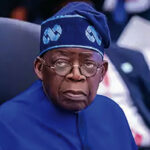
In a democracy, leaders who want to be remembered for worthy causes often start by laying their plans with care and introspection. They are aware that history will judge every leader. Great leaders do not fail to game out what could happens next. It requires a deliberate effort to plan how to deal with several scenarios of unpleasant situations and gauge out the outcomes with informed decision-making. Failing to do any or all of these situations, have led many presidents to run aground in the office. Some of them have ruined their own country in the process. It’s sad that every incumbent president in Nigeria since 1999, turned out worse than his predecessor. I had thought that after eight unfruitful years as president, that Muhammadu Buhari would go down in history as the worst democratically elected president. But times and circumstances seem to have proved me wrong. I never knew that in less than three years in office, President Bola Tinubu, who once prided himself as a “die-hard democrat”, would push the envelope beyond what is acceptable in a democracy.
Let’s not forget, as a presidential candidate, Tinubu was packaged and marketed to the Nigerian voters as one with a magic bullet – someone with effective solutions to Nigeria’s complex problems. He bragged that, if elected president, he would fix the economy that Buhari left in ruins, and find solutions to the intractable insecurity across the country, as well as fix the power sector. In fact, he urged Nigerians not to re-elect him for a second term if he fails to fix the power sector. The sector has since become worse than he met it. It was also believed that if elected President, Tinubu would unite us rather than divide us. Today, he has widened our fault lines. He has become an ethnic champion.
With the benefit of hindsight, President Tinubu was falsely packaged as someone who will make better things happen, and prevent worse things from happening, a leader who will reduce economic hardship and make Nigerians feel a sense of belonging, irrespective of where they come from. Nigerians are currently experiencing the worst things unimaginable in their lives. Nigeria has become a killing field. The country seems overrun by terrorists. In less than three years of his presidency, Nigeria is collapsing under Tinubu’s watch. More than at any time since 1999, our democracy is at risk. Unless he makes amends, Tinubu presidency may go down as the worst president in 27 years. It’s not unkind to arrive at this conclusion. It approximates to what psychologists call “The Dunning-Kruger Effect”. Coined in1999 by David Dunning and Justin Kruger, the concept highlights how individuals with low abilities or limited knowledge often overestimate their own competence. In other words, the loudest voice in the room is not necessarily the most knowledgeable. But, in competitive environment, ‘the loudest often wins’. That’s why “Emilokan” can be mistaken for competence. The effect is commonly misinterpreted to mean “stupid people”, but in reality, it’s a human bias that affects everyone in areas where they lack the necessary expertise.
At the moment, many Nigerians have, out of frustration, been whispering in both private and public conversations, how did we come to this sorry state, of being governed by a bunch of selfish, unprepared and unfit politicians? In self-resignation, most Nigerians have been asking: Is Nigeria jinxed, cursed, or are we the cause? The answer is not far-fetched. Our system rewards the wrong people. It enthrones mediocre and hypocrites. Hypocrites hold others accountable to the very standards they cannot keep. Recall that in 2013-2014, Asiwaju Bola Tinubu, then an opposition leader, strongly criticised former President, Goodluck Jonathan.
Other News
He called for his resignation over escalating insecurity, in particular, the Chibok girls’ abduction. He called Jonathan “clueless and incompetent”, and claimed that the former president was in denial about terrorists’ occupation, especially in the North East region. In the words of Tinubu, “no reasonable and responsible government permits its youths to suffer”, and no “part of Nigeria should be under terrorist occupation”. He said the frequent terrorist attacks on the North East had proved that Jonathan had failed in its primary duty to protect Nigerian citizens. Critics are now revisiting these statements on Tinubu. Mr. president, “how market”, a local lingo, how have you faired on the same scale you accused the other folk? Now, the table has turned. That’s what karma does. It has a way of paying people, not only in their own coin, but with interest and justice multiplied. The grim, cold reality of Nigeria’s present insecurity can no longer be masked by the tissues of lies by the president’s attack dogs. Last Thursday will go down in Tinubu presidency as perhaps the darkest day. Terrorists suspected to be jihadists overran a Military Base in Benisheikh, Kaga Local Government Area of Borno state. But that of last week was like no previous ones. Survivors said the midnight attack was unprecedented, the most intense in recent months.
The attack also claimed the life of Brig-Gen. Oseni Omoh Braimoh. He was, until his untimely death, the Brigade Commander, 29 Task Force Brigade headquarters in Borno. 17 other military personnel were also reported killed in the coordinated attack. Over 1000 military personnel are believed to have been killed since January 2026. This is beside numerous other civilians killed and abducted from churches across the northern states. In some instances, hefty ransom has been demanded by the terrorists. Also last week, terrorists demanded a ransom of 700 cows, 1000 sheep from Katsina residents. They also issued a 6-day ultimatum to deliver or face fresh attacks.
Where’s the President? On AWOL? His preoccupation is how to continue suppressing opposition parties to get re-elected. even if the country is burning. Nothing else matters.On a visit to Bayelsa last week, the president mocked Nigerians. He said we should praise him from saving us from suffering. “Let’s thank God we are better than Kenya and other African countries”. Where did the president get his data? He lacks compassion. Such comparison downplays the severity of Nigeria’s current socioeconomic challenges. A leader’s main concern should be the safety and welfare of the people. It shows a leader lacking compassion, unaware of the what the office of presidency entails – a duty to do – not a prize to be won.
That’s why the ruling APC, and the Chairman of the Independent National Electoral Commission, INEC, Prof Joash Amupitan, should heed the advice of the Nigerian Bar Association(NBA). President of the association, Afam Osigwe, SAN has cautioned the INEC boss, the courts and lawyers against meddling in the internal affairs of political parties. INEC and the courts have been caught in the web of dabbling into the internal affairs of political parties despite the clear provisions of the Electoral Act, 2026. Section 83 of the Act stipulates that, “No court in Nigeria shall entertain jurisdiction on any suit or matter pertaining to the internal affairs of political parties”. Not only are courts denied jurisdiction to entertain any matter related to the internal affairs of political parties, they are also precluded from granting any interim or interlocutory injunction even where any action has been brought in violation of the Act. The section also provides that “where such an action is brought in negation of this provision, no interim or interlocutory injunction should be entertained by the court”.
In that regard, the courts are required to suspend ruling, and deliver such ruling at the stage of final judgment, and shall give accelerated hearing to the matter. The NBA warning comes amid ongoing litigations by factions of the African Democratic Congress(ADC) following the recent delisting of David Mark-led faction by INEC. The Supreme Court is expected to rule on the matter today. It also comes amid allegations that the present INEC has become a sort of ‘DayCare Centre’ for the ruling APC. Public confidence is also eroding in the judiciary. The apex court should restore this waning confidence urgently.