Follow Us on Google
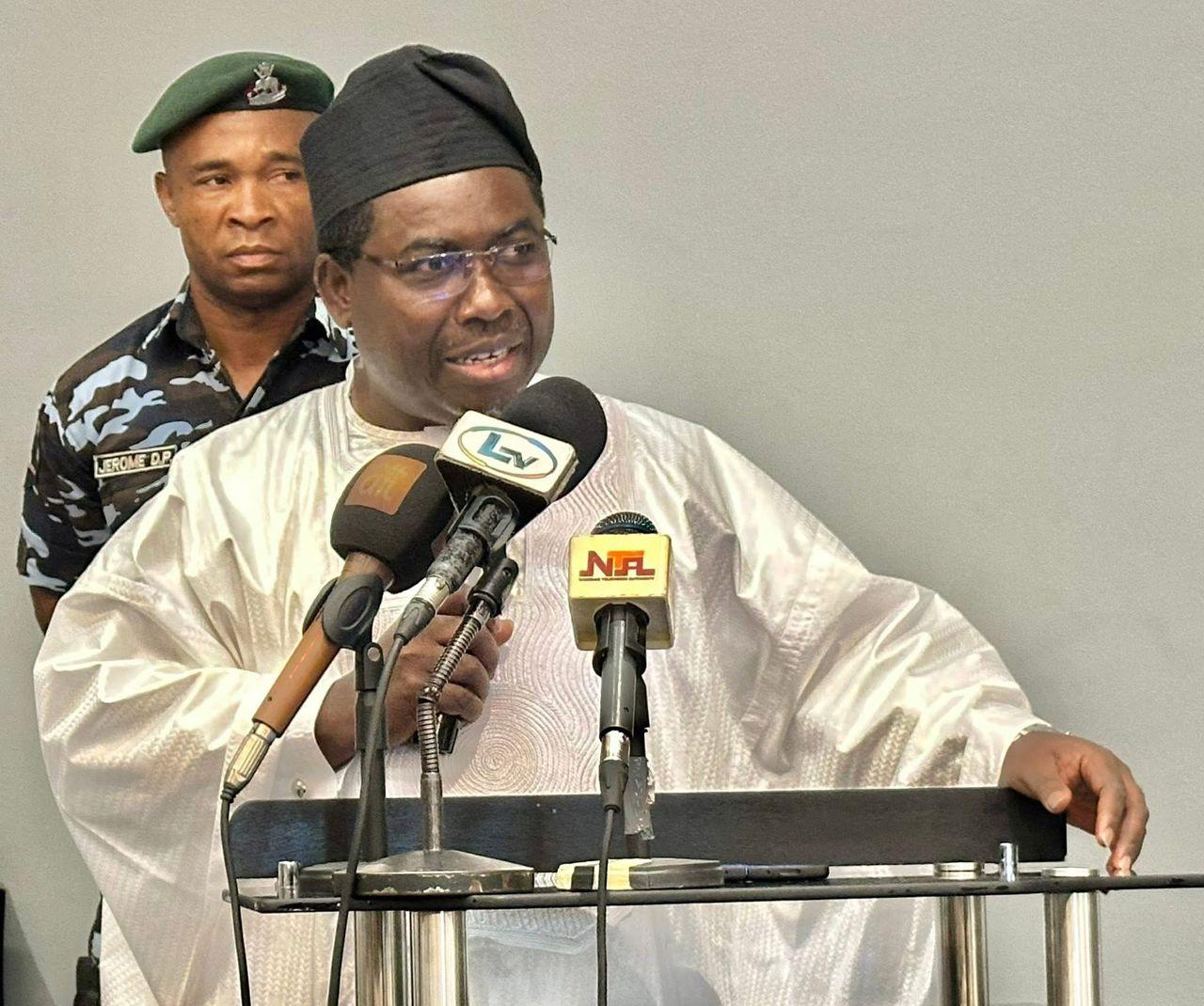
The chairman of the Independent National Electoral Commission (INEC), Joash Amupitan, has raised the alarm over the threats posed to the credibility of the 2027 general elections by the growing sophistication of artificial intelligence-driven disinformation and other challenges.
Amupitan lamented that despite proposing a substantial budget for next year’s general election, with significant allocations for technology and election operations, the commission is yet to receive the full release of the funds, even as it has continued with preparations for the polls.
He said that although the commission is pursuing a more rigorous, comprehensive audit of its electoral technology systems, covering system redundancy, penetration testing and disaster recovery planning, flawless technical performance on election day will not, by itself, protect the integrity of the 2027 election.
Represented by National Commissioner Sani Adam, SAN, the electoral umpire’s boss, in his keynote address at the 13th Annual International Conference of the Association of Communication Scholars & Professionals of Nigeria (ACSPN) in Abuja, suggested treating electoral technology and electoral communication as a single discipline.
He warned that the commission’s credibility now rests as much on how information about its processes is understood and trusted as it does on the integrity of the ballot, the Bimodal Voter Accreditation System (BVAS) and result sheets.
While explaining that the deployment of BVAS and the INEC Result Viewing Portal (IReV) was designed to close a longstanding credibility gap in the nation’s elections, giving citizens the ability to view polling unit results before they could be altered en route to collation, he, however, acknowledged that the build-up to the 2023 general elections showed that such technology could become a source of public doubt when it underperformed.
Amupitan also stressed that legitimacy is earned only when systems perform reliably, are well understood, and are explained honestly when they fall short.
“Technology has changed how Nigerians vote. It has also changed, just as fundamentally, how Nigerians know — or think they know — what happened when they voted. That second change is the subject of my remarks this morning. Let me start with what should be an encouraging story, because it is one INEC has lived. The introduction of the BVAS and the IReV Portal was a deliberate attempt to close the credibility gap that had trailed Nigerian elections for a generation.
“BVAS gave us a biometric guarantee against multiple voting and impersonation. IReV gave citizens, for the first time, the ability to see a polling unit result sheet on their own phone, hours before that figure could be altered anywhere along its journey to a collation centre.
“That was the promise of technology deployed in the service of transparency. But 2023 also taught us, painfully and publicly, that the same portal whose purpose was to build trust can, when it falters under load or when uploads are delayed, become the very evidence cited to question that trust.
“A technology does not automatically produce legitimacy. It produces legitimacy only when it performs reliably, is understood correctly by the public, and is explained honestly when it does not perform as expected. That lesson is the foundation of everything else I will say today.
“It is why, as we look towards 2027, the commission is not simply reinstalling the same systems and hoping for a smoother outcome. We are pursuing a more rigorous path: a comprehensive audit of our electoral technology systems, covering system redundancy, penetration testing and disaster recovery planning, so that we understand our vulnerabilities before an election exposes them rather than after,” he said.
Explaining further, Amupitan said: “We are also exploring the conduct of a mock presidential election ahead of 2027, a full test-run of accreditation, transmission and results viewing under conditions that mirror election day as closely as possible. These are not cosmetic gestures. They are a direct answer to the concerns raised about the reliability of our technology in 2023, and a signal that the commission intends to arrive at the next general election having stress-tested its own credibility before Nigerians are asked to stake theirs on it.
Other News
“But even a flawless technical performance on election day will not, by itself, protect the integrity of an election in 2027. The threat has migrated. It has moved from the accreditation machine to the information ecosystem that surrounds it, and this is where the theme of this conference becomes urgent rather than merely relevant,” he lamented.
Unveiling more threats to the polls, the umpire boss said: “Generative artificial intelligence has made the fabrication of convincing video, audio and imagery cheap, fast and increasingly difficult for the ordinary citizen to detect. A synthetic clip of an election official announcing a result that was never announced, a cloned voice attributed to a candidate conceding a race that is still open, a fabricated image of ballot papers already marked before polls open, these are no longer hypothetical scenarios reserved for science fiction panels.”
“Across the continent, researchers have already documented impersonations of senior African Union figures and the circulation of manipulated political video during electoral cycles in West and East Africa, including doctored footage that surfaced around Nigeria’s own 2023 presidential contest.
“What makes this threat distinct from the disinformation of previous election cycles is speed and scale. A rumour once needed a marketplace, a newspaper column or a radio broadcast to travel. Global risk analysts now rank AI-enabled misinformation among the most severe short-term threats facing democratic societies worldwide, and Africa’s rapid growth in mobile internet penetration, combined with an unusually dense electoral calendar across the continent between now and 2027, means that risk is not evenly distributed. It is concentrated, right now, on us,” he described.
While enumerating further threats, Amupitan admitted that: “For an election management body, this is a peculiarly difficult problem, because it does not always announce itself as a crisis. There is no single dramatic video to debunk.”
“There is instead a slow erosion of the common ground on which we ask over ninety million registered voters to trust the same declared result. Meeting this challenge requires INEC to think and communicate less like a regulator issuing occasional statements and more like a continuously present, trusted voice across the very platforms where fragmentation is occurring.
“I should also be candid about the resourcing reality behind these ambitions. INEC has proposed a substantial budget for the 2027 general election, with significant allocations set aside specifically for technology and election operations, including the procurement of new accreditation devices to replace those lost or damaged during the last cycle.
“Full release of these funds is still being awaited, yet preparations continue: our ICT team has already engaged manufacturers on device procurement, and planning for the technology audit and mock election is proceeding in parallel with, not in sequence after, budget finalisation. I raise this not to dwell on constraint, but because transparency about our own resourcing challenges is itself part of the communication discipline I am describing. A public that understands what we are working with is less easily persuaded by a fabricated narrative about what we are supposedly hiding.
“Given this landscape, I want to be candid about what I believe an election management body in Africa must now do differently, and what INEC intends to do.
First, we must treat electoral communication and electoral technology as a single discipline rather than two separate departments. The security of our servers and the credibility of our public messaging are now the same problem viewed from different angles. A technically secure system that is poorly explained invites suspicion. A well-explained process running on an insecure or untested system invites disaster. Our technology audit and our public communication strategy for 2027 must therefore be designed together, not sequentially.
“Second, speed of authoritative response must become a core competency, not an afterthought. In an environment where a fabricated claim can circulate nationally within hours, an election management body that takes days to issue a clarification has effectively conceded the narrative before it has spoken. This means investing in a dedicated, always-on digital monitoring and rapid-response capability, one that can identify a viral falsehood about our processes, verify the facts, and publish an authoritative correction across the same platforms where the falsehood is spreading, within the same news cycle,” he suggested..