Follow Us on Google
By Chinelo Obogo, [email protected]
At the inception of the administration of former President Muhammadu Buhari, an aviation roadmap which included the establishment of a Maintenance, Repair and Overhaul (MRO) facility, an Aviation Leasing Company (ALC); Agro-Allied Cargo Terminals; Airport City; National Carrier; Africa Aerospace and Aviation University (AAAU) was launched.
Immediate past Minister of Aviation, Hadi Sirika, vowed to unveil a world class MRO among others through a Public Private Partnership arrangement before Buhari’s tenure elapsed. But after eight years, the lofty dreams of the projects failed to materialise, prompting industry think-tank group, Aviation Safety Round Table Initiative (ASRTI) to rate the master plan 2015-2023 based on campaign promises as key performance indicators ( KPI) to judge the system.
The failure of the past government to fulfil its promise to ensure the establishment of facilities like an MRO despite the fact that for the first time in the nation’s history, a core industry professional was in charge of the Ministry of Aviation for over seven years, was a sore point for stakeholders, many of whom were optimistic that the industry would benefit from the administration.
At the inaugural edition of FAAN’s National Aviation Conference held in Abuja, FAAN Managing Director, Yadudu, argued that with a viable MRO for Nigeria, thousands of direct and indirect jobs would be created, leading to an exponential increase in revenue and capacity building through training of technical personnel.
“As at 2021, it was reported that Nigeria lost $2.5 billion (N1.25 trillion) in MRO investments to neighbouring countries. Today, the Eiffel Tower in Paris, London bridge, Dubai Mall, Burj Khalifa, the British museum in United Kingdom among others have all been consciously developed into major tourist attractions that drive passenger traffic to those destinations and by implication attract businesses and generate employments for the locals and foreigners alike,” Yadudu said.
This sentiment was also expressed by the chairman of Air Peace Airlines, Allen Onyema, at the quarterly meeting of Aviation Round Table (ART).
Onyema who doubles as the Vice President of Air Operators of Nigeria (AON), told the gathering that domestic carriers lose millions of dollars maintaining their aircraft overseas because Nigeria does not have an MRO and that the absence of such a facility is one of the major reasons why Nigerian airlines are bound to fail.
He said: “As I speak to you now, I am sure I have about eight aircraft abroad and these are costing millions of dollars. Even to ferry those planes abroad is a lot of money already. So, the Nigerian airlines are destined to fail from the beginning. You are dead on arrival because there are so many things against you. You don’t have MROs that could take care of maintenance. That should have been a major priority government should have facilitated.
“I do not believe in government doing business but government can provide the enabling environment for people of means to come and build the facility. If government sets up MRO it will fail, because government businesses fail anywhere in the world. All they need to do is to provide the enabling environment and people will build the facility.”
Onyema’s revelation that many domestic airlines repair their aircraft oversees is not far-fetched because in 2021 during a tour of Ethiopia’s MRO in Addis Ababa, Daily Sun sighted a Boeing 737-700 aircraft belonging to Arik Air which was in the process of being repainted at the facility.
The aircraft, which as at then had already been there for over two weeks, was to be repainted in the color of Nigeria Eagle, a startup airline which was to be floated by the Asset Management Corporation of Nigeria (AMCON) which had taken over the management of Arik Air since February 2017.
Akwa Ibom builds MRO, multi-purpose terminal
Experts have repeatedly pointed out that any country that desires to compete as an aviation hub must have an MRO of international standard, strong and viable airlines and a multi-purpose airport terminal that can move passengers from flight to flight. These components have been the plan of the Akwa Ibom State government through the years.
The state has constructed an International Smart Terminal Building at the Victor Attah International Airport in Akwa Ibom, it owns Ibom Air, an airline that has proven to be one of the best in the industry in terms of performance and most importantly, and an MRO. The state government begun the construction of its MRO in 2012 and 11 years later, the facility has been completed but awaiting tooling, certification and usage.
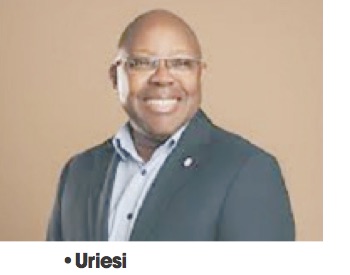
Ibom Air Development Company, which would be in charge of running the facility said Airbus Consulting was invited to evaluate the MRO and provide a business plan that would drive it, while the Chief Operating Officer (COO) of Ibom Air, George Uriesi, said the facility can compete with the likes of that of South Africa Airways, Ethiopian Airlines in Addis Ababa, and the facility of Egypt Air in Cairo.
“The MRO facility is very important for Nigeria and West Africa. It is the only facility of its type in the whole of West and Central Africa but more than that, it presents an opportunity for us to move into a different era in the industry in Nigeria because of all the facilities that it has. It is massive and can take two Boeing 747-800 standing side by side with the doors closed. In the same vein, it can take eight of our aircraft type, Airbus A220 at once and 10 of our other aircraft type, CRJ900.
“From wheels, aircraft brakes, tires and all the different shops; many of these things have not existed in Nigeria at this scale before. So, we have the opportunity to present this repair and overhaul maintenance facility to all the airlines in West and Central Africa.
“Most of our airlines go to Europe and pay millions of Euros to be able to maintain their airplanes. With this facility, we are now going to be able to provide maintenance for other airlines right here in Uyo. We are partnering with Airbus consulting, we have contracted them to partner with us to come and assess the facility which by the way, they are impressed with. They will help us develop a business plan for optimal use of this facility. We want to be able to maintain our fleet which are the A220 and CRJ900 and also to advise us on which fleet best we can get the most business out of.
“When we have that business plan, it allows us to know what to invest in, in terms of the capabilities of maintenance of which aircraft and target the right airlines to go after to offer our services to them,” Uresi said.
On the features of the new international smart terminal building, Uresi said, “You can arrive on a domestic flight and connect to an international flight and arrive from an international flight and connect to a domestic flight. You can also arrive on an international flight and connect to another international flight. You can arrive at the same terminal under the same airport experience which is world class and it all adds to the joy of travelling.
“We have a very poor airport experience that Nigerian passengers and visitors to Nigeria have experienced through our international airports over time. For this terminal, if you want to go to Johannesburg, you book a domestic flight out of Abuja and fly into Uyo to connect to Johannesburg. We are going to collaborate with all the security services. Any person that has anything to do with processing of passengers will be trained to make the experience through this airport a world-class experience like you find anywhere else you go to. By providing this service through this game-changing terminal, we expect to build this a hub in West Africa that really has never been seen before.”
Expert speaks
An aviation expert, Amos Akpan told Daily Sun that the terminal is visionary and the MRO is desired but that the business case for viability as profitable commercial ventures should be addressed because that will be the platform to drive sustainable operations and keep it functional for over a long term.
“This means we should pay attention to critical factors that will make it successful and sustainable. I am aware of the argument that we should not categorise these projects within the short and medium term profit earning enterprises. But my opinion is that partnership with private investors will lead to the installation of corporate governance practices which will address the burden of reliance on drawing capital from the lean purse of the state government as it is currently done.
“In today’s world, whether seaport or airport, they are built with the concept of generating revenue to pay for its cost of operations and yield returns on investment; Not as as continuous unending liabilities. The argument that its profit can not only be quantified in, or limited to, a profit and loss statement has been defeated by the existing government created business institutions like the NNLG run by private – corporate principles. Government created Airlines, airports, MRO, and seaports give annual reports showing accountability and corporate governance. We need to follow this path for sustainable growth and development.
“Number one critical success factor is power. You cannot make such projects sustainable and successful while depending on generators or the current epileptic power grid. You need to create sustainable power system for that project and its immediate environment.
“Number two is the skilled human capital required to operate the systems by the world’s current trends. Everything is global so the business units or the business portfolios in Victor Attah International airport must think, must create, and must provide world class services and products. Each structure and system should match in standard and quality, not necessarily in size, what is obtained in Dubai, Singapore, or Japan.
“An operator must have a reason to come to our MRO instead of Ethiopian, Morrocan, or Egyptian MRO. You must have an edge above your competition. On the whole I see a very future thinking platform for growth and development. My advice is for successive regimes to sustain the momentum. If successive regimes continue to build and improve on the existing platform, AKS will be the toast of aviation in the West African sub region,” Akpan said.