Follow Us on Google

From Juliana Taiwo-Obalonye, Abuja
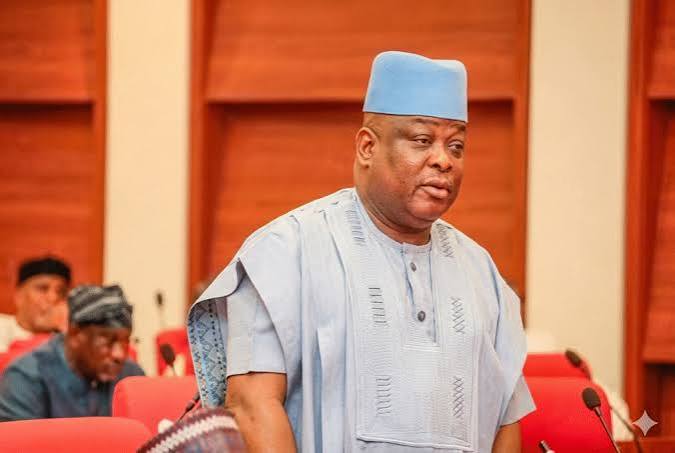
Artificial intelligence (AI) could unleash a global crisis of deception, misinformation and manipulation if left unchecked, Chairman of the Senate Committee on Capital Market, Osita Izunaso, has warned, raising fears that increasingly sophisticated fake images and fabricated digital content could undermine public trust and make it difficult to distinguish truth from falsehood.
The senator’s warning was reinforced by international communication experts who cautioned that the growing misuse of AI and social media was eroding institutional credibility, fuelling divisions and threatening responsible public discourse.
Speaking on Monday at the Global Alliance World Public Relations Forum in Abuja, themed “Responsible Communication: The Voice of the World,” Izunaso called for urgent regulation of artificial intelligence before its potential benefits were overshadowed by the dangers of misuse.
“Just like when new media started, most politicians did not find it necessary to regulate the new media. We started late as parliamentarians and I am also of the opinion that AI must be regulated before AI will destroy the world.
“Now, when you see AI images, they look so real that sometimes you might not be able to decipher which is AI and which is real. Don’t get me wrong. AI is good, but it has to be regulated before the goodness of AI will become the calamity of the world,” he said.
The lawmaker also decried what he described as the weaponisation of social media against politicians, alleging that some individuals resorted to online attacks and damaging publications when public office holders failed to meet their personal demands.
“When people ask you for something and you are unable to do that thing, they will say okay, don’t worry. Then, within one week, you will see what they post about you. All manner of negativity,” he said.
He cited the case of a political appointee who allegedly became the target of negative online comments following his appointment to a campaign council, attributing the attacks to personal and political differences.
Izunaso called for greater responsibility in digital communication, stressing that technological advancement must be accompanied by accountability and respect for truth.
His concerns were echoed during a panel discussion titled “Misinformation and Social Cohesion: Rebuilding Trust through Responsible Public Relations,” where communication professionals warned that false information was weakening institutions, deepening social divisions and undermining public confidence.
Chief Executive Officer of Ardent Communications and President of the Public Relations Society of the Philippines, Ana Pista, said artificial intelligence had intensified the challenge of misinformation, making ethical communication and professional accountability increasingly important.
“With the power comes the responsibility to protect the truth,” she said, urging public relations practitioners to uphold professional standards and resist the manipulation of public opinion.
Pista maintained that responsible communication should provide citizens with accurate information to make informed decisions rather than seek to control their thinking.
However, Australian communication expert, Adrian Cropley, cautioned against treating every disagreement or criticism as misinformation, stressing that professionals must distinguish deliberate falsehoods from legitimate differences of opinion. He said rebuilding trust required credible evidence, proper context and genuine engagement with the public rather than attempts to control narratives.
Other News
Cropley also challenged practitioners to speak against unethical decisions within their organisations instead of defending questionable conduct to protect their employers.
Egyptian Enterprise AI Governance Architect, Mohamed Hussien Abdelaziz, warned of a widening gap between what emerging technologies made possible and what professional ethics permitted, advocating stronger moral judgment in the use of artificial intelligence.
Chief Executive Officer of the Chartered Institute of Public Relations, United Kingdom, Alastair McCapra, said public relations professionals must address credibility challenges within their profession before seeking to rebuild public trust in institutions.
He also raised concerns over the relationship between younger generations and artificial intelligence, noting that although Generation Z was among the technology’s most active users, many young people feared its implications for employment.
McCapra urged organisations to understand their audiences and respond to their concerns, warning that transparency alone would not guarantee public confidence.
Pista called for greater involvement of young professionals in decisions concerning communication ethics and technological change.
“They should have a seat at the table because, at the end of the day, the future is theirs,” she said.
On inclusion, David Obinna Anyaele of the Abia State Disability Commission warned that responsible communication must also ensure access to information for persons with disabilities.
He said even accurate information could exclude people with hearing or visual impairments if it was not provided in accessible formats.
Citing an estimated 35 million persons with disabilities in Nigeria, Anyaele urged government institutions to provide sign language interpretation, audio alternatives and other accessible communication channels.
“Responsible communication must be for all. There is nothing about us without us,” he said.
He commended the Independent National Electoral Commission (INEC) for efforts to improve accessibility and urged other public institutions to adopt similar measures.
Earlier, Vice-Chancellor of Chukwuemeka Odumegwu Ojukwu University, Anambra State, Kate Omenugha, called for communication ethics to be integrated into university curricula, warning that the widespread use of AI and social media without adequate ethical guidance was increasing the risk of misinformation.
Also speaking, President and Chief Executive Officer of the Global Alliance for Public Relations and Communication Management, Justin Green, disclosed that Africa now had six representatives on the organisation’s board, compared with none previously.
He said the continent currently had the highest representation on the board, reflecting its growing participation in global public relations leadership.