Follow Us on Google
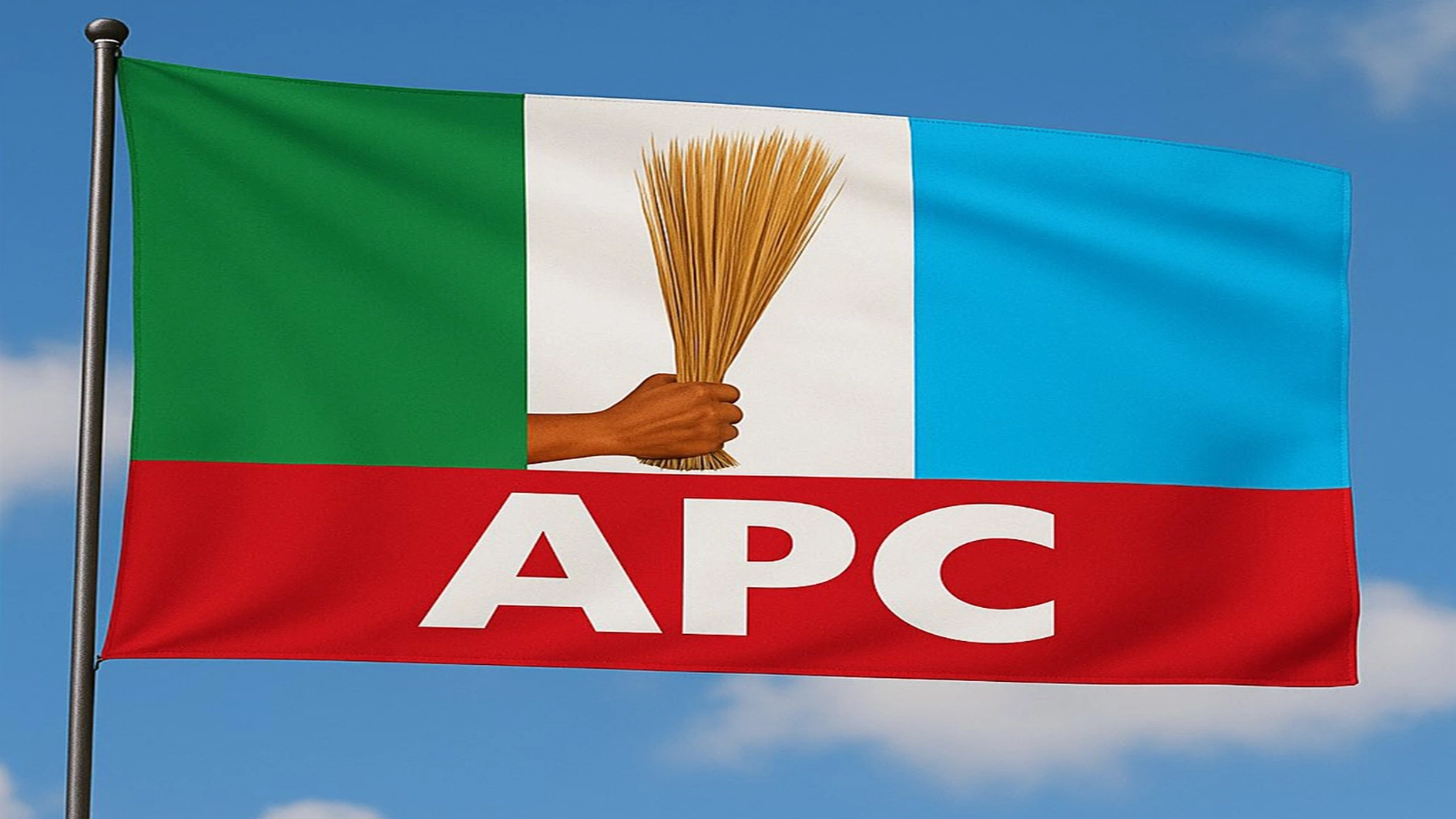
The expulsion of former Agege Local Government Chairman, Chief Ganiyu Kola Egunjobi and Azeez Oladapo Yusuf, popularly known as Ninolowo, from the All Progressives Congress (APC) has intensified political debate in the constituency ahead of the 2027 elections.
The Lagos State chapter of the APC announced the expulsion of the two politicians on September 23, citing alleged violations of the party’s constitution and involvement in anti-party activities.
The development followed the decision by Egunjobi and Ninolowo to contest the 2027 Lagos State House of Assembly election on the platform of the Allied Peoples Movement (APM), after both had participated in the APC’s nomination process.
The APC State Chairman, Pastor Cornelius Ojelabi, said the two politicians violated the provisions of Article 9(5)(II) of the party’s 2022 amended constitution by seeking elective positions on another platform after participating in the APC primaries.
The party described their actions as disloyalty and anti-party activity, maintaining that members who participate in its nomination process are expected to abide by the outcome or pursue recognised internal and legal channels for redress.
However, the expulsion has revived the controversy surrounding the APC House of Assembly primaries in Agege Constituencies I and II.
Egunjobi and Ninolowo were among the prominent aspirants who contested the primaries and were initially reported to have emerged as winners. Contemporary reports from the May exercise put Egunjobi’s votes at 12,455, while Ninolowo was reported to have secured 8,299 votes.
Subsequent changes to the APC candidate list, however, altered the political situation and triggered grievances among supporters of the two politicians.
Following the dispute, Ninolowo and Egunjobi eventually emerged as APM candidates for Agege Constituencies II and I respectively.
In their response to the controversy surrounding their defection, the two politicians said their decision to leave the APC was based on what they described as “grave injustice” and the failure of the party leadership to provide what they considered satisfactory redress.
They also rejected suggestions that their movement to the APM was orchestrated by Lagos State House of Assembly Speaker, Mudashiru Obasa.
According to them, their decision was independently taken following their experiences during and after the APC’s nomination process.
The development has consequently transformed what began as an internal party dispute into a wider electoral contest in Agege, with both the APC and APM preparing to mobilise support ahead of the 2027 election.
Supporters of Ninolowo have argued that the controversy should not be viewed simply as a case of defection from the APC. They maintained that the APM candidacy represents a continuation of his political pursuit after the disputed APC nomination process.
Some of his supporters have also suggested that voters could support candidates from different political parties across various levels of the 2027 elections, depending on individual preferences.
In their account, a voter could support President Bola Tinubu at the presidential level, Dr Kadri Obafemi Hamzat for the Lagos governorship, Senator Idiat Adebule for the Senate and Mudashiru Ajayi Obasa for the House of Representatives, while backing Ninolowo on the APM platform for the State Assembly.
That position, however, remains a political claim by Ninolowo’s supporters and does not establish an independent voting pattern across Agege.
APC stakeholders in the constituency have, in contrast, maintained that the defections of Ninolowo and Egunjobi would not weaken the party’s structure.
They have pledged to mobilise support for the APC candidates across the ballot and maintain the party’s presence at the grassroots.
The contrasting positions have added another dimension to the political contest, which is increasingly being discussed in terms of the personalities of the candidates, their grassroots networks and the history of the disputed APC primaries.
For the APC, the issue is primarily one of party discipline and adherence to its constitution. The party’s position is that members who are dissatisfied with the outcome of its nomination process should seek redress through established internal or legal mechanisms rather than contest against the party under another platform.
For Ninolowo and Egunjobi, however, the central issue remains the outcome of the nomination process and what they described as the failure of reconciliation efforts.
The dispute has, therefore, moved beyond the APC’s internal structures and into the wider electorate.
In Agege Constituency II, the emerging contest is expected to feature Ninolowo of the APM against Enimakure Akindele Sakiru of the APC.
The contest could consequently test the extent to which the unresolved APC primary controversy continues to resonate among voters.
It also presents both parties with competing challenges. While the APC will seek to demonstrate that its organisational structure remains intact despite the defections, Ninolowo’s camp will seek to convert his political support base and the grievances arising from the primary dispute into electoral support.
With the 2027 elections approaching, the expulsion of Ninolowo and Egunjobi has not brought the Agege controversy to an end. Instead, it has added a new chapter to an already contentious political dispute.
The eventual outcome will depend on how the competing campaigns mobilise voters and how residents of Agege Constituency II respond to the issues, candidates and political alliances presented to them at the polls.