Follow Us on Google
By Chinelo Obogo
As the new tax laws kick in, domestic airlines are poised to pass any increased tax burdens to passengers as a survival strategy, a senior official of a major carrier has revealed.
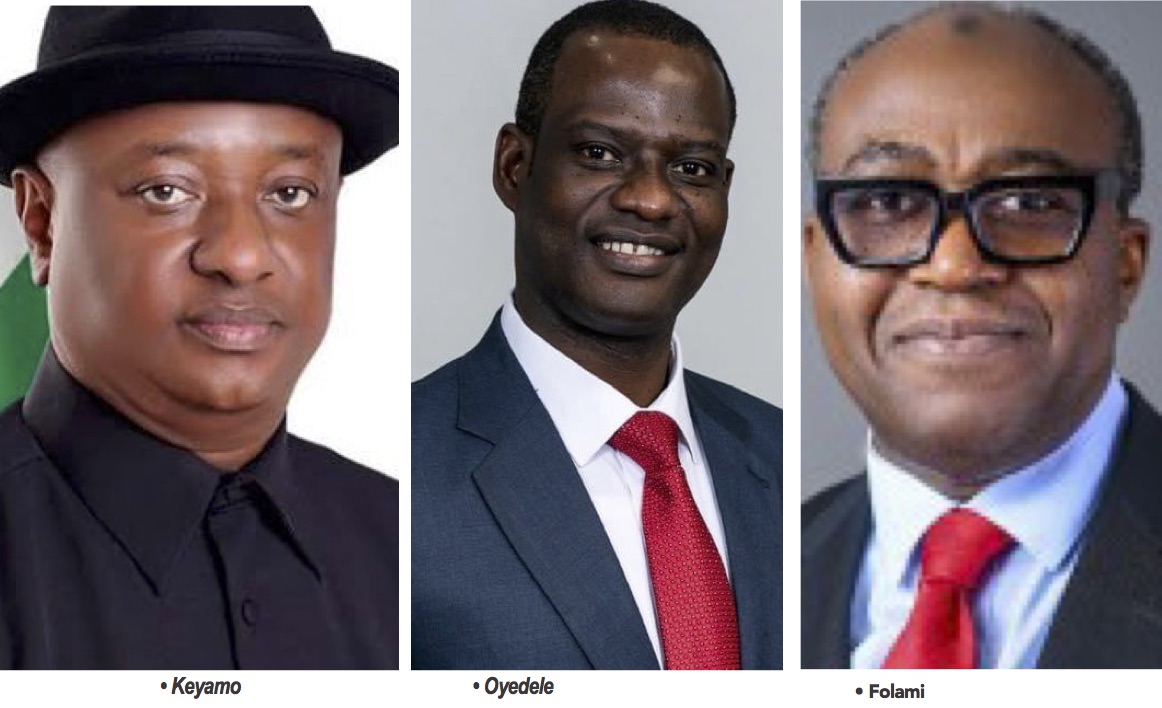
The source, speaking to Daily Sun on condition of anonymity, responded to Taiwo Oyedele, Chairman of Nigeria’s Presidential Fiscal Policy and Tax Reforms Committee, who claimed that the new tax laws would benefit the aviation sector by lowering airline operating costs without triggering fare increases.
The debate over Nigeria’s new tax reforms escalated after Air Peace Chairman, Allen Onyema, warned in a television interview that the law could drive up airfares.
Taiwo Oyedele, Chairman of the Presidential Fiscal Policy and Tax Reforms Committee, countered, arguing that the reforms would benefit airlines by eliminating the 10% withholding tax on aircraft leases and allowing Value Added Tax (VAT) to be claimable.
Despite these assurances, a senior airline executive expressed skepticism, describing the statements as political rhetoric rather than policies grounded in economic reality.
The executive stressed that any increase in government taxes would inevitably be passed on to passengers through higher ticket prices.
“If the taxes you pay increase, will you not add it to your cost of running the business? When you increase somebody’s tax and then you say it won’t affect him, don’t you know the person is playing politics? The government removed some VAT components from importation and all that were not supposed to be paid before. Under late Buhari, they didn’t pay it anymore, so that will alleviate the problems.
“If you look at the way we do our fare structure, and some other airlines do the same thing, we have what we call the base fare. That’s what the airline is collecting from you. Then they will add NCAA tax, they will add fuel surcharge, which is, if you are going for one hour, how much is the fuel likely to cost?
“I fuel my car; once I buy N50,000 fuel, for instance, I know in three days it will be finished. So if I fuel my aircraft and I carry 100 passengers and divide it by the number of my seats, I know how much one person should pay. So they will put all of it like that in your fare summary. And if you now say I’ve increased the government component of tax, whatever area that government component of tax needs to reflect will go up a little. It may not be huge, but the government is collecting a certain percentage of every ticket. So their definition of ‘huge’ or ‘not huge’ is what is now in question.
“When Nigeria wanted to increase fuel prices, what did they tell us? They told us that other countries charge higher for fuel than Nigeria. They did not bother with our own cost locally, but when it is another man’s turn, you will now start saying different things. You are not the one running his business for him. We are running a free market economy that is governed by demand and supply. If I price my service and it is not comfortable for you, leave it there. They say aviation is a priority sector. But there is no sector that is being funded by the government. If it is a priority for you, set up your Nigerian airline and let us see it run, and then you can charge N50,000 for air fare. If you charge N50,000 and we are still charging N125,000 and sometimes maybe it will go as high as N175,000 or N200,000, it won’t stop people who are going to buy the N500,000 ticket from buying.
“I was coming back home the other day and looking at the fuel pump prices at the filling stations, and I was happy. We saw one that was N700-something. I said, ‘I know, I am hoping that they can all come down,’ because what will fill my tank for N50-something thousand will probably now be N40-something thousand.
“I have had to sit under training on these new tax laws to learn how they are going to impact everybody, at least from the individual perspective. They were explaining to us that it may not necessarily be higher than what we used to pay. It is just that they have done it in another way, and if you are earning lower than this and all that, it is okay. Everybody will now become experts in it over time when we see the way you implement it.
“When the government increased stamp duties in the banks, nobody told the banks when to start charging again. They started charging immediately. So generally, if there is any form of increase in tax, there will naturally be a bump in flight ticket prices. If you don’t see an increase, it will be because the company has decided to absorb it in their own profits.
“The question being asked is if we are going to implement any increase in tax now, or are we going to wait. If we wait and we miss out on starting immediately, and then they come and calculate your tax and they add the one you didn’t collect, who will pay it? Every record of every flight is in the NCAA. They know how many passengers you carry as the airplane is taking off. You can’t wait. That’s not a decision that we call a meeting for. That’s a decision that will be reached either between finance and the head of commercial and management, and they will tell them to implement,” the source stated.
Other News
Travel agents challenge claims of multiple charges, taxes
Adding another dimension to the debate, the national president of the National Association of Nigerian Travel Agents (NANTA), Yinka Folami, has questioned recent claims about the number of taxes embedded in airline tickets, calling for a proper investigation into fare pricing in the aviation sector.
Speaking as a guest panelist on Creative Naija TV, Mainland FM on Thursday, Folami addressed two key issues which he said have dominated discussions about airline ticket pricing: seasonal fare increase and reports that airlines pay up to 18 government taxes per ticket. On the first issue, Folami stated that government taxes are not responsible for seasonal price increases. He said that airlines make business decisions based on seasonal demand factors that are separate from government taxation.
He said: “There are two issues at play. The first is that government taxes are responsible for the seasonal hikes, and our answer is no, because for example in December, the government didn’t increase taxes. In June, you could buy a ticket to Abuja for N145,000, but in December, you buy the same ticket for N255,000. And now, if you check the cost of flight for January to February, you would see that a one-way ticket has gone down to N125,000. So we need to end the speculation that government taxes are responsible for the seasonal hikes. Some of the airlines had taken business decisions that are outside government taxes because of the season.”
Addressing the second issue, Folami expressed skepticism about claims that airlines pay 18 taxes per ticket, stating that this contradicts NANTA’s industry experience: “The second issue is the assertion that there are 18 government taxes on every ticket. NANTA is 50 years old, and in our 50-year experience, that assertion is new to us. I am not saying that it is not true; I am only saying that that assertion is new to us.
“When you scan an average domestic ticket, you will find about four taxes. You will find QT, which goes to the fund. You will find NG, which goes to the government—that’s the CAA. You will see the basic fare, which is supposed to accommodate the airline costs and margins, and then you will see something called YQYR.
“An assertion has been made that airlines pay about 18 airline taxes, so we need to come together for that assertion to be deconstructed. There is a Nigerian ticket which has a total cost of N360,000, and it pays tax of N9,000 to FAAN, it pays N16,500 to the government, and the basic fare that goes to the airline is N46,000, while the YQYR is N288,000. What this shows is arbitrariness. YQYR is an emergency task that is applied by airlines, and it is being arbitrarily applied. It is this arbitrariness in the application of taxes that we should look at. If we address the issue of arbitrary imposition of taxes, everyone would be settled, and it would be in the interest of the government, the airlines, and the flying public.”
Nigeria, country with costliest airfares
The debate over ticket pricing comes as new research reveals that Nigeria has the least affordable domestic air travel in the world when adjusted for local wages and purchasing power.
A research paper published in 2025 by the President of Aircraft Owners Association of Nigeria, Dr. Alex, with the title “Reassessing Nigerian Airfares: A Global Affordability Perspective,” evaluates the affordability of domestic air travel in Nigeria using 2025 National Bureau of Statistics data and compared it with 19 other countries.
The findings show that Nigeria ranks as the country with the least affordable market and the highest real cost burden on travelers. The findings challenge claims that Nigeria has the lowest airfares and call for policy reforms.
Nigeria’s 2025 average fare of N131,667 is based on NBS monthly data. The data is for comparative analysis only, and the methodology applied in the research was a cross-country comparison conducted using standard fare, average monthly wage, and PPP. The Real Cost of Flying Index is calculated as: Fare / (Wage × PPP). A higher index indicates lower affordability.
For standard short-haul domestic fares in US dollars, passengers in India pay $75.00, Vietnam $65.00, Malaysia $55.00, Thailand $65.00, Philippines $75.00, Indonesia $80.00, Brazil $100.00, Mexico $90.00, United States $150.00, Canada $185.00, Australia $170.00, Japan $150.00, China $105.00, UK $130.00, Germany $130.00, UAE $105.00, South Africa $120.00, Kenya $105.00, Ethiopia $95.00, Nigeria $131.67.
The average monthly wages for each of the countries are: India $250.00, Vietnam $400.00, Malaysia $1,200.00, Thailand $700.00, Philippines $350.00, Indonesia $300.00, Brazil $900.00, Mexico $700.00, United States $6,900.00, Canada $4,200.00, Australia $4,800.00, Japan $3,200.00, China $1,200.00, UK $4,000.00, Germany $4,500.00, UAE $3,500.00, South Africa $1,100.00, Kenya $250.00, Ethiopia $100.00, and Nigeria $175.00.
The data shows that Nigeria’s average fare of N131,667 is higher than that of many countries when adjusted for income and PPP. Low wages and weak PPP result in the highest Real Cost of Flying Index.
Nigeria ranks 20th out of 20, making it the least affordable market. Even Ethiopia, with lower wages, has better affordability.