Follow Us on Google
From Adesuwa Tsan, Abuja
The Senate yesterday met again behind closed doors to deliberate on the Electoral Act amendment bill. But, after about four and a half hours of the meeting, the status of the bill remained unclear as nothing was disclosed to the public about its decisions.
At about 1:06pm, following a motion moved by Senate Leader, Opeyemi Bamidele, to continue with the deferred clause by clause consideration of the Simon Lalong-led Committee on Electoral Matters, the lawmakers began a closed-door session which lasted till about 5:30pm.
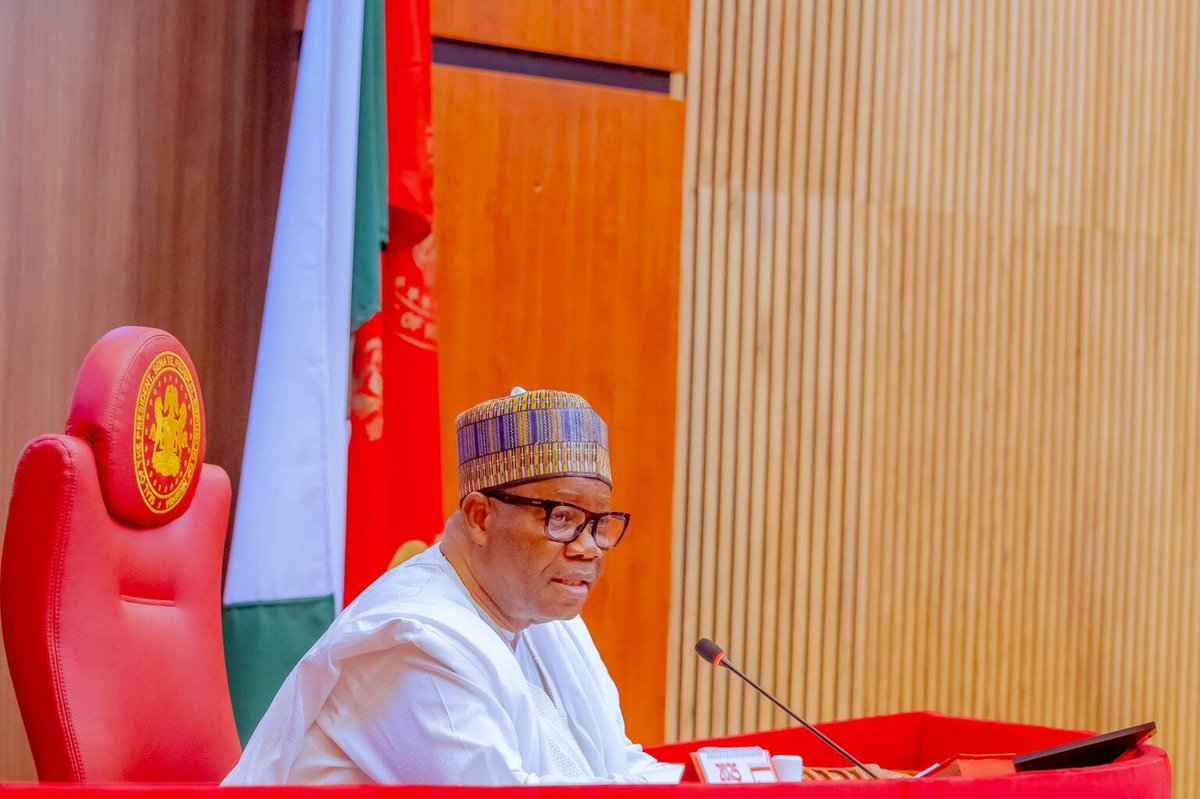
Immediately they resumed plenary, Senate President Godswill Akpabio said: “At the executive session, the Senate deliberated on the Senate in particular and that of the nation in general. Is this a reflection of what transpired in the Committee of the Whole?” Then the senators answered, “aye.” He, thereafter, hit the gavel, signalling the conclusion of the business in reference.
The Senate Leader then moved for adjournment of plenary till today. This is the second time the Senate is failing to take a decision on the bill.
Issues in the much anticipated Electoral Act amendment bill include mandatory real-time electronic transmission of results from polling units to the Independent National Electoral Commission’s (INEC) Result Viewing Portal (IREV).
Other News
It also proposes penalties for recurring challenges of result manipulation and ballot box snatching.
The committee also recommended additional safeguards to strengthen electoral integrity. A new subsection was introduced to Section 77 to criminalise the failure of presiding officers to sign and stamp ballot papers and officially announce results.
The report also aligns the law with existing electoral technology by amending Sections 47(2) and replacing references to the “smart card reader” with the “Bimodal Voter Accreditation System (BVAS).”
To curb exploitation of vulnerable voters, Section 54(1) was amended to prohibit political party agents, candidates or their officials from accompanying visually impaired or incapacitated voters into voting cubicles.
In a move to deter vote trading, the committee further proposed stiffer sanctions for the buying and selling of Permanent Voter Cards (PVCs), recommending an increase in the fine under Section 22 from N500,000 to N5 million.