Follow Us on Google
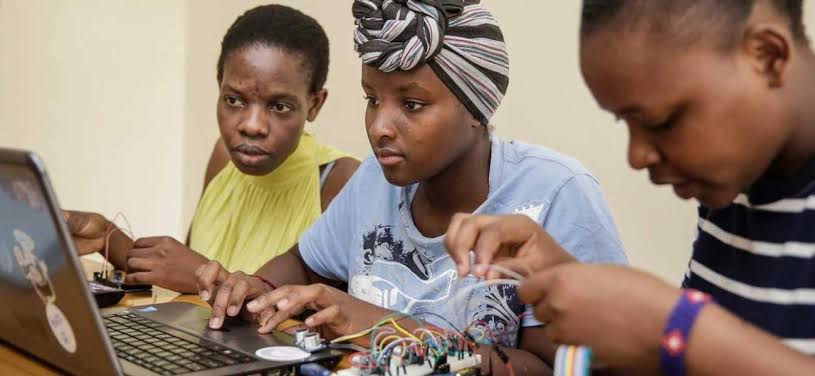
African women in science, technology, engineering, and mathematics (STEM) must be seen not merely as beneficiaries of development efforts but as active problem-solvers shaping Africa’s future, according to leading scholars and practitioners at a recent high-level panel on African Women in Science and Technology.
The virtual gathering which was organized by the Toyin Falola Interviews, was held on Sunday. The panel brought together distinguished voices including Dr Veronica Okello, Senior Lecturer at Machakos University, Kenya; Professor Catherine Ngila, Acting Executive Director of the African Academy of Sciences; Dr Ibraheem T. Badejo, Senior Director, New Ventures at Johnson & Johnson Innovation, Boston; Professor Lucie T. Tchouassi of the Mechanical Engineering Department at New Jersey Institute of Technology; and Dr Wumi Sadik, a Nigerian-American professor, chemist, and inventor also based at the New Jersey Institute of Technology.
The panelists challenged lingering stereotypes that cast African women as passive actors in scientific advancement. Instead, they spotlighted women’s active roles in confronting some of the continent’s most urgent issues—including climate change, environmental degradation, and public health threats.
Dr Veronica Okello asserted that “African women in STEM are not just participants—we are problem-solvers.” She stressed that women across the continent are engineering solutions that are deeply rooted in community realities, often with limited resources and institutional support. According to her, these women deserve not tokenistic recognition, but meaningful investment.
She urged African governments, private sector stakeholders, and global development partners to move away from ad-hoc empowerment initiatives and instead embrace sustainable investment frameworks that prioritise indigenous innovation.
Okello advocated policies that promote local procurement of women-led STEM solutions, co-designed mentorship programmes tailored to Africa’s sociocultural contexts, and robust funding mechanisms that enable women to scale their inventions.
“Africa cannot afford to treat women-led science and technology as an afterthought,” Okello said. “Mentorship, resource access, and policy inclusion must be institutionalised if we are to harness the full potential of women innovators on the continent.”
In her intervention, Dr Wumi Sadik drew from her personal journey as a chemistry major at the University of Lagos, Nigeria. Recalling the resistance she faced from family members unfamiliar with the discipline, Sadik narrated how she explained basic scientific concepts—such as the refinement of kerosene from petroleum—to gain her family’s support. She stressed the importance of having male allies, noting her father’s critical encouragement.
Sadik linked her story to Nigeria’s technological future, citing the establishment of the Dangote Refinery as a milestone that underscores the strategic importance of basic sciences. “Before you can get pharmaceuticals, you need petrochemicals,” she explained. “People don’t understand that the basic science is what leads to the technologies that we have.”
She called for systemic reforms in science education and policy-making to foster gender equity. Sadik advocated the development of national STEM policies that prioritise women’s participation, eliminate systemic biases, and ensure equitable representation in leadership positions.
“There is paucity of women in leadership,” she said. “We can ensure that 50 percent of women participate in recruitment and promotion processes. We can increase funding and scholarships specifically targeted at girls and women pursuing STEM careers. We can modify gender mainstreaming strategies in higher institutions and allocate research funding to promote equity.”
Sadik also recommended integrating gender dimensions into research and innovation design, strengthening teacher capacity at all levels of education, and expanding digital literacy to ensure young girls gain practical exposure to science from an early age.
“It should not be that it is only when they travel overseas that they learn how to practice science,” she said. “We can reform science education to go beyond memorization and into innovation. There is a lot that we can do—and we don’t have to wait for the government to do it all.”
Both Okello and Sadik agreed that investing in African women in STEM is not merely a matter of justice, but a strategic imperative for development across the continent.