Follow Us on Google

Call for stronger continental cooperation
_______________________________________________________________________
From Laide Raheem, Abeokuta
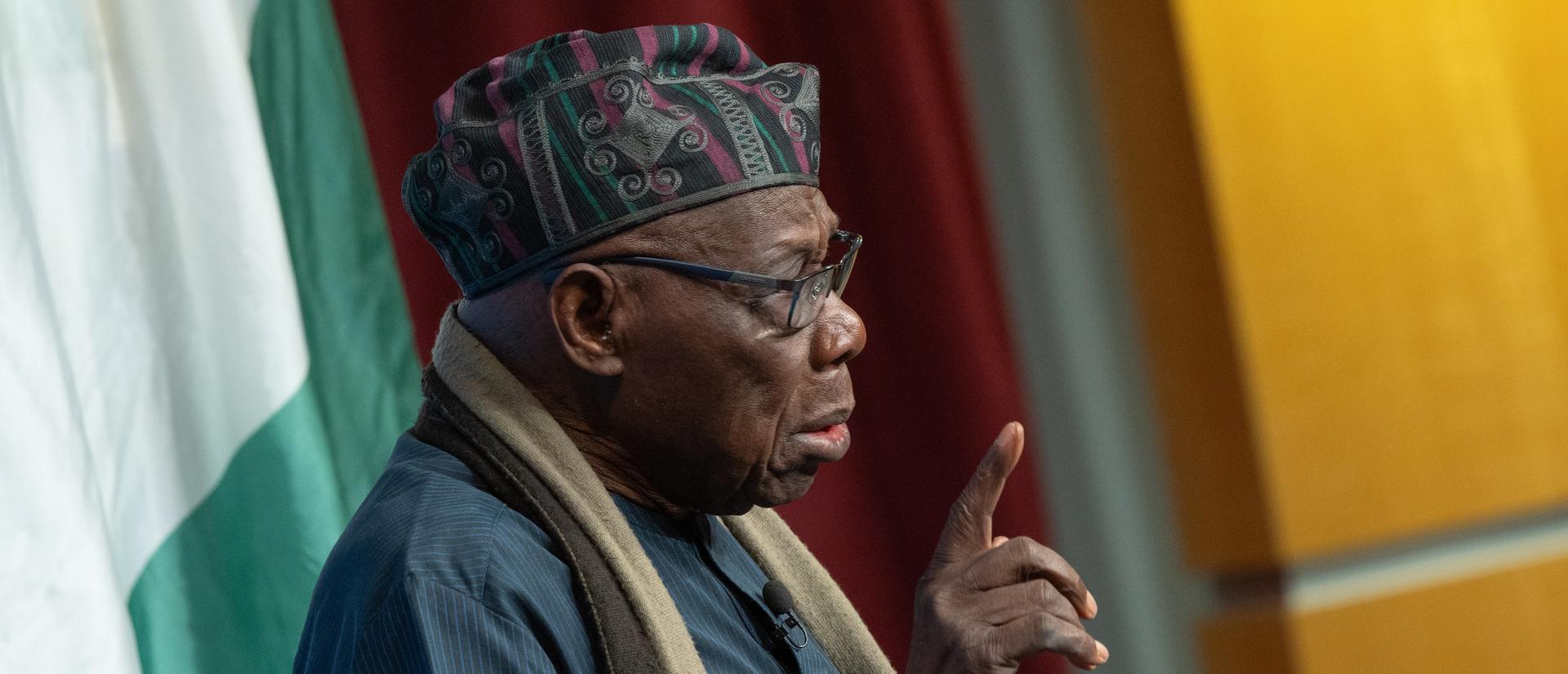
Former President Olusegun Obasanjo and other African diplomats, policy thinkers and development advocates have warned that Africa risks becoming a battleground for competing global powers unless its leaders build institutional capacity, economic strength and the collective political will to set the continent’s own development priorities.
They equally called for stronger continental cooperation, home-grown development strategies and independent African institutions to enable the continent to protect its interests and compete in the changing global order.
This position was contained in a communiqué issued at the end of the maiden Amandla Parapọ̀, the flagship policy and leadership retreat of the Amandla Institute for Policy and Leadership Advancement (AIPLA), held at the Amandla Conference and Resort, Ilishan-Remo, Ogun State.
The gathering, supported by Open Society Foundations (OSF), brought together African statesmen, diplomats, scholars, researchers, Pan-Africanists, policymakers and civil society leaders to examine the implications of changing global geopolitics for Africa. Obasanjo attended as a distinguished special guest.
Participants identified Africa’s vast arable land, strategic transition minerals, rare-earth deposits, maritime trade corridors and youthful population as critical assets that could strengthen its position in the emerging global order.
They, however, expressed concern that the continent remained poorly positioned to protect and maximise those resources amid increasing competition among global powers for strategic assets driving the green and digital transitions.
In her opening address, the Co-founder and Chairperson of the AIPLA Governing Board, Erelu Bisi Adeleye-Fayemi, challenged African leaders to move beyond diplomatic rhetoric and confront the realities shaping the continent’s future.
She maintained that Africa could not achieve genuine sovereignty by relying on borrowed ideas and external capital, stressing the need for independent institutions, stronger domestic funding mechanisms and greater African control over development priorities.
Drawing on her experience as co-founder of the African Women’s Development Fund (AWDF), Erelu Fayemi warned that excessive dependence on foreign funding could influence the priorities and ambitions of African institutions.
Other News
She also emphasised intergenerational leadership, urging African institutions to create opportunities for young thinkers, civic innovators and emerging scholars, while ensuring the transfer of institutional knowledge, ethics and strategic discipline.
On continental integration, she argued that no African country, regardless of size or natural resources, could effectively negotiate with major global powers in isolation.
She called for the practical implementation of the African Continental Free Trade Area (AfCFTA), the African Mining Vision and the African Union’s Agenda 2063, while advocating a shift from the export of raw materials to domestic processing and value addition.
The communiqué, however, called for the revival of the Pan-African spirit that characterised the 1990s and early 2000s, when the Organisation of African Unity (OAU) was transformed into the African Union (AU), alongside initiatives such as the New Partnership for Africa’s Development (NEPAD) and the African Peer Review Mechanism (APRM).
It identified Nigeria, South Africa, Algeria, Egypt, Ethiopia and Senegal as countries with significant responsibilities in renewing Africa’s collective leadership and development direction.
On governance, participants expressed concern over declining public confidence in democratic institutions and growing dissatisfaction with existing governance models, particularly among young Africans.
The three-day retreat featured thematic plenaries, executive fireside dialogues, a Grand Debate, keynote, lunchtime and endnote addresses, as well as a special guest presentation by Obasanjo.
Discussions focused on defence governance, democratic trust in the Sahel and West Africa, mineral sovereignty, regional security and domestic financing of African institutions.
Representatives of prominent African and international development, research and philanthropic institutions, including the Thabo Mbeki Foundation, TrustAfrica, MacArthur Foundation, Ford Foundation and the Council for the Development of Social Science Research in Africa (CODESRIA), also participated.