Follow Us on Google
By Uche Usim
Trade between Africa and the Caribbean could reach $1.8 billion annually by 2028, provided there is a focus on value addition, trade facilitation, and improved logistics, a new research by the International Trade Centre (ITC) and the African Export-Import Bank (Afreximbank) has revealed.
Currently, bilateral trade in goods between the regions stands at $729 million.
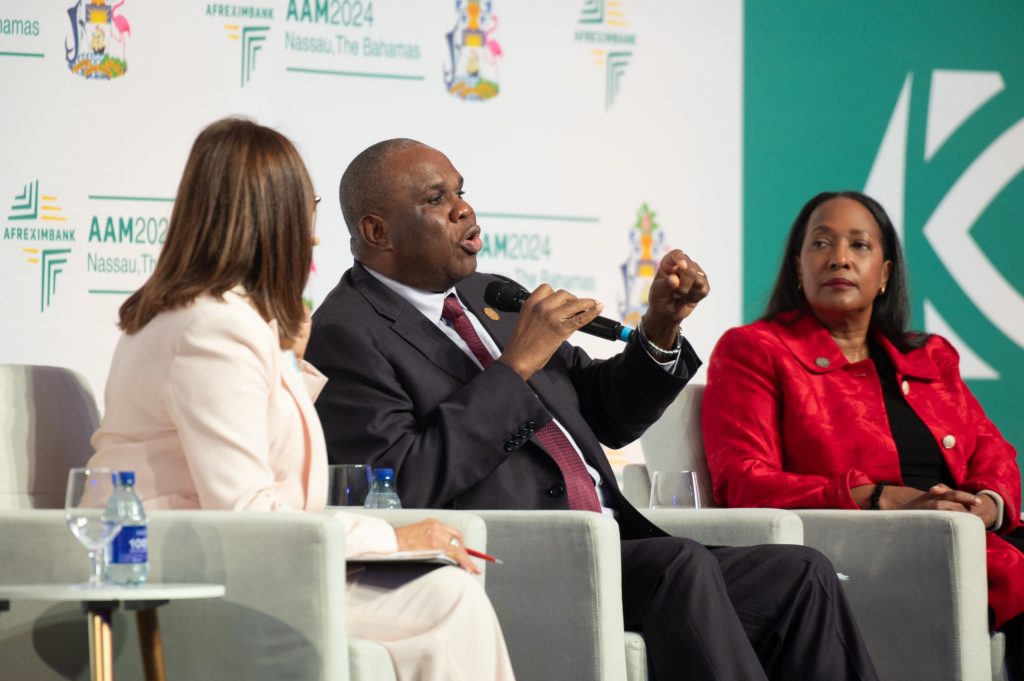
These preliminary findings were announced in Nassau, The Bahamas, during the recent launch of the ITC-Afreximbank ‘Strengthening AfriCaribbean Trade and Investment’ project at the 31st Afreximbank Annual Meetings and the third AfriCaribbean Trade and Investment Forum (ACTIF). The research highlights that the travel and transport sectors have the highest potential for growth, accounting for two-thirds of the potential ‘services trade’ between the regions. In the goods sector, key areas include minerals and metals; wood, paper, rubber, and plastics; as well as processed food and animal feed.
The project’s goal is to enhance trade and investment between Africa and the Caribbean and to foster cooperation between the private sectors of both regions. Following the launch, Afreximbank and ITC will create detailed profiles of the regions’ sectors to identify promising value chains and the barriers and needs for growth. The findings will be compiled in a comprehensive report to be published at the Fourth ACTIF in 2025.
Prof. Benedict Oramah, President and Chairman of the Board of Directors of Afreximbank, stated: “The report confirms the vast Africa-Caribbean trade and investment opportunities that remain untapped. It validates Afreximbank’s Caribbean Strategy, with a project pipeline of $2.5 billion and an investment pipeline worth $1.5 billion. Our collaboration with ITC aims to bridge the knowledge gap and build capacity among small and medium-sized enterprises, which are critical for the growth of Africa-Caribbean trade and investment.”
Other News
ITC Executive Director Pamela Coke-Hamilton added: “Small businesses can be the first to drive and benefit from increased trade between these two regions, as they form the backbone of both African and Caribbean economies. There are huge growth opportunities if the right sectors are prioritized for development and investment.”
Despite their shared history and cultural ties, Africa and the Caribbean export less than 3 per cent to each other. Even before the global impact of COVID-19, conflict, and climate change, bilateral exports never surpassed 6 per cent over the past decade. Trade between the two regions is concentrated in a few key products. For instance, over half of Africa’s exports to the Caribbean are mineral primary products, with crude oil leading at $232 million (27 per cent of total exports).
Caribbean exports to Africa are dominated by a fertilizer produced in Trinidad and Tobago, anhydrous ammonia, accounting for nearly half of all exports to Africa ($423 million, 49 per cent of total).
To boost trade, two primary issues need addressing: high tariffs on processed goods and weak logistics. Bilateral tariffs are generally higher than those for other trading partners and increase with the level of processing, discouraging the export of value-added goods. Reducing tariffs would benefit both regions by offering consumers more variety at lower costs and allowing specialization in competitive sectors.
Additionally, trade logistics performance in Africa and the Caribbean is significantly lower than in other regions (World Bank LPI). Improving the flow of goods and information can enhance market access and trade. Trade agreements can help lower trade costs between the regions. As part of the new project, ITC will analyze how various tariff liberalization and non-tariff measure harmonization scenarios may increase trade at the country and product levels.
The project will support the implementation of the memorandum of understanding between ITC and Afreximbank, building on existing cooperation in programs such as the “How to Export with the AfCFTA” Training Programme, the South Sudan National Export and Investment Strategy, the Pan-African Fashion Alliance, and the Pan-African Private Sector Trade and Investment Committee Survey.