Follow Us on Google
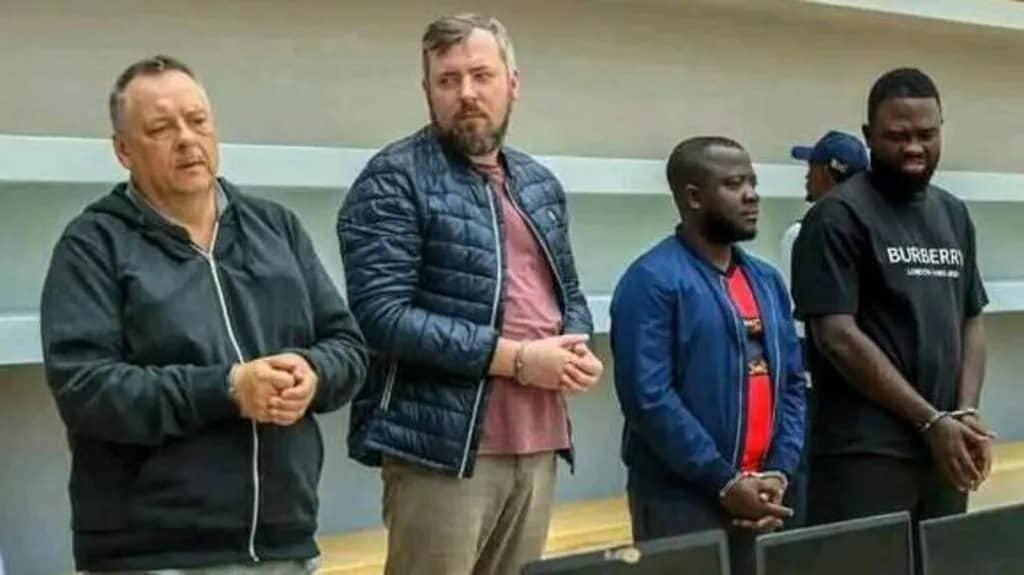
By Dotun Olayemi
A courtroom in Luanda has just handed down a verdict that ought to travel much further than Angola’s borders. Two Russians, a political consultant and a translator, have been convicted of terrorism, espionage, criminal association and illegal currency retention, tied to a network prosecutors describe as an offshoot of the now-dissolved Wagner mercenary project.
An Angolan sports journalist walked away with a suspended sentence. A political activist was acquitted outright. On the surface, this looks like a foreign intelligence story, a tale of Russian meddling dressed up as cultural diplomacy. Look closer, and it is an African story, one that concerns Nigeria as much as it concerns Angola.
The uncomfortable detail buried inside the Luanda judgment is that the alleged operation did not succeed by parachuting in foreign agents to shout on street corners. It succeeded, prosecutors say, by paying local journalists and experts a relatively modest sum, reportedly in the region of $24,000, to amplify narratives that served an external agenda. That is the price, apparently, of tilting a national conversation; not millions, not sophisticated technology, but pocket change funnelled to people whose economic precarity made them reachable. This is the real subject of the Angola verdict, and it is one every African newsroom, every political communications outfit and every civil society organisation from Lagos to Luanda must sit with.
Nigerian media and civic life exist under exactly the kind of financial strain that makes such approaches tempting. Advertising revenue has collapsed under the weight of a shrinking economy and a fragmented digital attention market. Newsrooms operate on skeletal budgets. Freelance commentators, bloggers and self-styled “experts” scramble for relevance and income in equal measure. Into that vacuum walks anyone with a chequebook and an agenda, whether it is a foreign state actor, a political godfather, or a corporate interest with something to hide. The Angola case simply puts a number and a verdict on a phenomenon that African media practitioners have long suspected operates quietly across the continent; narratives can be rented, and they are often rented cheaply.
This is where sovereignty enters the argument, and it deserves to be treated as more than a diplomatic abstraction. A nation can hold elections, fly its flag, and sit at the African Union table, yet still not be sovereign in the fullest sense if the stories its citizens consume about their own government, their own protests and their own future are quietly authored elsewhere. Information sovereignty is not a luxury add-on to political independence; it is a precondition for it. If a foreign network can, through a handful of paid contributors, help engineer the psychological climate around an election or a protest movement, then the ballot box itself becomes a downstream event, arriving after the real contest has already been lost in the information space.
Other News
Nigeria has had its own uncomfortable brushes with this pattern, from allegations of coordinated disinformation around elections to murky funding behind some advocacy campaigns that suddenly acquire outsized social media reach. The instinct in Nigerian public conversation has often been to treat such episodes as scandal-of-the-week material, good for a news cycle and then forgotten. The Angola verdict argues for a different posture entirely. It suggests that African institutions, when they choose to, can investigate, prosecute and convict this kind of interference using their own courts and their own evidence. That is itself a form of sovereignty being exercised, and it is worth Nigerian commentators noting that an African court, not a Western tribunal, delivered this judgment.
What should follow from this, in practical terms, is a serious conversation within Nigerian and African media circles about transparency codes. Newsrooms and communications agencies that engage international consultants, pollsters or “research outfits” ought to be disclosing those relationships as a matter of professional ethics, not waiting for a scandal to force disclosure after the fact. Media houses need verification protocols robust enough to catch funding that arrives dressed as academic partnership or cultural exchange, the very cover the Angola defendants claimed to be operating under when they said they were merely building a Russian cultural centre. Professional bodies, of the kind that already exist across Nigerian journalism and digital publishing, have a role to play in setting minimum standards for foreign engagement, standards with teeth rather than aspirational language.
There is also a harder truth for African governments to absorb, one the Angola case does not let them escape. Genuine grassroots grievance and manufactured disinformation are not mutually exclusive, and lumping every uncomfortable protest movement under the label of “foreign-sponsored” is its own form of dishonesty, one that Angolan activists themselves have pushed back against in this very case. The lesson is not that dissent should be treated as suspect. The lesson is that the information ecosystem surrounding dissent, the pipelines of funding and amplification running beneath the visible surface of a protest or a political campaign, deserves far more scrutiny than it currently receives, from journalists first, and from courts only when journalism has already failed to expose it.
Angola has shown that this kind of exposure is possible. The question for Nigeria, and for the wider region, is whether the continent will wait for the next courtroom verdict to notice how cheaply its own narratives can be bought, or whether its newsrooms will build the ethical and financial resilience to make that price too high to pay.
• Olayemi, a social commentator, writes from Lagos, and can be reached on [email protected].