Follow Us on Google
…Eye $1.6trn by 2030
By Uche Usim
Africa needs a whopping $1.6 trillion by 2030 to achieve its development goals but beyond the numbers, the real issue is who controls the money and on what terms.
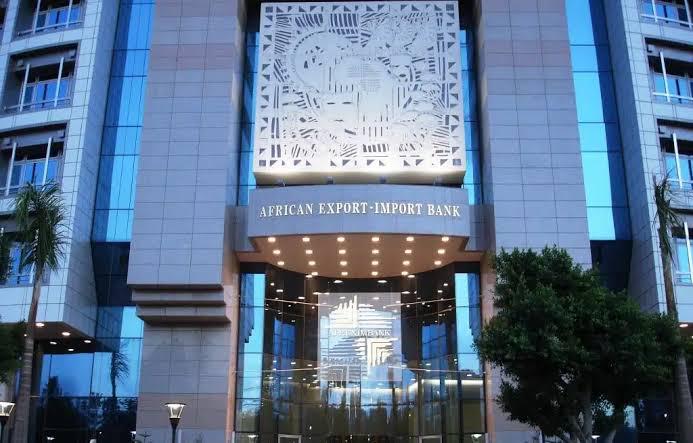
At the recently concluded 32nd Annual Meetings of Afreximbank in Abuja, African finance leaders came together with one loud and clear message: Africa must control its own financial destiny.
For decades, the continent has relied on foreign lenders, often with strings attached. But change is finally in motion.
Through the Alliance of African Multilateral Financial Institutions (AMFI), a strong coalition of 10 regional finance bodies like Afreximbank, the Trade Development Bank (TDB), Africa Finance Corporation (AFC), and Shelter Afrique, Africa is building a homegrown financial system that puts the continent’s priorities first.
The bold ambition, however, is facing a serious challenge. A coordinated attempt is underway to strip African development institutions of their Preferred Creditor Status (PCS), a legal protection that ensures they are repaid first during financial crises. It is a move many African finance leaders believe is designed to destabilise the very foundation of the continent’s emerging financial independence.
“This is no accident,” one finance leader remarked in Abuja. “Just when our institutions are proving they can deliver results, they’re being targeted. It’s not about performance, it’s about power leaders said.”
In 2023 alone, AMFI institutions channelled over $45 billion into development finance across Africa. Afreximbank played a leading role, deploying $7.2 billion that supported 2.8 million jobs across 53 countries. TDB facilitated $3.8 billion in trade finance, while AFC invested $2.1 billion into vital infrastructure projects. These are not abstract figures, they represent real jobs, real businesses, and real development gains.
At the core of this progress lies PCS, a principle enshrined in treaties ratified by African governments. It is not a courtesy; it is a sovereign right. PCS lowers borrowing costs and offers financial stability to institutions tasked with driving Africa’s growth. Critics argue that because some of these institutions have private shareholders or commercial operations, they shouldn’t be granted such protections. But this view overlooks the deliberate design of African financial institutions to blend public purpose with private sector efficiency.
“Afreximbank has financed over $100 billion in trade and development since inception, with a non-performing loan rate of just 1.2%—well below the industry average,” one executive noted. “We’ve survived financial shocks from the 2008 crisis to the COVID-19 pandemic and still maintain AA-level credit ratings. Our model works.”
Despite this, a troubling double standard remains. Western-led institutions like the World Bank and the Inter-American Development Bank retain PCS without question, even though they also combine public and private mandates. But when African institutions adopt similar models, they’re denied equal treatment. This unequal approach has raised serious concerns about lingering colonial attitudes within global finance.
From 2020 to 2023, African multilateral lenders maintained an average default rate of just 0.8%—less than half that of commercial banks in similar markets.
Other News
Their cost of capital also remains significantly lower, often by 200 to 300 basis points, enabling them to lend more affordably to African governments and businesses.
But it’s not just about numbers. It’s about unity and strategy. AMFI is driving powerful collaboration across the continent’s financial institutions, syndicating capital, aligning standards, and pooling resources for projects too large for any single lender to handle alone.
Already, this synergy is bearing fruit.
Take the Abidjan-Lagos Corridor Highway project, for example. Five AMFI institutions joined forces to co-finance the $1.8 billion infrastructure initiative—something that would have been impossible for a single lender. In the SME space, over 45,000 small businesses have benefited from $2.3 billion in financing under the AMFI SME Finance Initiative, creating an estimated 180,000 jobs.
Institutions like the Africa Trade Insurance Agency and ZEP-RE are leading efforts to manage risk and expand cross-border insurance services, while platforms like the Pan-African Payment and Settlement System (PAPSS) are transforming intra-African trade. PAPSS alone has processed over $1.2 billion in transactions, reducing settlement times from days to hours and slashing costs by up to 40%.
Still, even as these institutions rise, Africa continues to lose valuable capital to foreign markets. According to the African Development Bank, net capital outflows from the continent amount to $88 billion each year. African pension funds manage over $400 billion, but less than 12% is invested in Africa. The continent’s sovereign wealth funds control $170 billion, yet only 8% is deployed at home.
“It’s not just about financial returns. It’s about trust,” said a senior banker. “Our institutions are performing, they’re profitable, and they’re mission-driven. But too many African investors still look abroad for safety.”
The data speaks for itself. Afreximbank has paid dividends every year since 1994, with a 12.3% average return over the past decade. The Trade Development Bank has remained profitable for 28 consecutive years. AFC has delivered over 15% annual returns since inception. Meanwhile, local investors often bypass these strong performers in favour of less impactful foreign holdings.
The Central Bank of Nigeria recently increased its stake in Afreximbank from 16.8% to 24.5%—a bold vote of confidence in African-led finance. Similar actions by Ghana and Egypt’s central banks show growing belief in the potential of homegrown institutions.
Ultimately, the fight over PCS is about more than legal status—it’s about who gets to shape Africa’s future. If African institutions lose this protection, it could undermine everything the continent has worked to build. “We cannot afford to let external actors dictate the terms of our development,” said one senior delegate. “We’ve come too far to turn back now.”
AMFI is more than a coalition—it’s a movement to build an integrated, self-sufficient financial system that serves Africa’s unique needs. Backed by a combined balance sheet of over $180 billion and support from all 54 African governments, the architecture is in place. The tools are ready. What’s needed now is unity, confidence, and the political will to defend it.
Africa’s $1.6 trillion development imperative is more than a funding challenge, it’s a call to reclaim control over the continent’s economic destiny. With every transaction, every policy shift, and every collaboration, Africa is moving closer to a future where its financial power lies firmly in its own hands.