Follow Us on Google
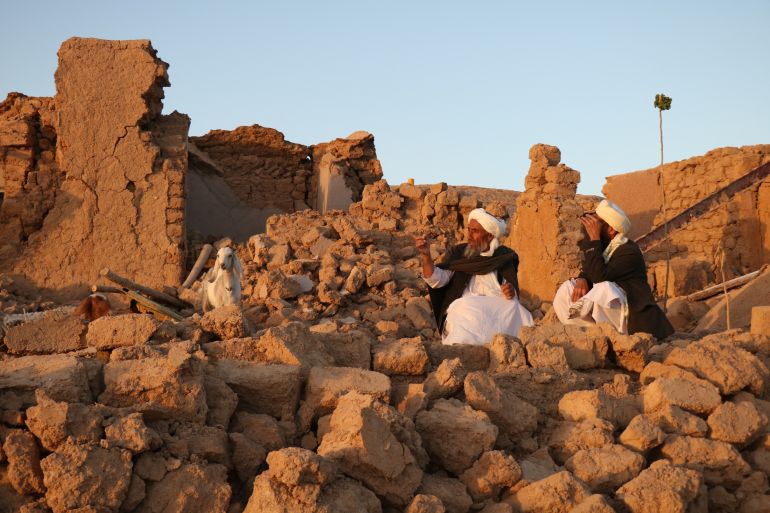
9,240 injured, 1,320 houses destroyed
No fewer than 2,000 people were killed in earthquakes in Afghanistan and more than 9,000 injured, the Taliban administration said yesterday, in the deadliest tremors to rock the quake-prone mountainous country in years.
The weekend quakes in the west of the country hit 35 km (20 miles) northwest of the city of Herat, with one of 6.3 magnitude, the United States Geological Survey (USGS) said. They were among the world’s deadliest quakes in a year when tremors in Turkey and Syria killed an estimated 50,000 in February.
Reuters quoted Janan Sayeeq, spokesman for the Ministry of Disasters, as saying that 2,053 people were killed, 9,240 injured and 1,320 houses damaged or destroyed. The death toll spiked from 500 reported earlier on Sunday by the Red Crescent.
Ten rescue teams were in the area, which borders Iran, Sayeeq told a press conference. More than 200 dead had been brought to various hospitals, said a Herat health department official who identified himself as Dr Danish, adding most of them were women and children.
Bodies had been “taken to several places: military bases, hospitals”, Danish said. Beds were set up outside the main hospital in Herat to receive a flood of victims, photos on social media showed.
Food, drinking water, medicine, clothes and tents were urgently needed for rescue and relief, Suhail Shaheen, the head of the Taliban political office in Qatar, said in a message to the media.
The mediaeval minarets of Herat sustained some damage, photographs on social media showed, with cracks visible and tiles fallen off. Hemmed in by mountains, Afghanistan has a history of strong earthquakes, many in the rugged Hindu Kush region bordering Pakistan.
Death tolls often rise when information comes in from more remote parts of a country where decades of war have left infrastructure in a shambles, and relief and rescue operations difficult to organise.
Afghanistan’s healthcare system, reliant almost entirely on foreign aid, has faced crippling cuts in the two years since the Taliban took over and much international assistance, which had formed the backbone of the economy, was halted.
Diplomats and aid officials say concerns over Taliban restrictions on women and competing global humanitarian crises are causing donors to pull back on financial support. The Islamist government has ordered most Afghan female aid staff not to work, although with exemptions in health and education.
In August, a spokesperson for the International Committee of the Red Cross said it was likely to end its financial support for 25 Afghan hospitals because of funding constraints. It was not immediately clear if the Herat hospital was on that list.
The quakes triggered panic in Herat, resident Naseema said. “People left their houses, we all are on the streets,” she wrote in a text message to Reuters on Saturday, adding that the city was feeling aftershocks.
There are 202 public health facilities in Herat province, one of which is the major regional hospital where 500 casualties had been taken, the World Health Organization (WHO)said in a report yesterday. A vast majority of the facilities are smaller basic health centres and logistical challenges were hindering operations, particularly in remote areas, the WHO said. “While search and rescue operations remain ongoing, casualties in these areas have not yet been fully identified,” it said.