Follow Us on Google
By Merit Ibe
The global economy is in the middle of a major shift. The globalisation momentum is being retarded by the United States President, Donald Trump who is championing the US first agenda through protectionism, economic border demarcation and trade imbalances using tariffs.
This had led to supply chain disruptions and shrinking development aid.
To avoid being isolated, Africa stepped onto the global stage at the World Economic Forum in Davos with a clear message that the continent is ready to partner, compete and grow.
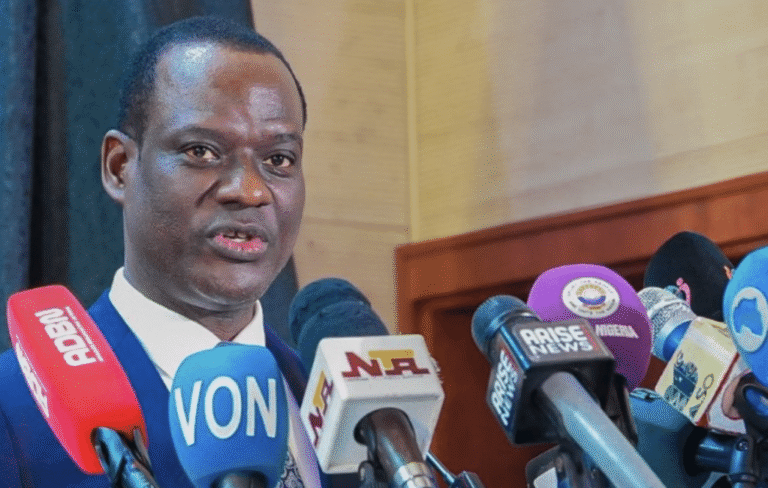
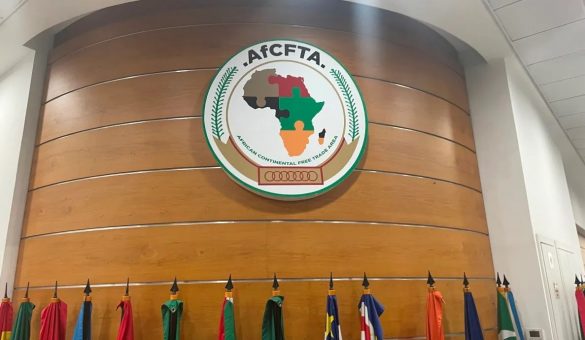
This message was delivered by the Secretary-General of the African Continental Free Trade Area (AfCFTA), Wamkele Mene, on the margins of the World Economic Forum Annual Meetings in Davos, in a high-level panel themed: “How Can Africa Prosper in the New Economy.”
As global trade becomes more fragmented, Mene argued that Africa is moving in the opposite direction; towards integration, cooperation, and a single continental market.
Highlighting recent progress, Mene revealed that intra-African trade reached about $220 billion in 2023, signalling growing momentum within the continent.
He further noted that in 2024, Nigeria emerged as Africa’s number one export destination, a milestone he described as a strong vote of confidence in Africa’s largest economy.
Nigeria also earned praise for becoming the first African country to ratify the AfCFTA Protocol on Digital Trade.
Mene said this step underscores Nigeria’s leadership in shaping Africa’s digital future.
He described AfCFTA as Africa’s strategic response to an increasingly uncertain global economy, positioning the continent as a reliable and resilient trading partner.
Mene acknowledged that the decline in development aid presents short-term difficulties for African economies.
However, he said the medium- to long-term solution lies in stronger collaboration between the private sector, governments, and development finance institutions.
According to him, this partnership model can unlock the scale of finance required to drive industrialisation and sustainable growth.
Mene said the global trading landscape is undergoing a profound transformation.
“Rising protectionism, particularly among major economies, is pushing investors to seek new and more predictable markets.”
In his view, these global shifts are inadvertently strengthening the case for Africa as a destination for trade and investment.
Despite the optimism, Mene was clear-eyed about Africa’s challenges, pointing to decades of fragmented markets and the burden of operating with more than 42 currencies.
He also cited high infrastructure, transport, and logistics costs, as well as barriers to the movement of people, as persistent obstacles.
Mene warned that without accelerated market integration, Africa risks remaining a continent of unrealised potential.
Under AfCFTA, he said the continent is decisively moving from negotiation to implementation, with a sharp focus on lowering the cost of trade.
Central to this shift is the rapid elimination of intra-African barriers to trade and investment.
On trade diplomacy, Mene expressed concern that Africa’s engagement with external partners remains fragmented following the expiry of the African Growth and Opportunity Act (AGOA).
He argued that Africa would be better served by negotiating with third countries as a bloc, using AfCFTA as a common baseline.
While AfCFTA is not yet a customs union, Mene said legal adjustments could empower African institutions to negotiate collectively, similar to the European Union model.
On digital trade, he explained that the protocol adopted by African heads of state covers data flows, interoperable payment systems, SME inclusion, and emerging technologies.
He disclosed ongoing partnerships, including with Google, to roll out digital literacy programmes aimed at preparing young Africans for participation in the digital economy.
Also part of the discussion at different fora at WEF were that with its youthful population, expanding digital ecosystem, vast natural resources, and a single market vision under AfCFTA, Africa may be entering its most consequential moment in the global trade system.
On Nigeria’s foreign policy in a changing global landscape, Yusuf Maitama Tuggar, Nigeria’s Minister of Foreign Affairs spoke about the positive direction of the economy.
“I highlighted how recent reforms are improving coordination, restoring confidence, and repositioning Nigeria as a credible partner for trade, investment, and technology collaboration, alongside our approach to economic diplomacy in a changing global order.
“The conversation focused on Nigeria’s evolving economic and geopolitical positioning, its role in advancing regional stability in West Africa, and how reform-led economic diplomacy is shaping long-term growth and international cooperation.”
Other speakers and contributors included Ahmed Shide Mohamed, Minister of Finance of Ethiopia; Angela Oduor Lungati, Executive Director, Ushahidi, Kenya; Yusuf Maitama Tuggar, Minister of Foreign Affairs of Nigeria;
Julius Maada Bio, President of Sierra Leone amongst others.