Follow Us on Google
By Steve Agbota [email protected]
Despite being among the last African countries to ratify the trade agreement for African economic integration, Nigeria is yet to meet or complete the mandatory trading requirements for the actual take-off and trading on the African Continental Free Trade Agreement (AfCFTA) platform.
Nigeria deposited its instrument of ratification of the African Continental Free Trade Area agreement on December 5, 2020 becoming the 34th member state to formally ratify the treaty.
The deposit came an hour before the opening of a summit of African Heads of States where they proclaimed the Johannesburg Declaration formally fixing trading to start on January 1, 2021 as earlier scheduled.
The African Union Commission’s Trade and Industry Commissioner, Ambassador Albert Muchanga, received the instrument from a Nigerian delegation at the Commission’s headquarters in Adddis Ababa.
However, Nigeria which is being touted by experts as the likely greatest beneficiary of the AfCFTA is still foot-dragging in meeting the requirements needed to participate.
Information gathered by our reporter showed that countries such as Ghana, Egypt, Cameroun, Kenya, Rwanda have all completed the mandatory trading requirements necessary for the intra-Africa trade.
According to a document obtained by our reporter, about 10 African countries have all met the requirements. The countries include; Ghana, Tunisia, Egypt, Cameroon, Rwanda, Kenya, Tanzania and Mauritius. These countries have already been accredited as participating nations.
As these countries concluded their mandatory trading requirements, they are set to begin trade on the AfCFTA platforms, a development that may shrink Nigeria’s shipping industry revenue by over 20 per cent downward if it fails to complete mandatory trading requirements to participate, according to shipping experts.
Conversely, experts have projected that when trading agreement comes into effect, the AfCFTA would create a single market for goods and services in Africa. By 2030, the market size across the continent is expected to include 1.7 billion people with over $6.7 trillion of cumulative consumer and business spending—if all African countries join the agreement.
In spite of opportunities abound in the trading agreement, Nigeria is still leading the pack of countries delaying the take-off of the AfCFTA.
Speaking with Daily Sun, a shipping expert, Anthony Umero, said that Nigeria inability to join other African countries that have completed mandatory trading requirements would see the revenue of the nation’s shipping revenue shrink by 20 per cent if not more, saying that Nigeria has more work to do in order to position itself as the maritime hub for AfCFTA.
According to him, the Nigerian port sector, road, rails, inland infrastructure, coupled with the perennial and embarrassing gridlock on the nation’s port access roads, may not cope with the anticipated increase in economic activities occasioned by AfCFTA.
“Comoros, Gabon, Gambia, Ghana, Madagascar, Mauritius, Mozambique, Namibia and Somalia will experience a surge in traffic through their ports by 2030 as a result of AfCFTA. If the necessary infrastructure projects are implemented, Nigeria’s maritime fleet is projected to increase by 70 per cent for bulk and 90 per cent for container cargoes,” he said.
For Nigeria to benefit fully from AfCFTA, and assume the position of maritime hub, he said there should be conscientious efforts by government and the private sector to carry out some quick intervention measures.
He said the first is to fix the road on the major trade corridor connecting Nigeria and West African neighbours while the second is the port automation of processes and procedure with the establishment of a single window, adding that there is need to provide scanner at the port, fast track the development of Lekki Deep Sea Port, improve the agricultural value chain.
He hinted that if the indicators were implemented, they would spur economic growth and prosperity and eradicate poverty on the African continent and boost job creation, eliminate barrier to trade, facilitate free movement of goods produced by African countries and boost inter-regional trade.
He added that the scheme would also improve competitiveness by exploiting opportunities, boosting intra-african trade, which would lead to more shipping activities for Nigeria.
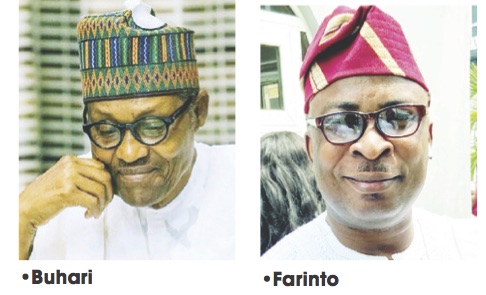
Also speaking on the issue of the AfCFTA and ensuring Nigeria does not become a dumping ground, acting President of the Association of Nigerian Licensed Customs Agents (ANLCA), Dr. Kayode Farinto, urged government to create a ministry to oversee the agreement.
According to him, having a ministry to oversee the agreement will ensure the preparedness of the country in the trade.
“We are signatory to this convention and whether we like it or not, African countries need to bring their goods to our country and we cannot say no.
“The UK has an anti-dumping policy in spite of the fact that they are a member of European Union and they used it to reject items they don’t want in their country, so we too need to do things right,” he added.
On the delay, the Chief Executive Officer of the Center for Promotion of Private Enterprises (CPPE) Dr. Muda Yusuf blamed bureaucracy in the system and the slow pace of work in the public sector for the delay.
He also confirmed that Nigeria is yet to submit negotiations on trade in goods and other documents to both AfCFTA and the African Union (AU), as he also blamed the lack of adequate information for the delay in take-off.
“I believe it is the usual bureaucracy and slow pace of work in our public sector space. That is what I think is responsible. I know that the negotiations on trade in goods have been completed and I am not sure whether it has been deposited with AfCFTA, because in AfCFTA, once you complete negotiations, you have to report the appropriate documents with AfCFTA and the AU on the products of which you are going to have protection or products on which you want to liberalize and all of that.