Follow Us on Google
“Political development should start at the grassroots”
— Abdullah II of Jordan
By Omoniyi Salaudeen
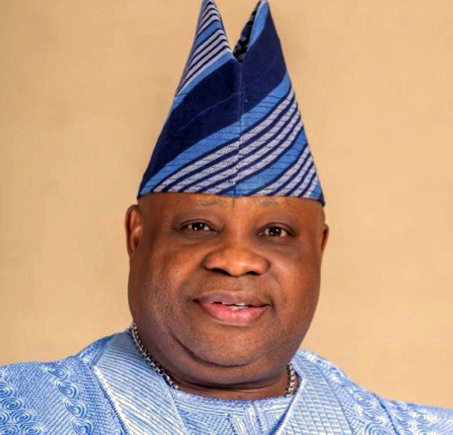
Governor Ademola Adeleke of Osun State offers a compelling case study in political populism. Governing in a tough economy typically demands technical policy expertise and structured problem-solving, attributes not usually linked to a leader best known for his dancing persona. Yet his decisive election victory reveals something deeper: a powerful, emotional bond with the electorate that transcends policy memos and technocratic jargon.
As an incumbent who sought re-election on the platform of a relatively less popular party (Accord) while confronting a resurgent opposition, his victory goes beyond popularity. His first-term win in 2022 was not just about votes. It was about identity. For many Osun voters, Adeleke represents accessibility, empathy, and a break from elitist politics. That connection with the grassroots — built through town halls, direct interventions, and a deliberately “people-first” image — remains his strongest political asset.
The first lesson of his victory is that voters reward authenticity over polish. In an era where political outing is often organised by heavy protocol, Adeleke ran a campaign that felt personal. His dances, his pidgin, his direct engagement with artisans, market women and students communicated one message: “I am one of you.” That authenticity disarmed years of APC messaging about experience and structure. Voters concluded that if a man could be that open on stage, he could be that open in government. It was a bet on character over CV.
The second lesson is that grassroots mobilisation still defeats establishment machinery. The 2022 election was supposed to be a walkover for the APC incumbent. The party controlled federal power, state structures, and had deeper pockets. Yet Adeleke’s PDP leveraged hyper-local networks. From religious leaders to transport unions to youth groups, the campaign turned every polling unit into a conversation. “Operation Imole” was not just a slogan. It became a promise of light in a state that felt dimmed by unpaid salaries, pension arrears and abandoned projects. The lesson for 2027 is clear: no party can take Osun for granted. Money matters, but presence matters more.
The third lesson is that economic hardship creates room for emotional politics. Osun voters in 2022 were not voting for a 10-point manifesto. They were voting for relief, for dignity, for a governor who would “feel their pain.” Adeleke’s promise to prioritise workers’ welfare, clear pension backlogs, and return to free education tapped directly into that mood. It did not matter that policy experts questioned the fiscal math. What mattered was that someone was speaking the language of the suffering. As the country approaches 2027 with inflation, fuel costs and unemployment still biting, that template will be copied across states. Candidates who can combine empathy with even a basic delivery plan will have an advantage.
The fourth lesson is about the power of narrative control. Adeleke and his team never tried to out-technocrat the opposition. Instead, they owned the “dancing governor” label and turned it into a brand of joy and hope. While critics called it unserious, supporters called it human. That narrative framing meant every attack on his competence was read by voters as elitist condescension. In 2027, expect more candidates to deliberately lean into personality traits rather than run from them. In the social media age, relatability is a campaign strategy.
However, the Adeleke case also teaches a cautionary lesson: popularity must be converted to performance. Governing is harder than campaigning. The same voters who celebrated his swearing-in dance are now asking for roads in Iwo, teachers in primary and secondary schools, hospitals in Ikirun, and jobs for graduates. Populism opens the door, but delivery keeps it open. If by 2026 Osun people cannot point to tangible improvements under the “Imole Agenda,” the emotional bond will fray. That is the test every populist faces: can the connection survive the reality of budget constraints and federal policy?
Other News
For the opposition, the lesson is that you cannot defeat personality with only criticism. The APC’s campaign focused on experience, technocracy and federal might. It underestimated the hunger for a new political tone. The lesson of Adeleke’s victory is not that populism won, but that the APC failed to organise itself as a unified force. Party leaders argue that Governor’s victory was built more on protest votes against unpaid salaries, pension arrears, and perceived elitism under the previous administration than on a sustainable policy framework. The rest is history.
Heading into 2027, the APC’s strategy is to reframe the contest as “Performance vs Popularity.” The opposition maintains that while dancing and town-hall optics create goodwill, they do not fix Osun’s structural problems: IGR remains low, and youth unemployment is still high. APC stakeholders point to what they call “motion without movement” — a government heavy on announcements but light on completed capital projects.
The party is also banking on internal reconciliation and a new face. After the bitter 2022 loss, APC leaders in Osun had spent the last three years rebuilding ward structures and courting aggrieved members who defected to PDP. For the upcoming presidential and national assembly elections, their argument to voters will be simple: “Osun needs federal connection, fiscal discipline, and the technical capacity to attract investment, not just applause.”
Beyond winning votes, the biggest task before Governor Adeleke ahead of 2027 is political reconciliation. Osun politics has been deeply polarised since 2018. The rivalry between the ruling Accord and the APC has moved beyond ideology into personal camps, family feuds, and local government factionalism. In many towns, party lines now determine who gets contracts, who is invited to palace meetings, and even who benefits from government palliatives.
For a governor who campaigned on “Imole” and inclusiveness, the burden is to prove that governance can rise above partisanship. Adeleke must reach across the aisle to APC stalwarts, aggrieved party elders, and independent political gladiators who still command structures across the three Senatorial District. This is not about defection. It is about dialogue.
Re-uniting the political class matters for three reasons. First, governance efficiency. A divided state assembly, hostile local government chairmen, and boycotted stakeholders’ meetings slow down project execution. Second, federal leverage. Osun will need bipartisan support to lobby for federal projects, ecological funds, and special intervention. A governor seen as fighting everyone cannot attract those resources. Third, election security. The most violent elections in Osun’s history happened when gladiators refused to speak to each other. By opening channels now, Adeleke can reduce tension before 2027.
If Adeleke can convene an “Osun Stakeholders Forum” that includes APC leaders, civil society, and traditional rulers, he turns his populist appeal into statesmanship. This does not mean surrendering Accord’s advantage. It means expanding it. In politics, enemies can become critics, and critics can become partners on development. If Adeleke leaves office having lowered the temperature in Osun politics, that may be a greater legacy than any road. The electorate will remember who united them, not just who entertained them.
Ultimately, the Adeleke victory proved that in a state battered by hardship, voters will choose a leader who feels like them, even if he does not sound like a technocrat. It proved that grassroots presence, authenticity, and emotional alignment can override party structure and federal power.
But it also set a timer. The same emotional capital that brought Accord to power must now be converted into roads, schools, health centres, and jobs. If it is, Adeleke’s model becomes the new playbook for Nigerian populism — proof that personality plus delivery is unbeatable. If it is not, the APC’s “Performance vs Popularity” argument will gain traction.
For voters, the question in 2027 will not be “Who dances better?” It will be “Who delivered better?” For parties, the lesson is that you can no longer campaign from Abuja or from press releases. You must campaign from the market, the mosque, the campus, and the garage.
The Adeleke factor has changed Osun politics. Whether it defines it for another four years will depend on whether rhythm is matched with results, and whether populism is matched with reconciliation. In that sense, 2027 is not just Adeleke’s test. It is a test for all of Nigerian democracy.