Follow Us on Google

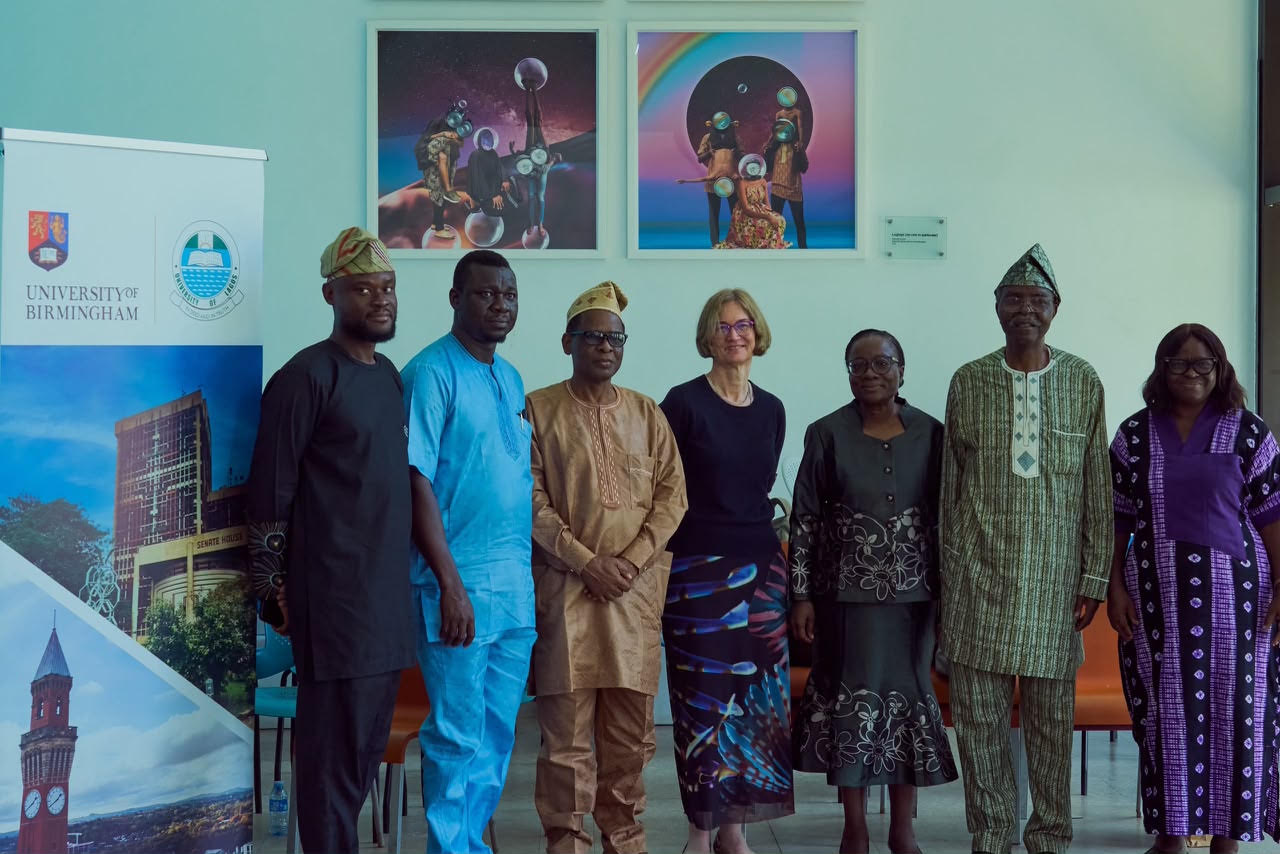
Experts from the University of Birmingham and the University of Lagos last week welcomed a sold-out audience to a flagship event in Lagos that examined the forces that have shaped one of Africa’s major cities, showing how its people have repeatedly adapted to economic upheaval, colonial rule, technological transformation and rapid social change.
Hosted by the British Council, the invitation-only event, titled “Lagos: A City in Motion”, featured Distinguished Professor Ayodeji Olukoju and Dr Felix Oludare Ajiola of the University of Lagos, alongside Professor Insa Nolte of the University of Birmingham. The three academics looked at the city through the changing worlds of entrepreneurship, faith and youth livelihoods, and how people have responded to shifting economic opportunities, political structures and technologies.
Professor Olukoju traced the development of African entrepreneurship in Lagos, pointing to the importance of commerce, property, banking, agriculture and transport, as well as the city’s position as a port. He noted that African entrepreneurs operated within the structural disadvantages of colonial rule while confronting trade depressions, currency crises, global wars and epidemics. They responded through innovation and diversification, using property, credit, and social and religious networks to strengthen their businesses.
“The story of entrepreneurship in Lagos is one of resilience and adaptability,” Olukoju said. “African businesspeople faced significant constraints, but found ways to innovate, diversify and build networks that helped them navigate economic uncertainty. Their experiences encourage us to think more broadly about what entrepreneurial success really means.”
On faith and identity, Professor Nolte examined relations between African Christians, Muslims and followers of Yoruba religion between the 1880s and 1920s. She showed how African Christians mobilised religious change to expand their networks as the colonial government increasingly included them. Her research found that engagement with Islam and Yoruba religion allowed Christians to build respectful relationships with members of other faiths. Rather than seeing Islam simply as a competitor, many were inspired by it to form African-led churches independent of missionary organisations, and they also built alliances with Lagosian Muslims to strengthen their position in relation to the colonial government.
Other News
“Lagos’s religious history shows that relations between faith communities were about much more than competition,” Nolte said. “As colonial rule expanded, African Christians engaged seriously with Islam and Yoruba religion while developing institutions of their own. Religious innovation and collaboration were central to the politics of the city and its hinterland.”
Turning to contemporary Lagos, Dr Ajiola explored urban culture, politics and youth livelihoods, focusing on the historical development of “Yahoo-Yahoo”, the Nigerian colloquial term for internet-enabled fraud and related financial crimes. He argued that cybercrime is not simply a product of the internet but part of a longer history of illicit urban livelihoods. Economic crises, uneven urban development, unemployment, inequality and political governance have contributed to its prevalence, while the growth of cyber cafés and social media transformed how fraud is organised and how far it reaches. According to him, the everyday scramble for survival, and competition for scarce jobs and influence, has fuelled the growth of so-called “Hustle Kingdoms” and several complex transnational criminal networks, including organised cult groups, in contemporary Lagos.
Dr Ajiola also drew attention to the changing role of women in the cyber fraud economy. Unlike in the early-to-mid 2000s, when women typically worked as accomplices rather than principals, they now frequently out-earn their male counterparts in the romance scam segment, having absorbed the operational knowledge of the men they once assisted. He further examined the role of popular culture, arguing that music and popular language have helped normalise ideas of rapid wealth, and the language and culture associated with illicit wealth, among parts of the urban youth population.
“To understand cybercrime among young people in Lagos, we need to look beyond technology,” Ajiola said. “It is connected to a longer history of urban livelihoods and has been shaped by economic pressures, inequality, unemployment and technological change. Understanding those deeper roots is vital to understanding why it persists.”
Across the three periods and perspectives, the event highlighted a common thread: how Lagos and its people have continually responded to profound economic, political, cultural and technological change. From entrepreneurs navigating the constraints of the colonial economy and religious communities forging new relationships, to the pressures facing young people in the digital age, the academics’ research offers different perspectives on the forces that have shaped Lagos and continue to transform the city.