Follow Us on Google
From Juliana Taiwo-Obalonye, Abuja
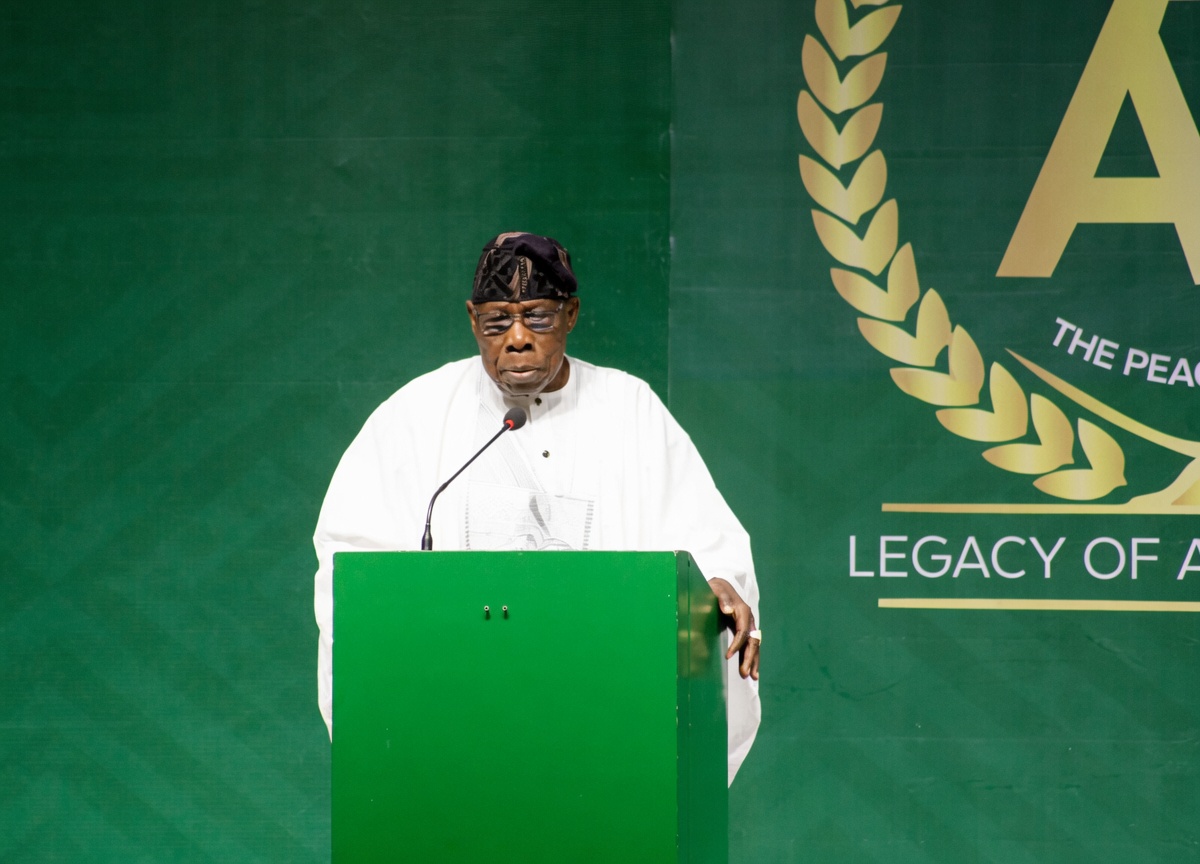
Former President Olusegun Obasanjo has said former Head of State General Abdulsalami Abubakar not only initiated and ensured the restoration of democracy in Nigeria but also “sustained” it through his deliberate, constructive engagement with civilian leaders — including himself — describing him as a great military leader, patriot, peacemaker and elder statesman who untangled the nation’s political mess after the death of General Sani Abacha.
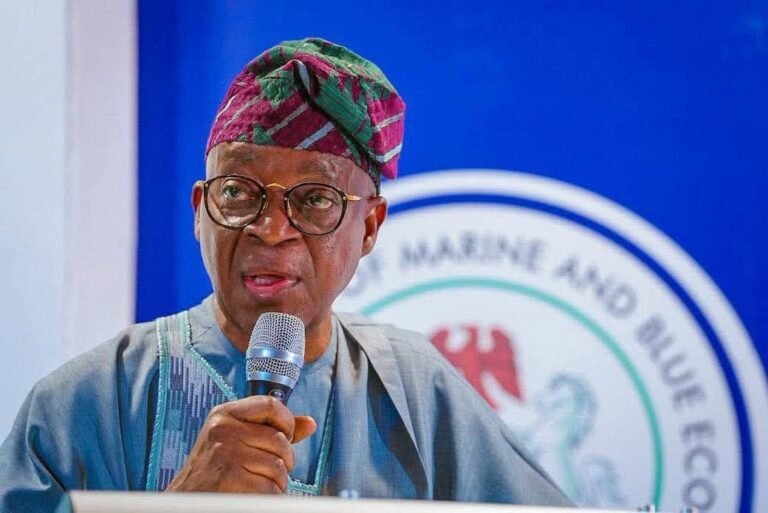
Speaking at the public presentation of three books honouring General Abdulsalami on his 84th birthday, Obasanjo, who described himself as an eyewitness and direct participant in almost all the actions of the military leaders, paid particular tribute to Abdulsalami’s stewardship from 1998 to 1999 and his post-office support for Nigeria’s democracy.
He placed Abdulsalami alongside three other landmark military leaders: General Yakubu Gowon, late General Murtala Mohammed, and himself, before focusing on the man being celebrated.
“The fourth, of course, is the one who has gathered us here and who we are celebrating today. And it is you, my brother, General Abdulsalami Abubakar,” Obasanjo said.
“A great military leader, an officer and a gentleman, a patriot and a nationalist, an elder statesman and a peacemaker who surmounted the seeming confusion and uncertainty that followed the battle of death. You emerged from the clouds and carefully proceeded to untangle the nation’s political business worry.”
He said he was, as the President of the Senate had noted, “a beneficiary of that.”
Obasanjo recounted how Abdulsalami, after assuming power, immediately set about resolving the post-Abacha crisis and securing the release of Chief Moshood Abiola.
“Your next move was how to get MKO Abiola release. And you got me regularly informed and also to relate messages to the family. Kola was already in Abuja to pick up his father when we unexpected happen. I remember you telling me on telephone, ‘Our man is dead,’” Obasanjo recalled.
“Who is our man? Was my question and I screamed… when you mentioned Abiola. And again, following advice, you handled post-Abiola demands and within less than one year of your taking office, we had democracy restored.”
Obasanjo emphasised the longevity of that achievement: “And twenty-seven years after that restoration, we still have democracy.”
Obasanjo went further; he credited Abdulsalami not only with restoring democracy but with sustaining it through his personal relationship and ongoing engagement with him after he became president.
“I should tell this August assembly that not only did you initiate and ensure the restoration of democracy. You sustained it — not only because of the peace that you had worked with with other people, but the way you actually work with me after I took over.”
“How can I forget how regularly you come with a piece of paper with all the points that you wanted to discuss with me about what is going on, about what should be done, about how you saw things? And we sat down. And we looked at them one by one. I answer what could be answered on the spot. And what could not be answered on the spot? I give you an answer within 24 hours. That was a magnificent way of sustaining what you have initiated, and I cannot thank you enough.”
Obasanjo said he personally learned from Abdulsalami’s approach and still cherishes that lesson.
“I must say that I learned and I cherish that from what I had when I was military head of state,” he said.
He then drew on his own experiences as military head of state to illustrate the value of consulting elders and traditional rulers — a practice he saw reflected in Abdulsalami’s conduct.
Obasanjo gave three vivid examples from his tenure to show how engaging elders helped sustain difficult policies.
First, on the 1977 Mecca pilgrimage and the Sultan of Sokoto:
“In 1977 the economy was very bad, extremely bad, and we banned a number of things… 150,000 or thereabouts went to Mecca [in 1976] and we supported them with foreign exchange. 1977 we couldn’t do it. How would I handle this?”
Other News
Obasanjo said he went to the Sultan of Sokoto. “Sultan said to me, ‘How many people do you want to go to Mecca?’ I said, ‘Sir, I’m not the one to determine the number of people who will go to Mecca. But we cannot support 150,000.’”
“‘So how many can you support?’ He said, ‘Tell me.’ I said, ‘Maybe about a third.’”
“The Sultan set up a committee. And that year, 48,000 people went to Mecca and my hand was not in it. I was not blamed for it. It was accepted.”
“That was what I learned from going to people, elders, and using them,” Obasanjo said.
Secondly, on women voting in the North for the first time in 1979, Obasanjo said: “The other thing was when in 1979, the first time women will vote in the North and there were rumors that it may not go well. Well. There might be protests. I went again to the Sultan.”
“The Sultan said, ‘What is your problem this time?’ I said, ‘Voting.’”
“The Sultan said, ‘Voting, you don’t want people to vote?’ I said, ‘No, women will vote for the first time and we had this problem.’”
“The Sultan said, ‘Is that your problem? On the day of election, my wife will be the first to go out to vote.’ And that’s what happened. And that was the way that was settled.”
The third was the Land Use Act and the Agbekoya protest.
“The other example I want to give was what today is even part of our constitution, the Land Use Act. When the Land Use Act was promulgated as a decree, a colleague of mine in government came to me and said, ‘Sir, this is your Land Use Act, it’s not liked by anybody. The North doesn’t like it. The South doesn’t like it.’”
Obasanjo recalled:
“I said, well, we are making progress. When we come up with a plan or a programme or a policy, it’s either too much in favour of the North and the South doesn’t like it or too much in favour of the South and the North will not like it. This time we have been able to have a policy that both the North and the South will not like. That’s progress. And we laugh about it.”
“But then we heard that Agbekoya in Ibadan went on protest. I went to Chief Simon Adebo (former Permanent Secretary in the Western States and former Nigeria’s Permanent Representative to the United Nations) and I said, ‘Baba, this is what I’ve heard. What can you do to help?’ He said, ‘Segun, I cannot help you. You have to help yourself. Go out to Agbekoya in their houses and explain things to them.’”
Obasanjo described his journey:
“I left Lagos at 2 a.m. By 4 a.m. I was in Ibadan. By 5 a.m. I was going to villages around Ibadan. By 8 a.m. I have visited more than 12 villages in Ibadan, meeting Agbekoya in their houses and the leaders. And then we were able to suppress the Agbekoya protest on land use decree. And that’s why Land Use decree or Land Use Act is able to stand till today.”
Obasanjo tied this back to Abdulsalami: “Again, the use and the help that you get from people who have the interest of the country at heart and who are able to give the type of help to sustain whatever you are doing. In your case, to sustain me and democracy in power.”
Obasanjo concluded with a warm personal tribute to General Abdulsalami on his 84th birthday.
“84 years. Long term. Congratulations.”
He added, “You will reach 90. And I will be there. You will reach 100, but I and General Gowon will not be there.”