Follow Us on Google
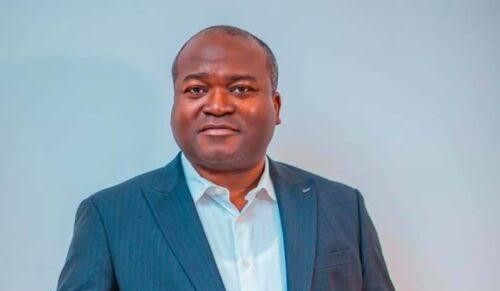
When Governor Babajide Sanwo-Olu announced the appointment of Dr. Ayo Ogunsan as the Executive Secretary and CEO of the Lagos State Security Trust Fund (LSSTF), it felt less like a routine personnel change and more like the dawn of a bold new era in public-safety governance. In a city as vast and complex as Lagos, the role matters.
With Ogunsan, an entrepreneur, academic, and security advocate — at the helm, Lagos signals its ambition: to become safer, smarter, and more resilient.
Ogunsan’s path to this critical post was anything but linear. His career began in the private sector, where he founded the Executive Group, overseeing diverse ventures in training, project management, and investment. That corporate experience, he says, taught him resilience, strategic thinking, and resource stewardship — all vital to leading a security institution.
Yet business was only part of his life’s work. Long before his new appointment, Ogunsan had already made a name for himself in the security space. He served on the LSSTF board, led the Police Campaign Against Cultism and Other Vices (POCACOV) in Lagos, and championed community policing as Patron of the Police and Community Relations Committee (PCRC).
Simultaneously, he held roles in academia — on the board of Caleb University and nonprofit spheres, advancing youth empowerment and public policy.
This cross-sector experience, Ogunsan believes, equips him uniquely. “Security cannot be imposed,” he argues. “It must be co-created with citizens.” His years with POCACOV and PCRC taught him that crime prevention must go beyond policing; it must address social drivers, build trust, and empower communities.
As LSSTF CEO, Ogunsan has laid out his vision: transform the fund into a world-class institution anchored on innovation, partnership, and accountability. He wants LSSTF not just to support Lagos’s security agencies but to serve as a model for public–private collaboration across Africa.
In his first 100 days, he plans to undertake a full operational review. That includes strengthening relationships with security agencies, scaling up rapid-response funding, and building out the infrastructure that supports frontline work. At the same time, he aims to broaden LSSTF’s donor base — bringing in new partners and reenergizing existing ones.
But for Ogunsan, continuity is as important as change. He respects the foundation laid by his predecessors and intends to build on it rather than overhaul it. Reforms will be deepened, not discarded; technology will be expanded, not replaced; and stakeholder engagement will become more inclusive — all while preserving the fund’s core mission.
Lagos is a city of contradictions: fast-growing, dynamic, and increasingly complex — and its security needs reflect that. Ogunsan identifies three urgent priorities for LSSTF: curbing urban crime (from robbery to cultism), strengthening intelligence through data-driven methods, and modernizing security infrastructure to keep pace with the city’s expansion.
To tackle those, he is betting big on technology. He envisions a smarter surveillance network, upgraded communications systems, and predictive policing tools powered by analytics. By leaning into data, LSSTF can move from reactive responses to proactive prevention.
Equally important, he sees greater synergy among security agencies as a game-changer. Under his leadership, LSSTF will encourage joint operations, embed inter-agency coordination, and support an integrated command structure. He believes that when the police, military, and paramilitary forces work seamlessly together — backed by modern systems — citizens benefit the most.
One of Ogunsan’s non-negotiables is accountability. He plans to institute stronger audit mechanisms, release regular performance reports, and tie funding to measurable outcomes. Public trust, he insists, is earned through openness, not just good intentions.
On the funding front, he’s exploring new models: blended financing, crowdfunding, and partnerships with development agencies. These, he hopes, will diversify LSSTF’s financial base and make it more resilient.
At the heart of his strategy, though, is community participation. Ogunsan speaks passionately about working with neighborhood watch groups, youth associations, and Community Development Associations.
He sees them as both beneficiaries and co-creators of security. By fostering local intelligence networks, reporting channels, and youth mentorship programs, he wants LSSTF’s footprint to be felt at the grassroots where security begins.
He’s equally committed to prevention. Campaigns against drug abuse, cultism, and crime will run alongside law enforcement efforts. For Ogunsan, the real victory is not in arresting criminals, but in dissuading people from becoming criminals in the first place.
Ogunsan’s academic engagement offers another dimension to his leadership. With ties to universities in Nigeria and abroad, he plans to forge research partnerships focused on crime mapping, behavioral studies, and policy evaluation. In his vision, LSSTF will not just be a funding agency; it will be a laboratory for innovation, learning, and evidence-based security policy.
His leadership style, he says, is empathetic, strategic, and inclusive. He listens, empowers his team, and anchors every decision in purpose. As a leader, he does not just manage resources; he mobilizes hearts.
In the long run, Ogunsan’s dream for Lagos is bold: a city where citizens feel safe, where technology and intelligence guide security, and where public–private trust is so strong that resilience becomes a way of life. He hopes to leave behind a legacy: an LSSTF that is transparent, high-performing, and deeply rooted in community.
To Lagosians, his message is simple but powerful: “Security is a shared responsibility.” To the youth, he says, “You are not just future beneficiaries; you are the heartbeat of our strategy. Choose purpose, choose peace.”
For the city, his appointment marks more than a personnel change; it marks a turning point. With Ogunsan leading LSSTF, Lagos is staking its future on a model of security that is smart, collaborative, and grounded in the people it serves.