Follow Us on Google

Chukwudi Nweje
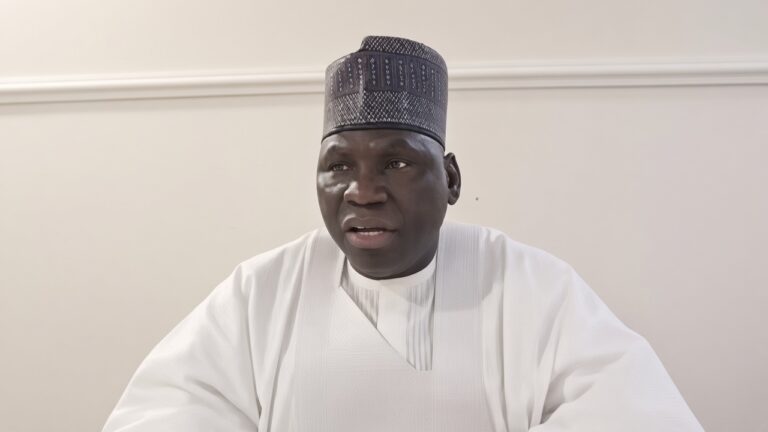
Debo Adeniran, Executive Chairman of the Center for Anti-Corruption and Open Leadership (CACOL) says the 8th National Assembly worked against efforts by President Muhammadu Buhari’s government to move Nigeria forward. He calls for more stringent laws against defection from one political party to another and wants parties to be streamlined along ideological lines.
How do you see the recently concluded 2019 elections?
I didn’t do a comprehensive personal monitoring of the elections; my assessment will be based on what our people on the field reported and what we read in the media. The 2019 elections are different from what we had in the past. No two elections are ever the same. What we had in 2019 is significantly different from all other elections. The large number of political parties that participated in the exercise affected the conduct of the elections in terms of provision of ballot papers and other logistics the Independent National Electoral Commission (INEC) needed for the exercise and the quality of the election. These were noticed in the several cases of inconclusive elections.
Again, the build up to the elections was a period of apprehension, many people thought there would be widespread violence but that was not the case. The violence that occurred was not as widespread as those of the previous elections and they were in the usual places like Rivers State. In Lagos it was isolated cases like in Okota. In other states, it wasn’t as much as the scare-givers predicted before the election, so we shouldn’t amplify election violence beyond proportion. The election could be rated average given the logistic and political issues. INEC was operating under very difficult circumstance. Every contestant wanted to win and because of that, propaganda was raised even against INEC itself. There was inadequate political, voters and electoral education for the people especially in the rural areas on how to handle the wider and longer than usual ballot paper. The result was the many voided ballots.
Do you subscribe to the views that the 2019 elections were the worst in the history of Nigeria?
Since 1959, violence has been a component of elections in Nigeria. Even the 1993 elections that were rated most credible, perhaps because of the Option A4 / Open Secret Ballot system, had some violence and widespread apathy. If the military government that organised the 1993 elections had allowed multiplicity of opinions it would not have been as peaceful as it was. The run up to those elections showed so many undemocratic practices. Several political associations that wanted to transform to political parties were banned, several politicians who wanted to contest were also banned and at the end, the military approved just two people, Chief MKO Abiola of the Social Democratic Party (SDP) and Alhaji Bashir Tofa of the National Republican Convention (NRC), to contest the presidential election. You cannot call that democratic practice. The military teleguided the 1993 election, basically, the SDP and the NRC weren’t true democratic parties. So, though the 2019 elections may not have been perfect, it is not the worst elections in Nigeria.
You say the 1993 exercise was not truly democratic because the military formed the political parties, this 2019, we had 91 political parties, which turned out to be a problem to manage and this number may increase by 2023 judging by the number of applications before INEC. How should the number of political parties be handled?
Ideology should be a major consideration before registering political parties. Political parties should be able to make it clear to INEC what their ideology is and what kind of government they will run should they win election. INEC should look at the similarities of ideology among the political parties and streamline the political parties along those lines.
A political party must also be able to muster enough followership in the area they want to operate. It doesn’t matter if it wants to operate locally. There should be a condition that a political party should have certain percentage of the voting population in an area before it will be registered. The party must also have the wherewithal to operate, this includes offices and funds. The ideological leanings of the political parties we have now are not well defined and many members did not join them on the basis of any known ideology.
There should be a law that members of political parties cannot defect to another political party unless there is sharp ideological deviation from the position of the party or they have spent minimum number of years in the party. It is deception for a politician to stand election on the platform of one political party and the next moment he jumps into another party.
Will you not be denying one his freedom of conscience and association by forcing him to remain a member of a party he no longer wishes to identify with?
Not if the conditions were there that you must spend certain number of years before you can defect and that you must prove that your party has deviated from the ideological orientation espoused when you joined the party. A politician must have done a lot of thinking before joining a political party so if the ideology of the political party has not changed, you should not have any business wanting to leave it.
Look at the migratory attitude of our politicians today moving from the Peoples Democratic Party (PDP) to the All Progressives Congress (APC). If the ideological leaning of the APC had been different from that of the PDP then they should convince the INEC of the clear departure from the original ideology they espoused.
What is your assessment of President Muhammadu Buhari’s first term in office?
From inception I said that Buhari has a track record of anti-corruption. I am also interested in fighting corruption because I believe that if corruption is eliminated there will be rapid economic growth and development and Nigerians will live life to the fullest. I believe that Buhari has done what no other past Nigerian leader has done especially in the area of the fight against corruption.
Don’t forget that the party that brought Buhari to power was less than one year old when they won the election. The party was also a coalition and they were still getting to know each other. After they won the election and needed to form a cabinet, there was a lot of horse-trading since they had not been working together. If Buhari had been a lilly-livered president the government would have collapsed. Buhari also fell sick and handed over to Vice President Yemi Osinbajo. He handed over to Osinbajo because he didn’t have anything to hide. Past presidents didn’t like handing over to their deputy because they don’t like them knowing some things. Buhari has been true to his position that he belongs to everybody and belongs to nobody. He refused to influence election in states. He didn’t even influence the leadership of the National Assembly and that was why the opposition took over. This was unlike what was obtainable under former President Olusegun Obasanjo when several senate presidents were impeached. Buhari detached himself from mainstream politicking and he has fought corruption the way no other president has been able to.
The APC has an overwhelming majority in the National Assembly and Buhari has moved from non-interference in choice of leadership to endorsing preferred candidates. What will the implications be this time?
Buhari’s non-interference in the choice of National Assembly leadership in his first term made the minority to become the majority and that hindered governance. If the National Assembly had cooperated with the executive, Nigeria would have fared better. Look at the budget; it was passed nearly eight months after it was presented. It was like the 8th National Assembly tried to sabotage the government of Buhari, if he had not been a strong leader, he wouldn’t have survived it. Every move Buhari made to move the country forward was resisted by the National Assembly. That mistake should not be repeated. Those of us who believe that a good foundation for growth has been laid do not want a National Assembly that will be a clog in the wheel of progress. Buhari’s choice of 9th National Assembly leaders will portend better tomorrow for the government and Nigerians.
Part of your activities in CACOL is what you call Budget Monitoring Project (BUMP). How do you rate the implementation of the 2018 budget?
We do not have the detailed figures yet, but one thing we know is that the level of implementation of the 2018 budget is less than 40 per cent. This means that Nigerians generally are suffering 60 per cent jeopardy. Budgets should be implemented 100 per cent. Budget is a plan of action; an appropriation act, which is a law. It should be a punishable offence for any cabinet member to under implement the budget. The reason departments, ministries and agencies (MDAs) under implement the budget is because they want to steal the remainder. It should be a criminal offense for any minister or department head that under implements the budget and does not return the remaining funds. Such persons should be punished.