Follow Us on Google
Nigeria has strengthened its pool of indigenous technical manpower for upcoming projects and Final Investment Decisions (FIDs) with seven young Nigerian engineers and geologists emerging with 18 internationally recognised certifications in specialised oil and gas services.
The trainees were certified in Directional Drilling and Evaluation Services (DD/MWD) and Electric Wireline Evaluation Services (EWL) following a specialised capacity-building programme implemented by the Nigerian Content Development and Monitoring Board (NCDMB), in partnership with Shell Nigeria Exploration and Production Company (SNEPCO) Limited and Geoplex Drillteq Limited.
The certifications were obtained from leading UK-based and international industry bodies, including the National Examination Board in Occupational Safety and Health (NEBOSH), International Association of Drilling Contractors (IADC), and Offshore Petroleum Industry Training Organization (OPITO).
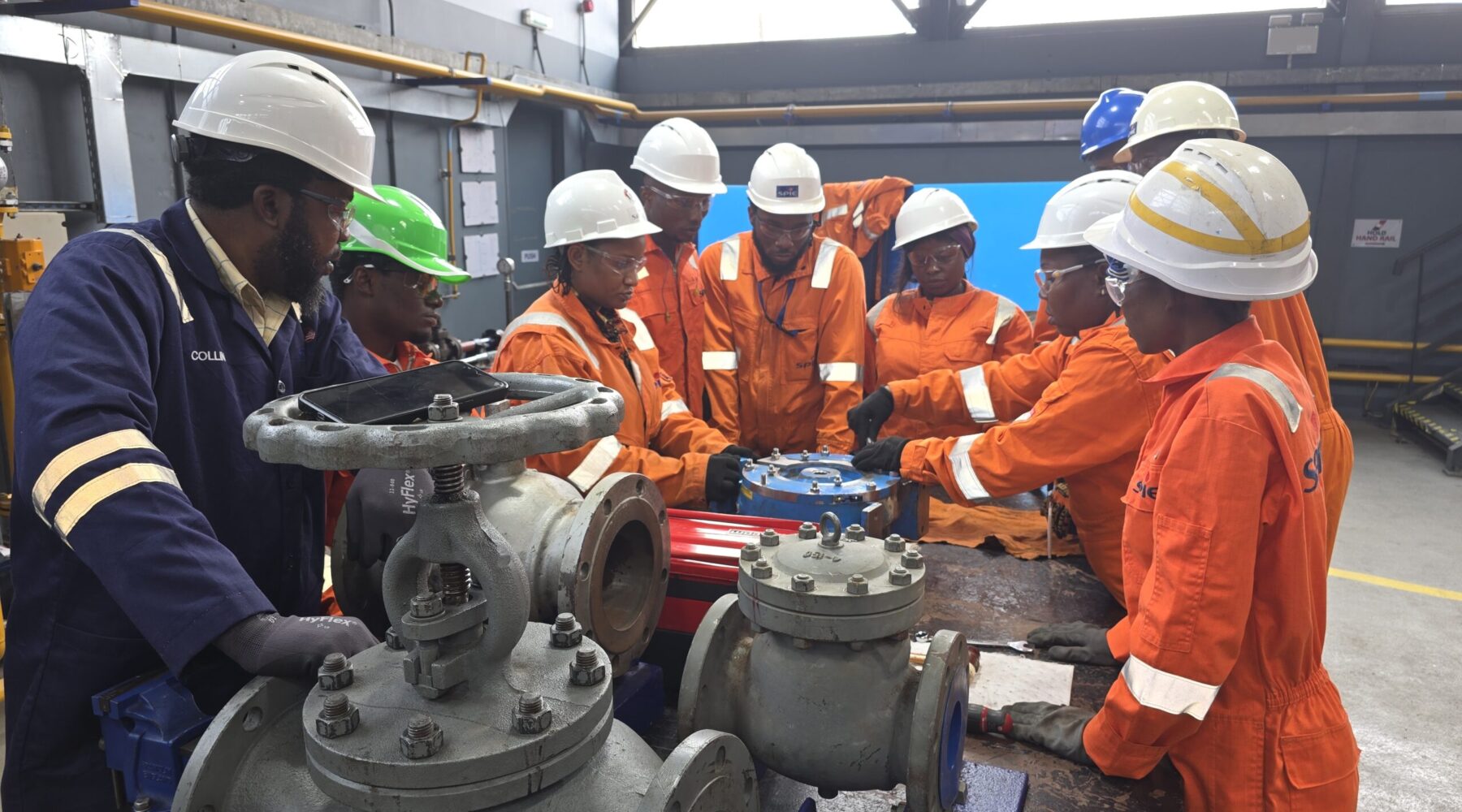
The programme combined intensive classroom instruction with on-the-job training on live projects, equipping the participants with practical skills required for complex drilling and well-evaluation operations. Under the SNEPCO contractual framework, the Directional Drilling and Evaluation programme covered jar maintenance, bottom-hole assembly components, measurement-while-drilling principles, formation integrity and leak-off test procedures.
The Electric Wireline Evaluation programme provided hands-on exposure to wireline logging, cement evaluation, perforation operations, pressure-control equipment, as well as rig-up and rig-down activities.
Speaking at the close-out ceremony, the Director, Capacity Building Directorate (CBD) of the NCDMB, Engr. Abayomi Bamidele, represented by the Deputy Manager in the directorate, Mr. Tareowei Bufazi, said the rigorous training had prepared the participants to take advantage of emerging opportunities in the global oil and gas industry.
He said the programmes were designed to combine structured classroom learning with practical experience on live projects, providing the trainees with technical competence that could position them for major industry opportunities as new projects and FIDs come on stream.
Bamidele urged the graduands to see their newly acquired qualifications not as the end of their training but as a platform for continuous professional development.
“The knowledge, skills and certifications you have acquired should serve as a foundation for continuous learning and professional growth,” he said.
He challenged the graduands to measure their professional success by the problems they solve, the standards they uphold and the value they create.
Other News
“The world you are entering is competitive, demanding, and constantly evolving,” he said, urging them to be courageous in pursuing opportunities and resilient in overcoming setbacks.
The NCDMB capacity-building directorate commended SNEPCO for investing in Nigerian talent and supporting the successful implementation of the programme, while also acknowledging the contributions of Geoplex Drillteq and Arewa Innovative Solutions.
For SNEPCO, the investment goes beyond meeting local content requirements.
Mr. Kingsley Erhunmwunsee of SNEPCO said the company regarded local content development as an investment in Nigeria’s future rather than merely a regulatory obligation.
He said the sustainability of Nigeria’s oil and gas industry depended on the availability of highly skilled Nigerian professionals capable of operating safely, solving complex technical problems, adopting new technologies and delivering world-class performance.
“Developing that capability within Nigeria strengthens not only individual careers, but also our companies and the Nigerian economy,” he said.
He commended the NCDMB for its continued efforts to deepen local content development and its support for the training programme.
Similarly, the Vice President, Business Development, Geoplex Drillteq Limited, Mr. Akeem Raji, described the close-out ceremony as a demonstration of the impact that collaboration among industry stakeholders can have on Nigerian capacity development.
He said sustainable Nigerian content must translate into measurable technical capability, internationally recognised qualifications and improved employability.
According to him, the real value of training is realised when participants are able to apply the knowledge and experience acquired safely, competently and productively in the industry.