Follow Us on Google
From Noah Ebije, Kaduna
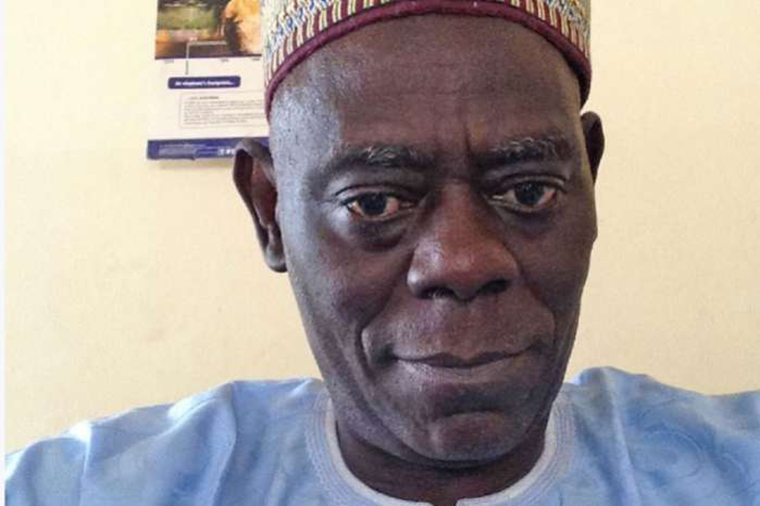
An elderstatesman and former Secretary General of Arewa Consultative Forum (ACF), Mr.Anthony Sani, has taken a critical look at the 65th independence anniversary of Nigeria, saying that the country is at war with itself.
Sani, who said he was 10 years old when Nigeria attained independence, noted that the prevailing insecurity across the country is a manifestation of inequality that pushed some Nigerians to take up arms against their fellow Nigerians.
He added that despite socio-economic challenges facing the country, the people need to count their blessings and name them one by one to know what God has done for them these past turbulent years.
Excerpts:
Nigeria on October 1, celebrated 65 years of independence. What is the significance of this event, is it a case of wasted years or fruitful ones?
The celebrations of the nation’s independence anniversary has been an annual event since 1960.And so that of 65th anniversary will not be new or something special. The celebrations would be that of freedom which enables Nigerians to govern themselves.This is because nothing can be more pleasing than freedom.We have used the freedom to try different forms of government such as the parliamentary,the military dictatorship and now presidential system. We also tried different model of economic development such as state capitalism, mixed economy and now outright privatization. During the celebrations,there would be both trend and cross analyses of the development for the express purpose of assessing progress against aspirations which can inform plans and policies for the future. We had only three regions at independence which became four in 1963.These became 12,19,30 and now 36 states and FCT. The nation has moved its capital from Lagos to Abuja.
One could count the number of hospitals and clinics at independence, but today to count the number of health institutions would take some time. It used to take two days from Keffi to Kaduna and two days from Akwanga to Jos, all because there were no good roads and no taxis or busses. Today it is a matter of a few hours to reach Kaduna from Keffi and Jos from Akwanga. In the area of education, the nation would compare the number of secondary schools and higher educational institutions at independence with what obtains now. For example, there were not more than five universities at independence, and now we have over 200 universities. Compare the number of federal government colleges at independence with what obtains now and you would hardly avoid the conclusion that the nation has moved by way of socioeconomic development especially when regard is paid to how fast the nation’s capital was moved from Lagos to Abuja. Cross analyses with peers of Asian countries would convey the impression that Nigeria should have done more than what obtains now.
The prevalent insecurity across the country is manifestation of inequality that pushes some Nigerians to take arms against their fellow Nigerians.That is to say, Nigeria is at war with itself.
Still it is helpful for us to count our blessings and name them one by one to be able to know what God has done for us.
What lesson can younger generations learn from independence celebration?
The younger generations should learn the lessons that independence means the development of the country is in the hands of Nigerians.Nobody can do it for them. They should avoid past mistakes such as corruption, which steals empowerment,steals opportunity and steals future.They should learn that moral values of honesty, credibility,integrity and justice are sine qua non in socioeconomic development.
The younger generation should also note that the good things of life are not natural order of things.These things are attained through endless hard work not only by leaders but followers as well.
Is the attainment of independence still worth celebrating, considering increasing poverty and insecurity in the country today?
The celebration of independence is worth it because it is celebration of freedom to govern ourselves the way we want. The increased poverty and insecurity are clear testament of failure of leadership to provide the road map and dare the rest of us to follow. Such pitfalls should be avoided by the younger generation. That is why the reintroduction of history in our schools would help the younger generation to know where they are coming from, where they are and where they choose to go.
At the inception, Nigeria was running regional government, some think we should go back to that era; what about you?
Yes, the first republic was a confederation under the watch of a parliamentary system. But were the system perfect it would not have been supplanted by other forms of government. The problems of Nigeria have nothing to do with forms of government but stem from our attitudes and the way we do things.
Some Nigerians are saying the colonial period was better than independence time. Do you agree?
However good the colonial government might have been, it cannot trade places with freedom to govern ourselves the way we want. It is important to note that, at independence, the population of Nigeria was 55 million, like Britain. But today, Britain, which is a developed nation, has 71m, and Nigeria has over 200m. As long as our GDP grows at a lower rate than population growth, there would be poverty, which drives insecurity.
Is the presidential system not too expensive for our economy?
I think we are the ones making the presidential system costly. For examples, in America, the vice president is the senate president, in order to ensure harmony and stability of the government. But in Nigeria, that is not the case. Hence the increase in cost of governance. In America, the cabinet ministers are not more than 30; in Britain the number is not more than 20; while in France it is about 15. In Nigeria, we have a crowd called government. Nigeria has 21 Supreme Court justices while America has nine, yet there are more delays of cases in Nigeria than in America. There is nowhere in the world where public officers are more cosseted from the hostile environment, more protected from the consequences of their actions and more compensated for their inadequacy than in Nigeria.