Follow Us on Google

From Isaac Anumihe, Abuja
With Nigeria’s housing deficit worsening to frightening levels, the federal government has announced an intervention, saying it will make at least 15,000 housing units available within the next three months as part of urgent efforts to address the horror.
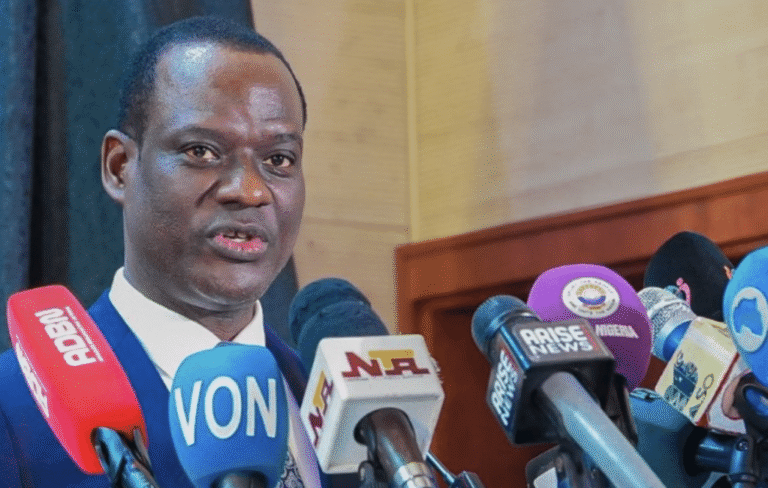
Minister of Housing and Urban Development, Muttaka Rabe Darma, made the announcement at a housing summit in Abuja yesterday. He said the planned delivery would significantly expand access to shelter, with projections indicating that more than 60,000 Nigerians could benefit when household sizes are factored into the allocation plan. “Now, in the next three months, if what I’ve been told is true, I assure Nigerians that 15,000 houses or more than 15,000 houses will be available for occupation by Nigerian families. “And that means over 60,000 unhoused families will be accommodated in the next three months,” he said.
The minister explained that the estimate assumes an average household size of four persons, typically a father, mother, and two children, meaning the intervention could directly improve living conditions for tens of thousands of citizens once allocation begins.
Darma said implementation would move quickly from planning to physical verification, stressing that the government would not rely on paper assurances. “By next week, we’ll begin to assess the availability of these 15,000 houses. I will move from place to place and make sure that these 15,000 houses are there and not just on paper. We are going to be practical as much as we can,” he stated.
He added that the ministry’s strategy would involve identifying existing gaps in delivery, confronting structural bottlenecks in housing development, and ensuring that promised units are completed and ready for occupation within the timeline.
“Our strategic plan, like I said, will definitely identify, recognise, and factor most of the challenges mentioned here and face them squarely and provide ways around them to ensure that we deliver to Nigerians. At least, they will know that we are on the way to satisfying them,” he added.
Darma also stressed that stronger collaboration with the private sector remains critical to achieving scale in housing delivery, especially in construction financing, land development, and infrastructure provision.
Other News
“Our leadership will need a lot of co-operations with the private sector for the purpose of reforming the built environment,” he said.
In his remarks, Minister of Labour and Employment, Muhammad Dingyadi, said housing should be viewed beyond shelter provision, describing it as a key driver of economic growth, job creation, and national productivity.
He noted that the administration of President Bola Ahmed Tinubu, under the Renewed Hope Agenda, is prioritising housing as a strategic sector for inclusive development through innovative financing structures and public-private collaboration.
Dingyadi commended ongoing efforts to translate housing policies into tangible projects, adding that such interventions align with the government’s broader goal of economic transformation.
“As Minister of Labour and Employment, I recognise the significant impact that large-scale housing delivery has on job creation, skills development, industrial growth, and poverty reduction,” he said.
He explained that the housing and construction sector has strong multiplier effects across the economy, supporting employment in building materials manufacturing, logistics, artisanship, professional services, and site construction activities.
The government says the accelerated housing rollout is expected to ease pressure on Nigeria’s housing market while stimulating employment and strengthening private sector participation in the built environment.